
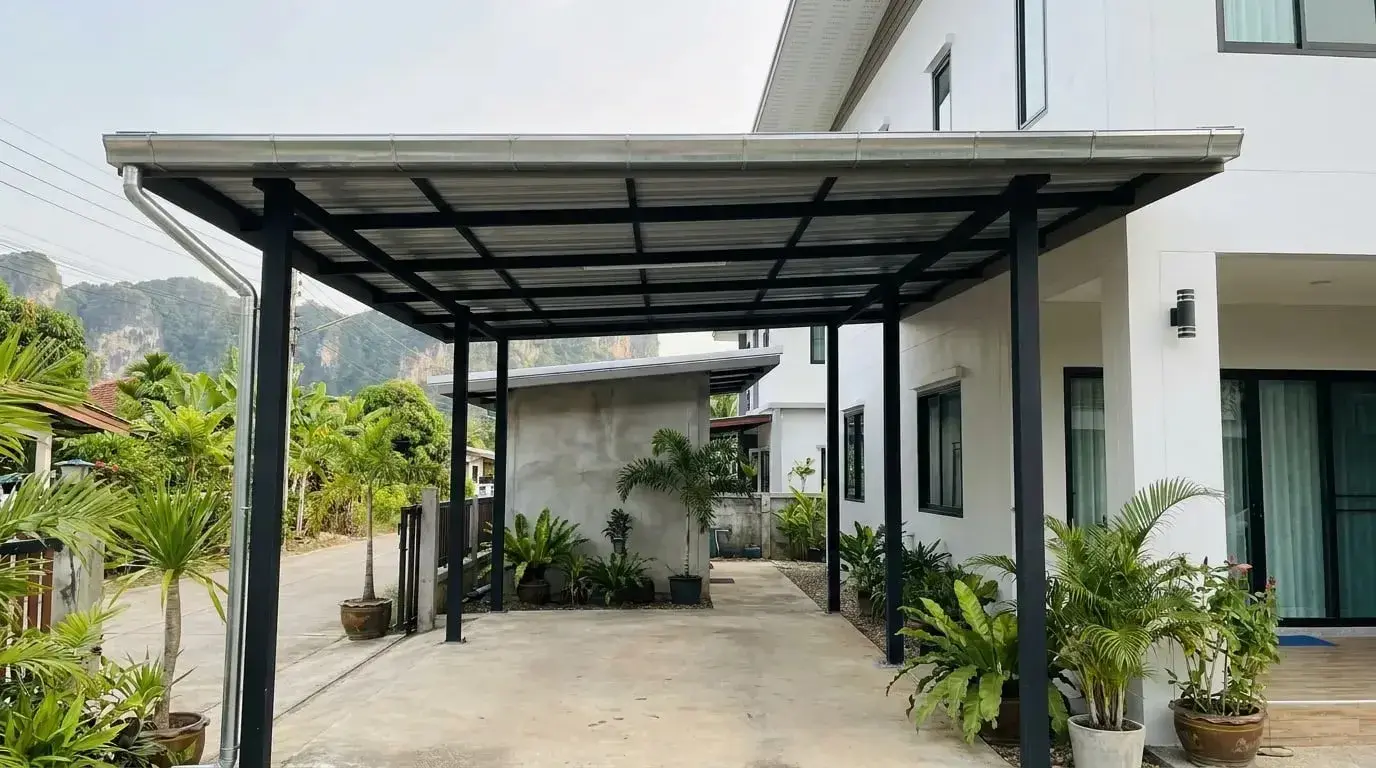
Monsoon rain in Krabi is heavy and it goes on for hours. Lots of homes and resorts already have a separate carport, kitchen or guest building, and every trip between them means an umbrella or a sprint. A covered walkway fixes that. The hard part isn’t the roof in the middle; it’s the two ends, where it meets existing roofs that are rarely the same height and often slope in different directions.
On the survey Rong checks the eave height at both ends, which way rain comes off the existing roofs, whether the path is soil, stone or concrete, where posts can go without blocking people or cars, and how wide it needs to be for two people to pass or to wheel luggage. For resorts, cafés and shops he also looks at how busy the route is.
The usual mistakes are draining the walkway into the joint of an existing roof, tucking it under an eave with no flashing so water runs back in, and building it too narrow or too high so slanting rain still soaks people. If the two eaves are at very different levels, Rong will tell you it’s better to build a separate frame and flash the joints than to force it onto an old roof.
To get started, send a wide photo of the route, the eaves at both ends, the rough length and a location pin on LINE.
- Jobs start from
- 10,000 THB
- Team experience
- 30+ years
- Site survey
- Free
- Steel grade
- Your choice
Designs and options
Single-slope walkway roof
Simple, light on steel and easy to budget. Ideal along a wall or fence. The slope has to send water to the side where there’s drainage, not onto the path or the neighbour’s property.
Small gable or curved walkway roof
Water runs off both sides and it looks at home on a garden path or in a resort. Best for walkways crossing open ground. More steel and finer work than a single slope, so not necessary if budget is tight.
Linking the house to a carport or outdoor kitchen
The job we see most. Everything depends on the two ends: whether to tuck under the existing eave, rise over it, or stand clear and flash the gap. That comes down to the height and slope of the roofs already there.
Walkways for resorts, shops and between buildings
Usually longer and busier, so posts must stay out of the way of guests and luggage trolleys, rainwater mustn’t drain in front of room doors, and work has to fit around guests or customers. Discuss working hours at the survey.
Materials: the honest pros and cons
Metal sheet roofing
Near the sea: depends on specPros
- Affordable and light
- Solid, so it blocks sun well
Worth knowing
- Loud rain noise without insulation
- Cut edges and screw holes start rusting if finishing is poor
For homes and resorts near the sea, choose a well-coated sheet grade and clean all drilling swarf off the sheets.
uPVC (vinyl) roofing sheets
Good near the seaPros
- The sheet can’t rust
- Quiet in the rain and looks tidy
Worth knowing
- Dearer than metal sheet
- Purlins (the steel battens the sheets sit on) must follow the maker’s spacing
Well suited to beachfront resorts, but the posts and steel frame below still need full rust protection.
Polycarbonate
Good near the seaPros
- Lets light through so the path isn’t dark
- Light and rust-free
Worth knowing
- Hotter than a solid sheet
- Can go cloudy or yellow over time and needs periodic cleaning
Useful where the walkway runs past windows and you don’t want the rooms darker. If it takes direct afternoon sun, a solid sheet is cooler.
Structural steel frame (posts, beams, purlins)
Near the sea: depends on specPros
- Strong and easy to fit to the route
- Can be extended or repaired later
Worth knowing
- Needs rust primer and top coat everywhere, welds included
- Post bases in soil or standing water rust quickly
You choose the steel grade, sizes and rust-protection system. Rong explains the trade-offs first and your choice is written into the quotation.
How the price is worked out
Covered walkways start from 10,000 THB, but there is no fixed price. It depends on your site: the length and width, number of posts, how the joints at each end are finished, the roofing you choose, and the price of steel at the time. Rong does a free site survey, then gives you a written itemised quotation. Remote or boat-access locations such as Ko Lanta and Ko Phi Phi carry a travel fee, which is shown in the quotation before you agree to anything.
There is no fixed price. It depends on your site and on steel and material prices at the time. The site survey is free.
Included
- Free site survey: measuring the route and checking eave heights and run-off at both ends
- Written itemised quotation
- Steel frame, posts, beams and purlins with rust primer and top coat
- Roof sheeting and finishing the joints with existing roofs or walls as agreed
- Clearing away offcuts and debris when the job is finished
Not included
- Materials, if you choose a labour-only contract
- Concrete or paving for the path, unless listed in the quotation
- Gutters and downpipes, unless listed in the quotation
- Electrical work and path lighting (ask on LINE with photos)
- Repairing existing roofs that already leak, unless listed in the quotation
How a job with us runs
- 1
Send photos on LINE
Photos plus a location pin. Rong tells you early if the idea is realistic.
- 2
Free site survey
He checks the walls, the ground and where the rain will go — the things photos can’t show.
- 3
Written, itemised quote
Full contract (labour + materials) or labour-only. Nothing hidden in a lump sum.
- 4
30% deposit, then work starts
Only once you have agreed the design and price. Payment is by cash bill, no VAT invoice.
- 5
Walk-through before handover
We check every point with you. 1-year warranty under the conditions in the quote.
How long it takes
It depends on the length, number of posts, how tricky the joints with existing roofs are, and the weather. At a resort or shop that stays open, work may be split into sessions so guests aren’t disturbed. Rong gives a timeline after the survey and it goes in the quote.
1-year warranty: what it covers
One year, under the site-specific conditions written into your quotation.
Covered
- Installation workmanship by our crew
- 1-year warranty, under the site-specific conditions written in your quotation
Not covered
- Leaks coming from existing roofs or walls that weren’t part of our work
- Anything the quotation does not list as covered by the warranty
Covered Walkways: questions we get asked
Will the walkway leak where it joins the house roof?
The joint is the riskiest part, especially when the house eave and the walkway slope in different directions. Rong decides whether to tuck under, rise over or stand clear and flash the gap, rather than relying on silicone. When comparing quotes, ask each builder exactly how they’ll finish both ends.
How wide does a covered walkway need to be to stay dry?
There’s no single figure. It depends on the roof height, the direction of wind-driven rain and whether the sides are open or walled. The higher and more open it is, the wider it needs to be or the further the roof must overhang. Rong judges it on site and will tell you if slanting rain will still get in.
Can we have a walkway without posts in the middle?
On some sites one side can be fixed to the house structure with posts on the other side only. If the walkway is long, or there’s nothing strong enough to fix to, it needs posts, and Rong will keep them tight to the edge. Our Cantilever Canopies page explains more.
Can you work at our resort while guests are staying?
We can discuss it. Cutting and welding make noise and sparks, so Rong plans with you which hours work can happen, which areas need closing off, and cleaning up each day. Tell us your resort’s rules when booking the survey.
Can you add lights under the walkway?
Ask on LINE with photos of the route and where you want lights. If you plan to add them later, tell Rong before the frame is built so cable routes can be allowed for.
How does payment work? Do you give a tax invoice?
We take a 30% deposit before work starts, and the balance is paid as set out in the quotation. You get a cash bill, but we do not issue VAT or tax invoices. If your company or landlord needs a tax invoice, tell us at the start so there are no surprises.
Read this before you build
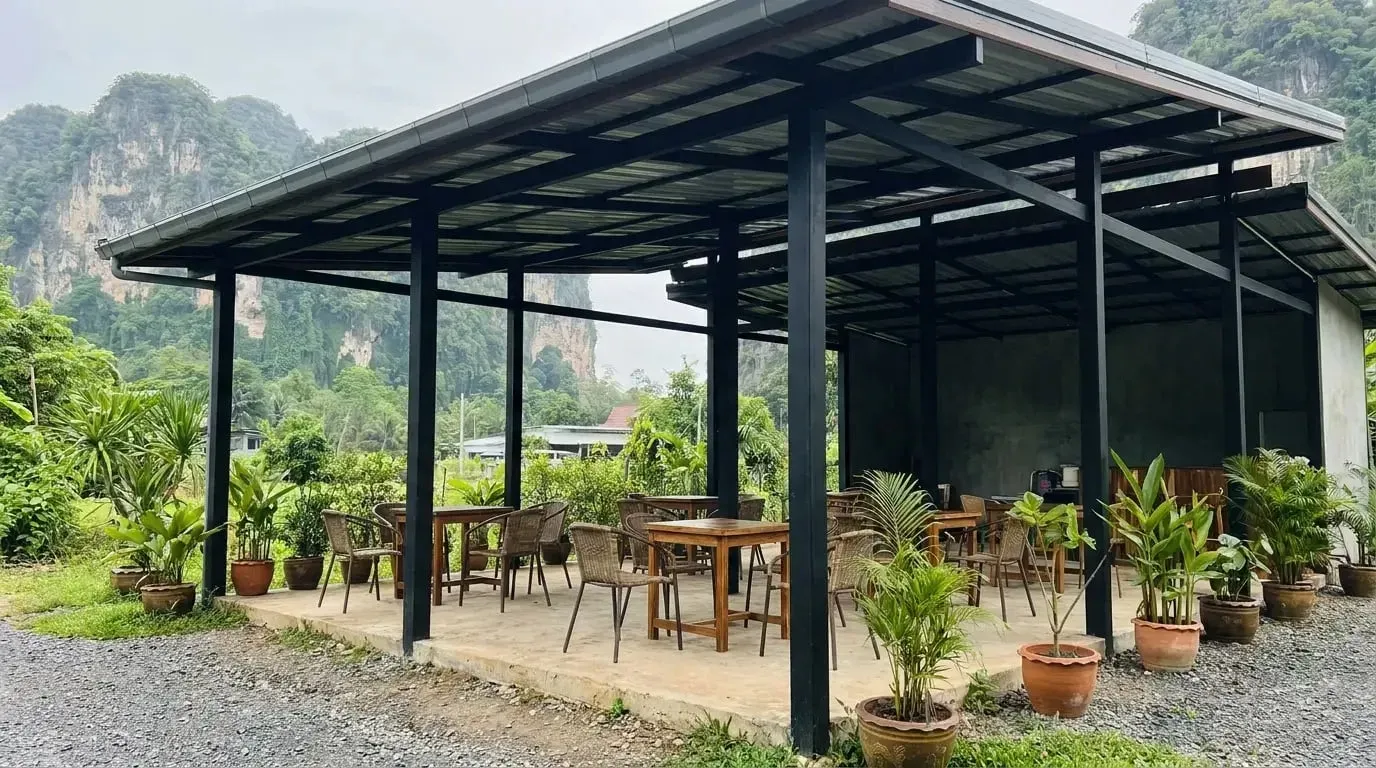 Roofing and Steel Work for Resorts, Bungalows and Cafés in KrabiRoofing and steel work for resorts, bungalows and cafés in Ao Nang and Ko Lanta: scheduling around guests, noise, access, ferry travel fees and receipts.
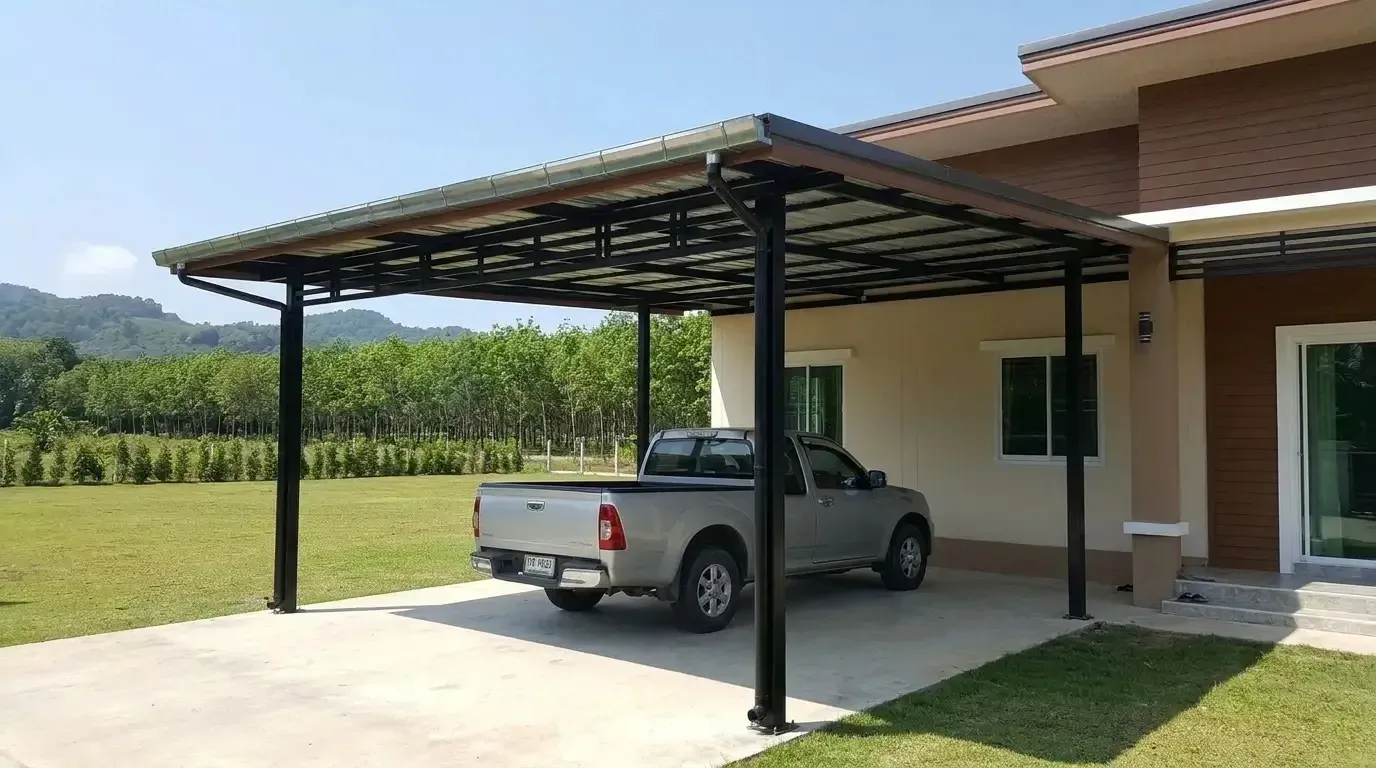 What a Steel Carport in Krabi Really Costs to BuildWhat really drives the price of a steel carport in Krabi: size, roof sheet, attachment, ground, rust protection and access. Why there is no price list.
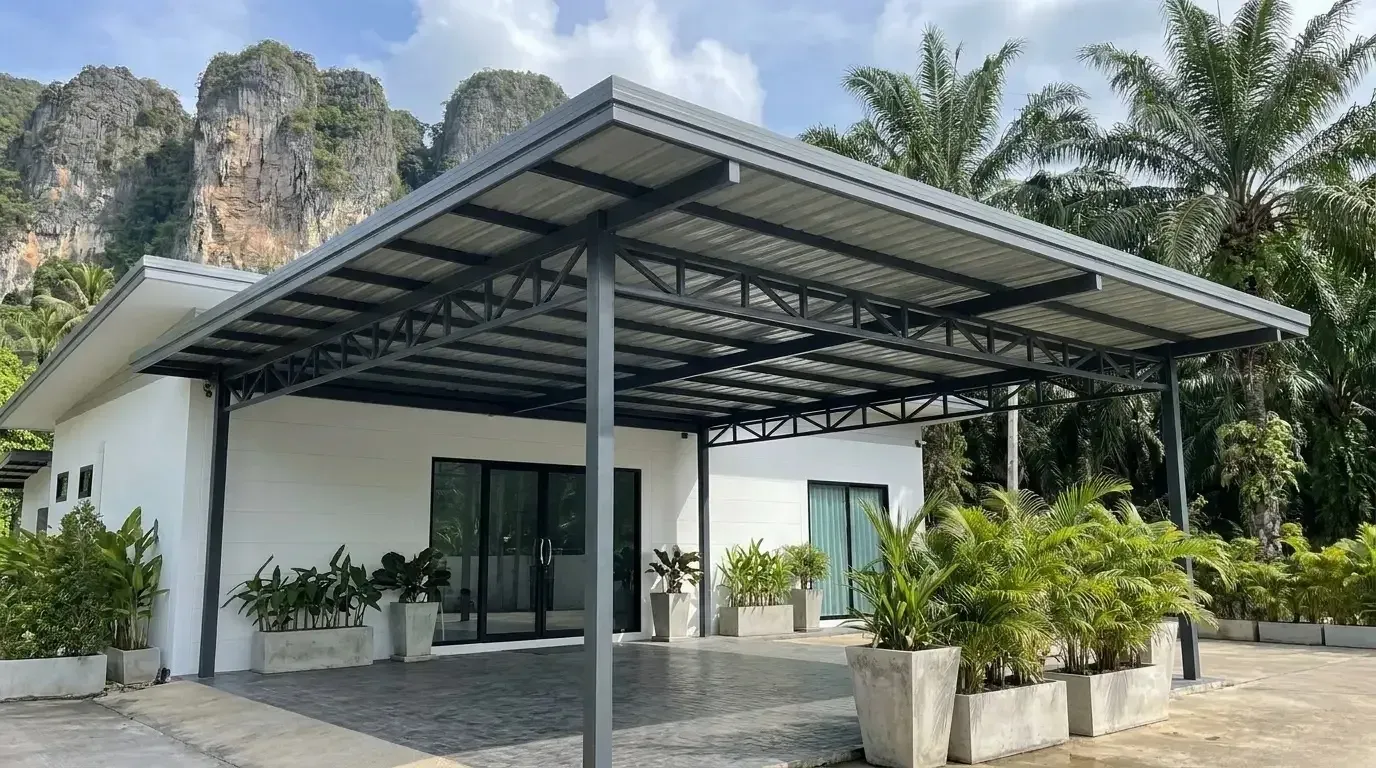 Hiring a Contractor in Krabi as a Foreigner: A Practical GuideA practical guide for foreigners hiring a contractor in Krabi: comparable quotes, deposits, cash bills vs VAT invoices, warranties and working in English.
Related services
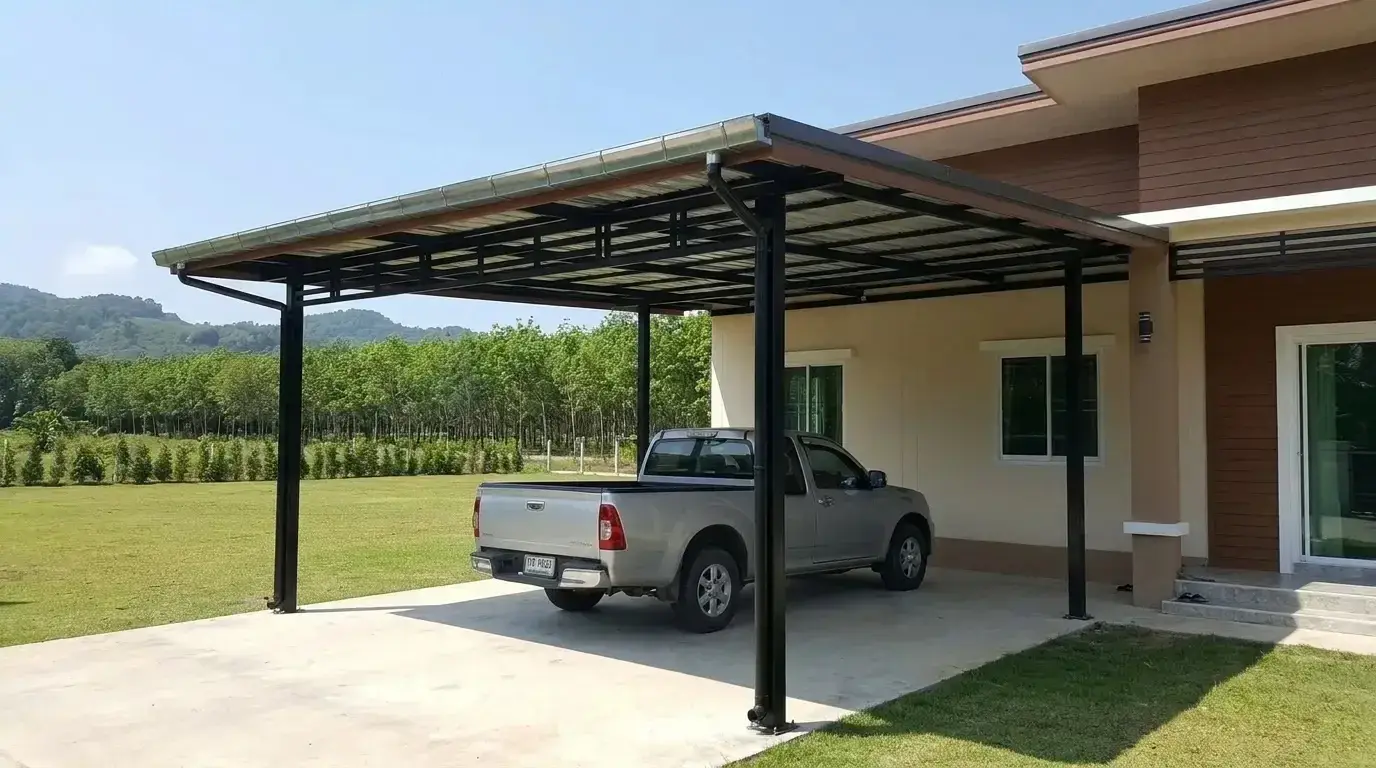 Steel CarportsSteel-frame carports sized to your car, your plot and your budget, with honest advice on roof shape and sheeting.
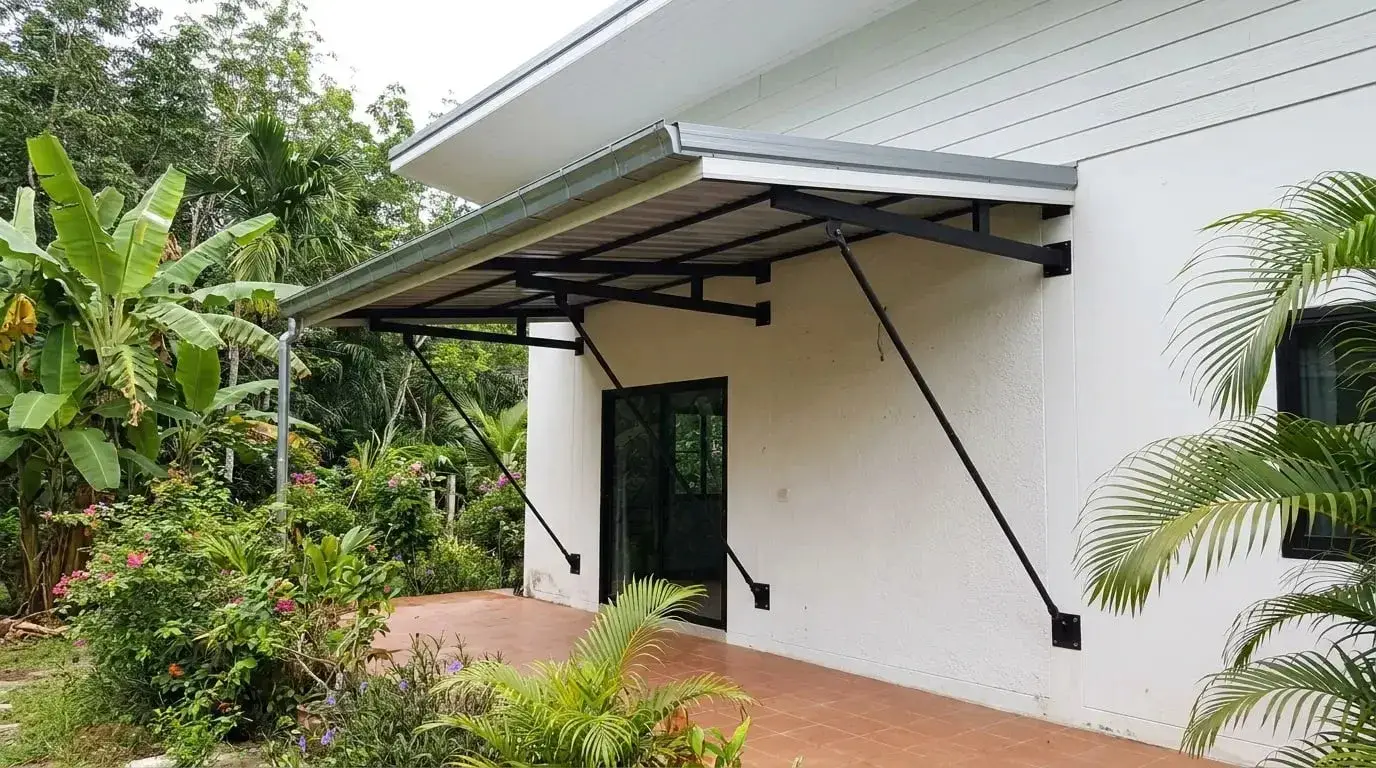 Cantilever CanopiesPost-free canopies and carports on cantilever beams, built only after the fixing structure has been checked.
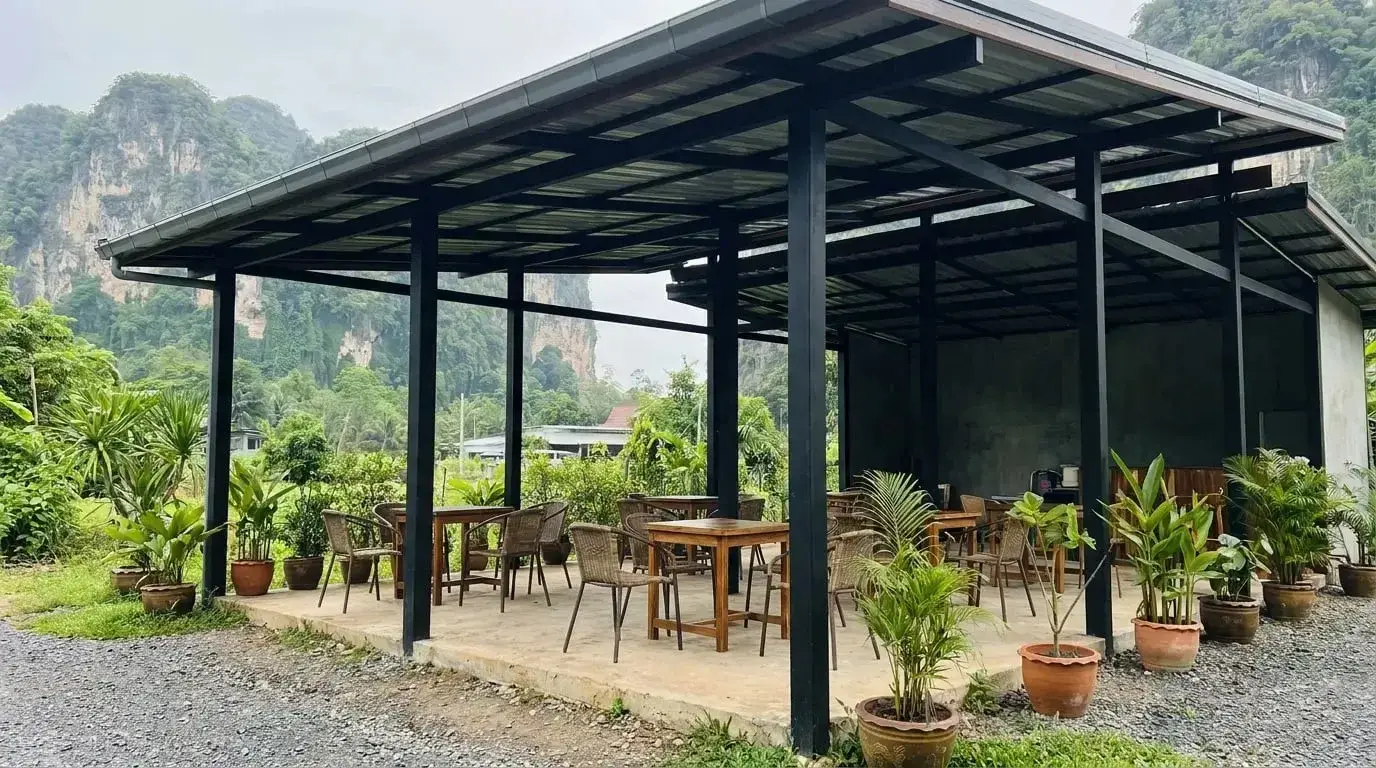 Roofing for Resorts, Shops & CafésRoofs, awnings and steel frames for beachside resorts, bungalows, shops and cafés, planned around rust, wind and keeping the business open.
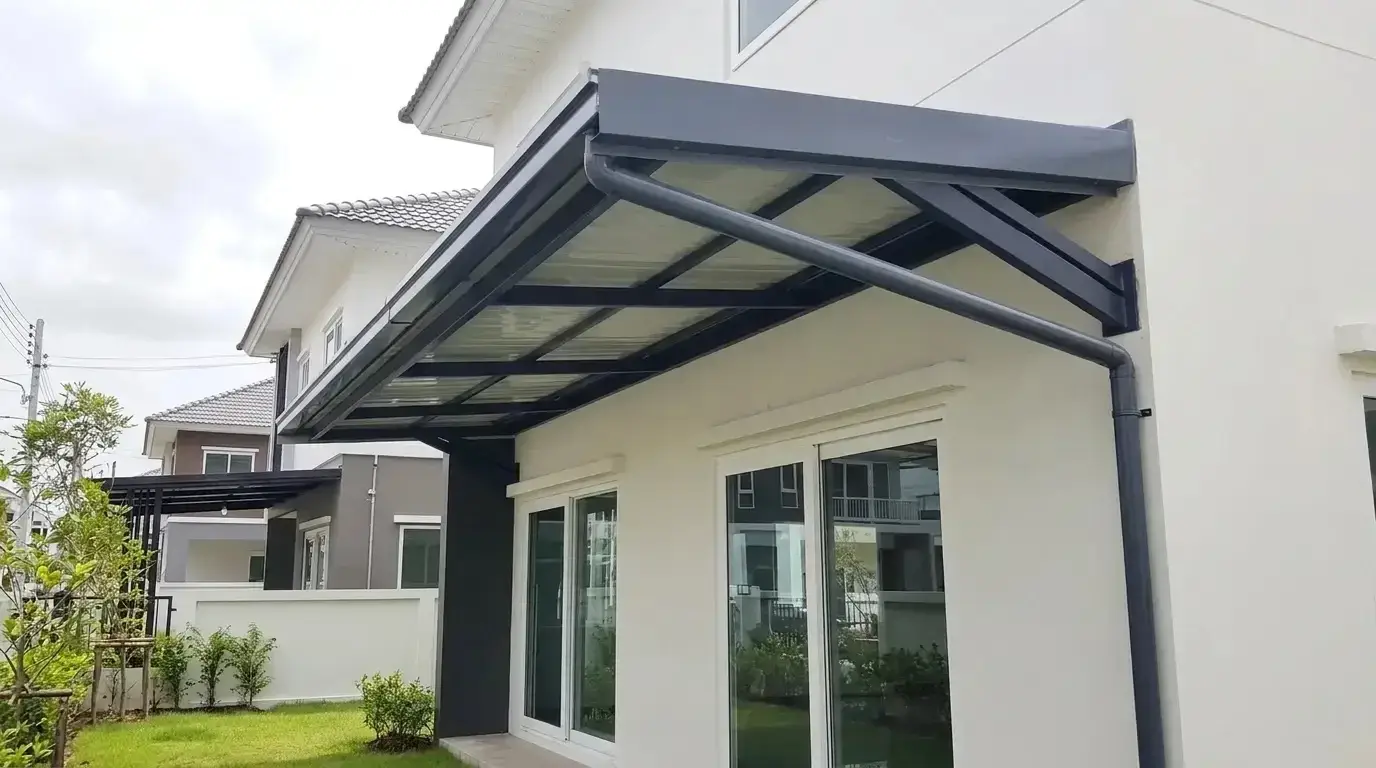 Awnings & Lean-to RoofsSteel-frame awnings and lean-to roofs over windows, doors and patios, built with the wall joint and drainage done properly.
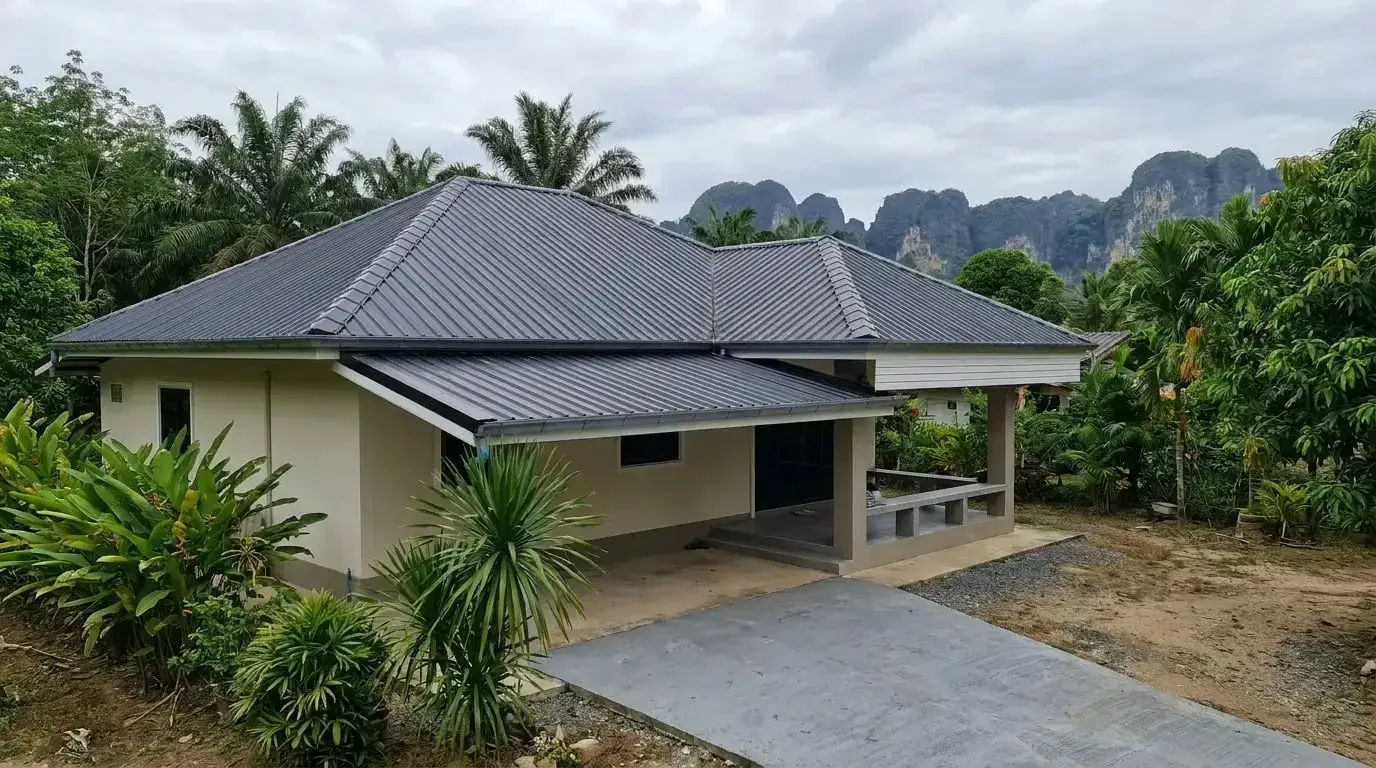 Metal Roofing & Re-roofingSteel roof frames and metal re-roofing for houses, with the existing structure checked before we recommend repair or replacement.
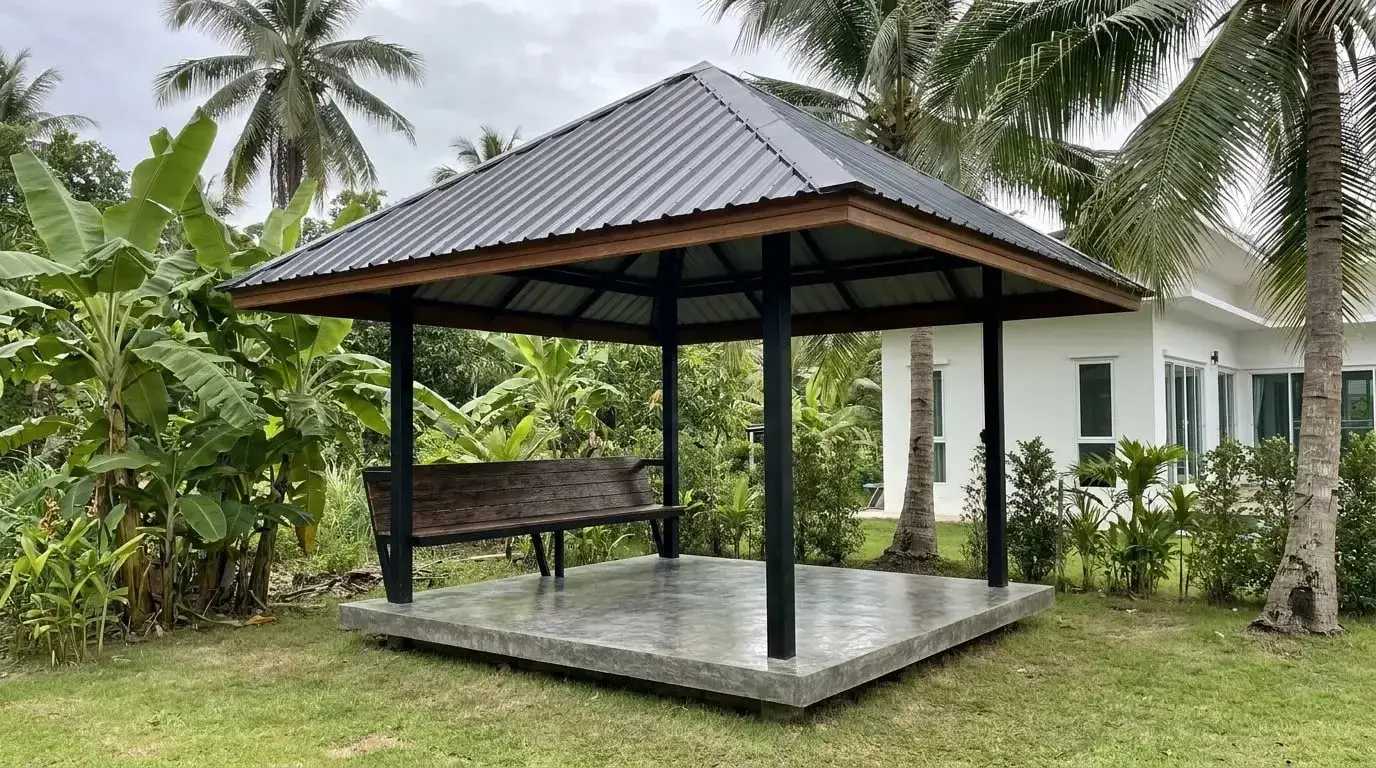 Garden Salas & PavilionsSteel-frame salas and pavilions with roof shape, materials and flooring chosen for how you’ll use them, after checking the ground and drainage.