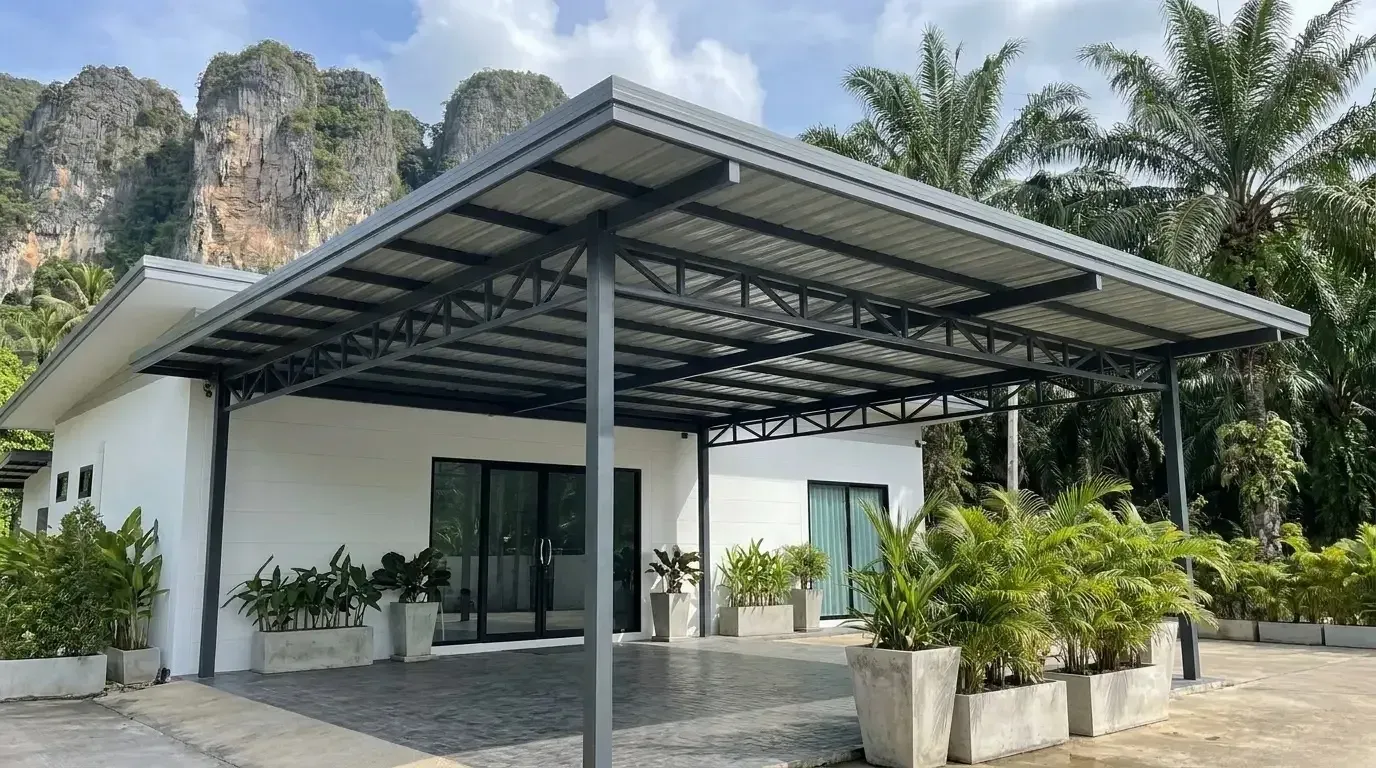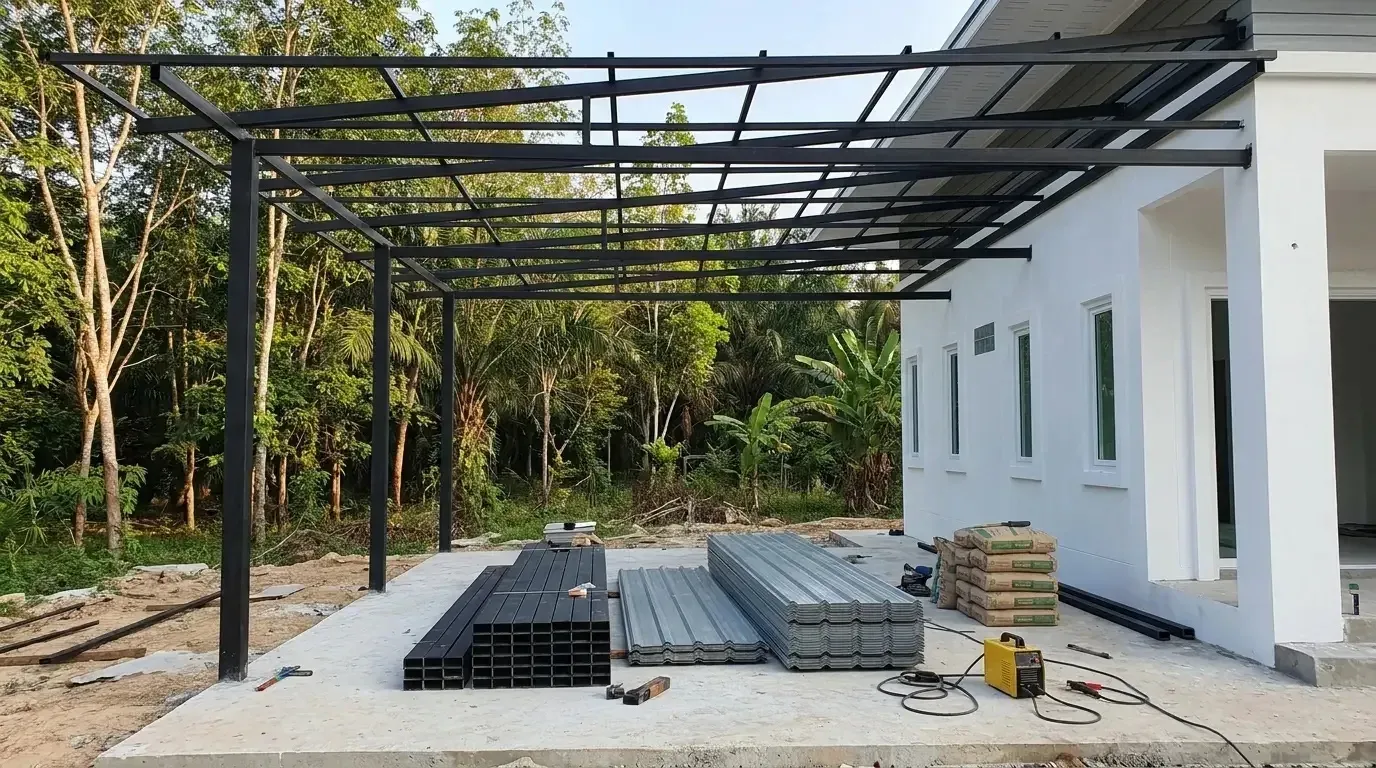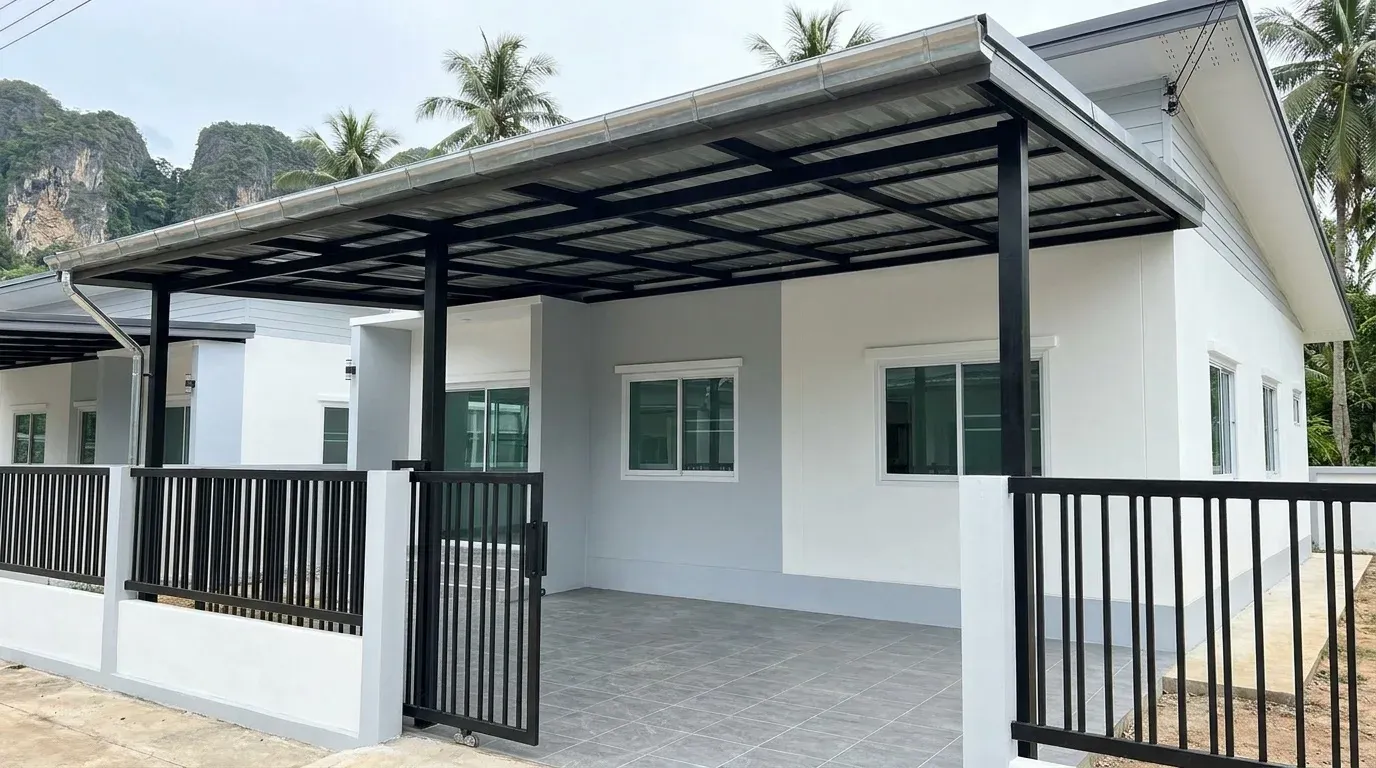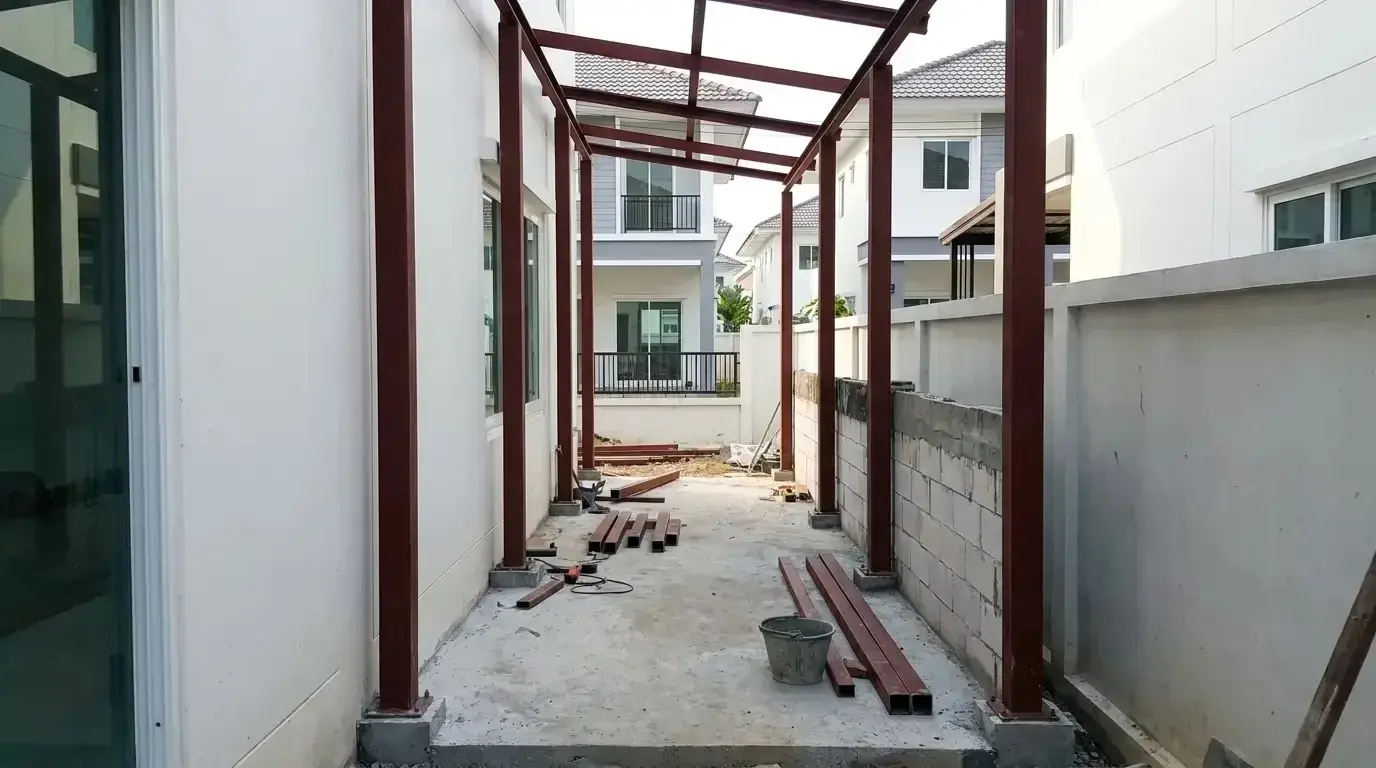
This is one of the questions we are asked most often, and the honest answer is: it depends, and the only people who can give you a definite answer for your property are the relevant local offices. We are a contractor, not lawyers or permit agents, and nothing in this article is legal advice.
What we can do is explain who to ask, what they are likely to want to know, and which private approvals often matter just as much as official ones.
Why there is no simple answer
Whether you need to notify or apply for permission can depend on:
- Where the property is: within a municipality or under a sub-district administration, and which zone applies
- What you are building: a freestanding shade structure, a roof attached to the house, an enclosed room, or an upper floor
- Size and height of the structure
- Distance from boundaries, roads and waterways
- Whether it changes the structure of the existing building
Rules and how they are applied can also change over time. For that reason we do not quote specific regulations. Check with the office before you start.
Who to ask
The local authority: thesaban or OrBorTor
In Thailand, day-to-day building control usually sits with the local administration. Depending on where you live, that is either:
- a municipality (thesaban), such as Krabi Town Municipality, or
- a sub-district administrative organisation (OrBorTor) in more rural areas
Visit or call the local office's engineering or public works section. Bring photos, the land title details or house registration, and a simple drawing with measurements. Ask plainly: does this structure need notification or permission, and what documents do you need?
If you are not sure which office covers your address, the village headman or a Thai neighbour will usually know.
Krabi Provincial Public Works and Town Planning Office
The provincial public works and town planning office deals with planning matters such as land-use zones. If your property is near the coast, in a zone with special controls, or you are unsure what is allowed on your land, it can be worth asking there as well, or asking your local office whether you should.
Take someone who speaks Thai
Government offices work in Thai. A Thai-speaking friend, your property manager or your lawyer will make the visit far more productive. Our guide to hiring a builder in Krabi as a foreigner has more on communicating with a contractor in English.
Private approvals that often matter more
Even when official permission turns out to be simple, private rules can stop a project.
Renters: landlord written approval
If you rent, get the landlord's approval in writing before any work that fixes to the building, digs footings or changes the look of the property. Include:
- What will be built, with a sketch or photo
- Where it will attach
- Who owns the structure when the lease ends
- Whether it must be removed when you leave
Share the approval with your contractor. We ask renters for it before we start.
Housing estates (moo baan) and their juristic person
Many housing estates have a juristic person (niti bukkhon) that manages common rules. These may cover roof colour, front setbacks, carport style and working hours for contractors. Ask for the rules in writing before designing anything.
Condominiums
Condo juristic persons generally control anything that changes the building's exterior or structure, including balcony enclosures, awnings and window grilles. Expect to need written approval, and possibly limited working hours and a deposit for damage to common areas.
Neighbours
Not a legal requirement, but worth a conversation, especially if roof water will fall near their boundary or the work will be noisy.
When to involve an engineer
A qualified engineer can calculate loads, check an existing structure and produce drawings that an office may ask for. It is worth involving one when:
- The roof span is large, or you want a cantilever roof with no front posts
- The new structure attaches to a wall or beam you are not sure can carry it
- You are adding a mezzanine or any upper floor
- The site is on a slope, soft ground or fill
- A room is being enclosed, such as a kitchen extension
- The office asks for engineered drawings
Rong will tell you at the survey if he thinks a job needs an engineer's input. The joint between a new structure and an old house needs particular care, because the two can settle and move differently.
A cautious step-by-step
- Describe the project in a simple sketch with measurements
- Get landlord, estate or condo approval in writing if relevant
- Ask the local thesaban or OrBorTor office whether notification or permission is needed
- If advised, check with the provincial public works and town planning office
- Involve an engineer if the structure or the office requires it
- Keep copies of all approvals and share them with your contractor
- Only then confirm the start date
How this affects cost and timing
Approvals can take time, and engineered drawings cost money. It is better to know early. Our free survey and written quote can help you prepare for the office visit. See our free site survey page and the carport price guide for how quotes are put together.
Next step
If you are still at the planning stage, send photos and your location through LINE on our contact page. We can describe the structure clearly so you know what to ask the office.