
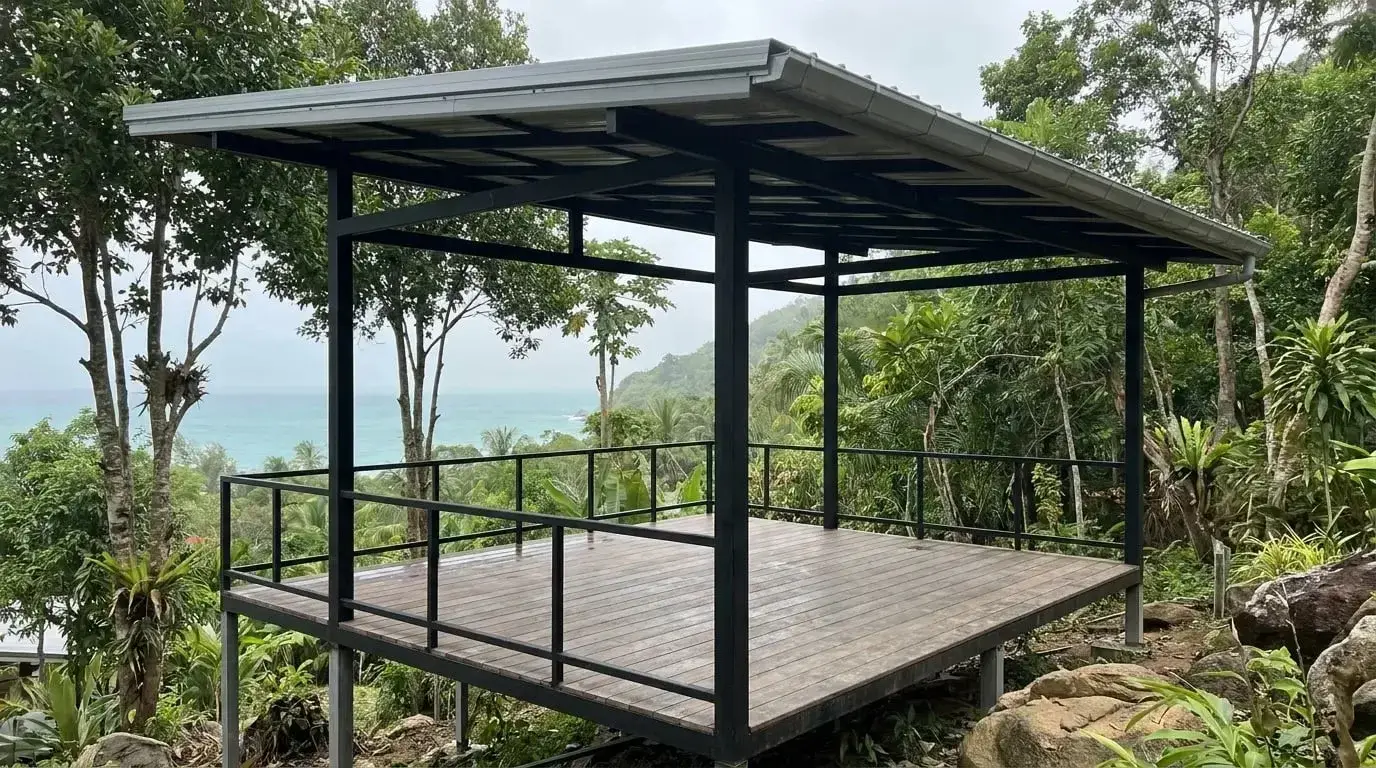
Ko Lanta is unlike the rest of Krabi from the first step: the crew, the truck and every length of steel have to cross the water by car ferry. Many buildings on the island are bungalows, resorts, guesthouses, private villas and beach bars that face the sea and the wind head-on.
Island jobs mean thinking about three things at once: getting people and materials across on the ferry, salt air all year round, and strong monsoon winds that lift roofs and awnings. Put plainly, on Lanta the cheap option that needs the crew brought back over for repairs usually ends up costing more than doing it properly the first time.
We cover the whole island, from Sala Dan at the northern end down the west-coast beaches, as well as Ko Lanta Noi and Ko Klang. Whether you run a resort, own a villa you let out, or rent a house long-term with the owner’s approval, the approach below applies.
What people here usually ask us to build
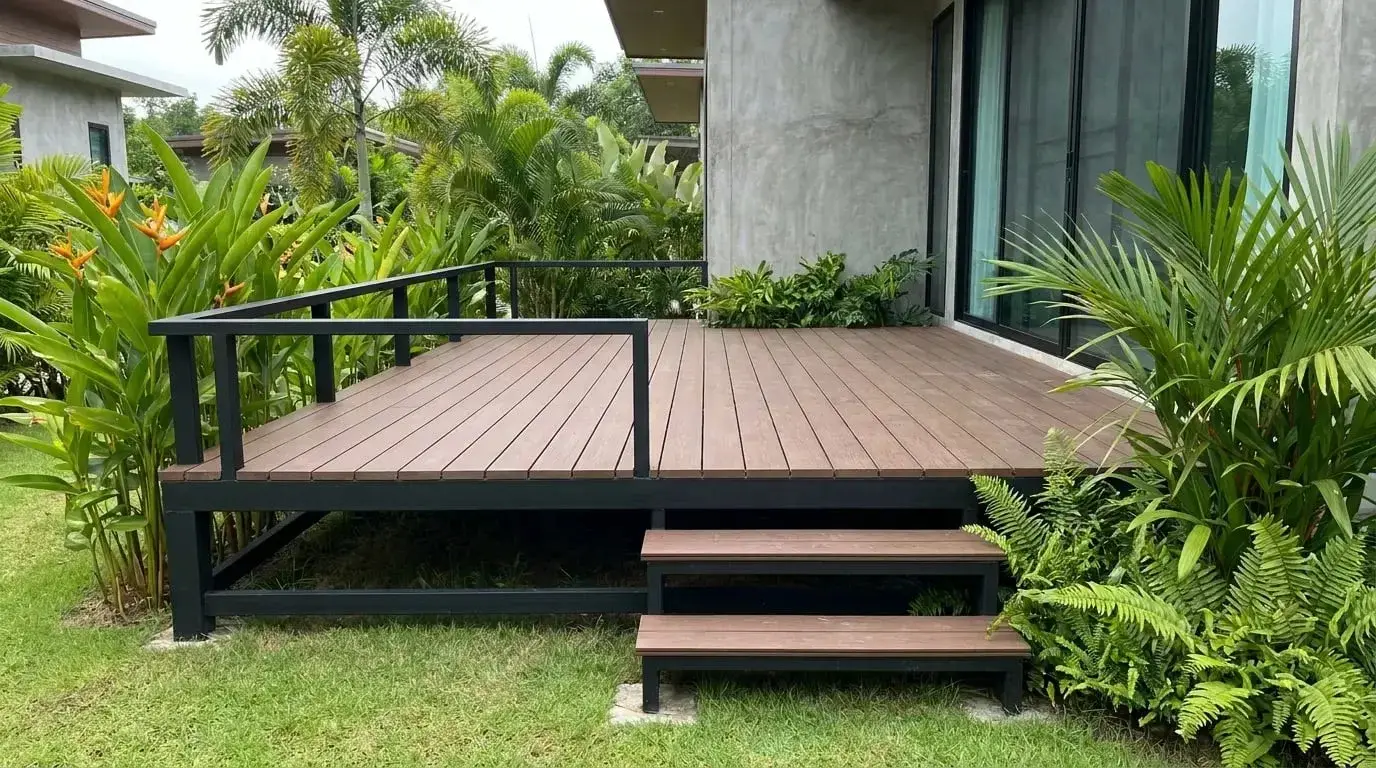 Composite Decking on Steel Frames →Decks and walkways linking bungalows rot fast in real timber on a damp, salty island. Composite boards on a steel frame are far easier to maintain, but the frame underneath is hard to inspect later, so its rust protection must be done right at installation.
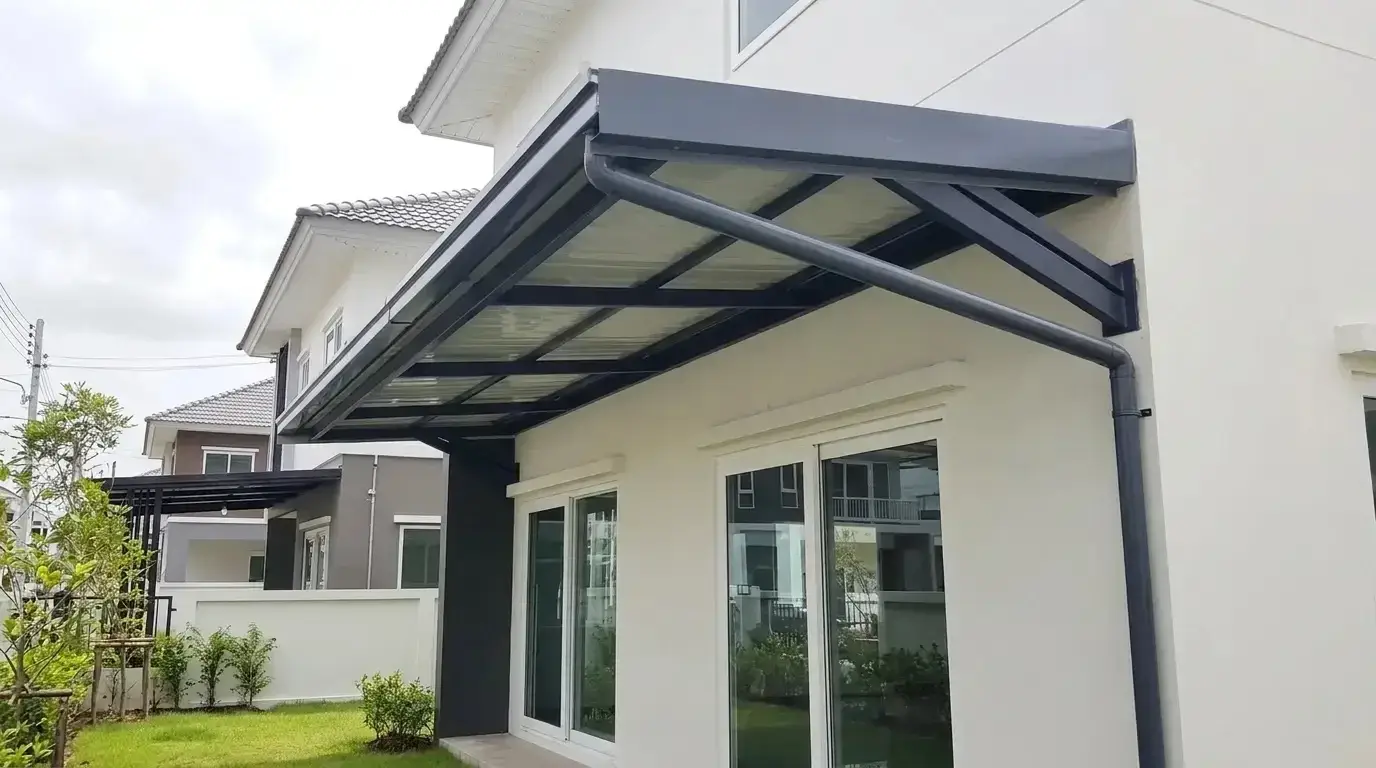 Awnings & Lean-to Roofs →Room fronts and beach bars need awnings, but on Lanta what destroys them is wind lifting from below, not weight pressing down. The number of fixing points matters far more than on the mainland.
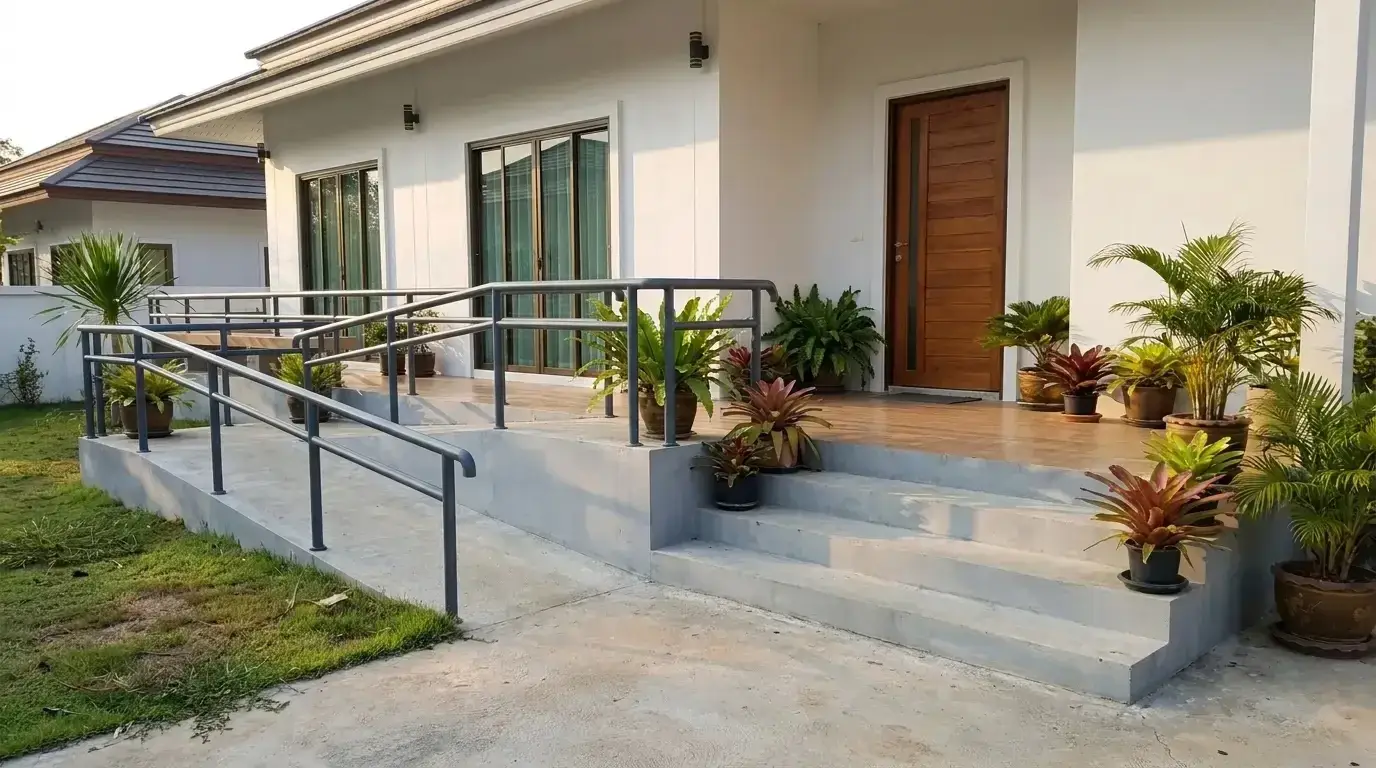 Handrails & Safety Rails →Resorts with raised walkways, steps down to the beach or hillside balconies see guests walking wet and sandy all day. Railings need to be firmly anchored and easy to rinse free of salt.
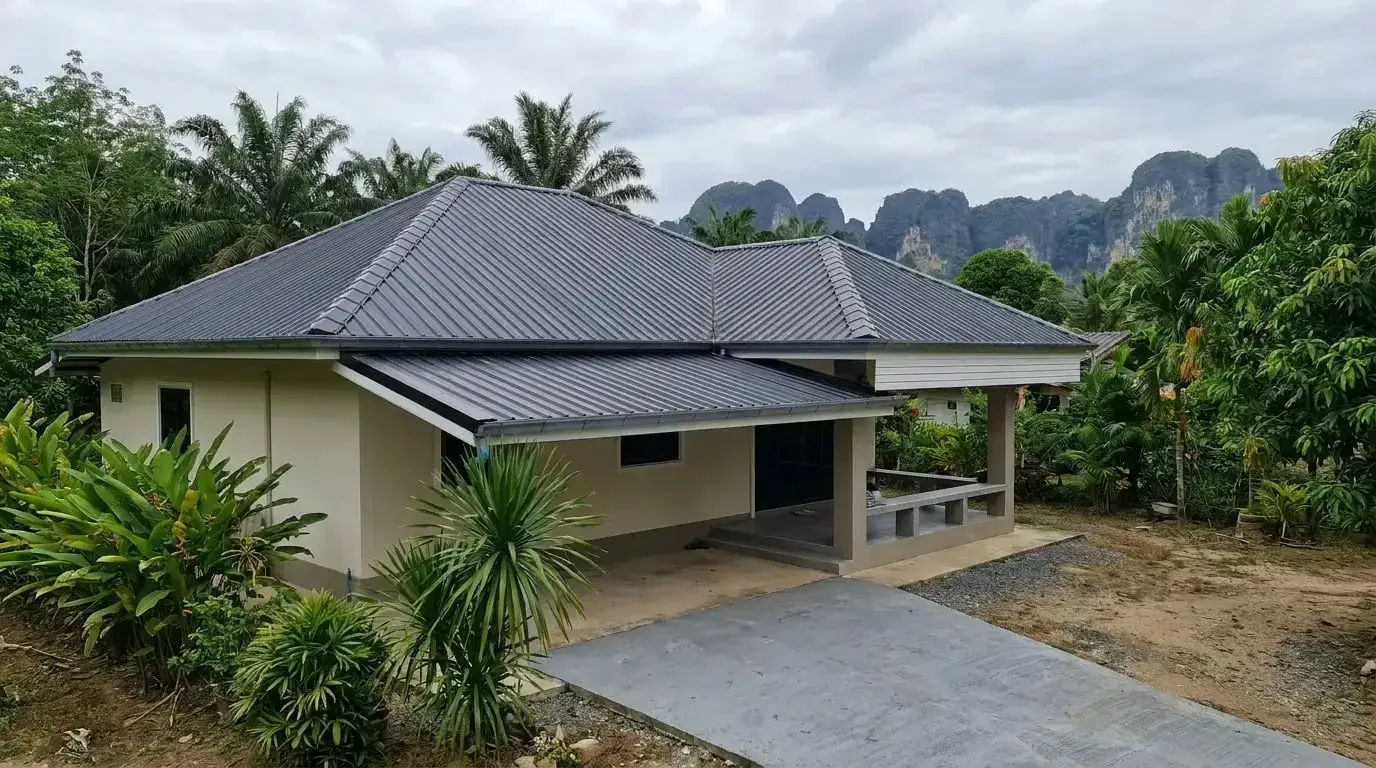 Metal Roofing & Re-roofing →Bungalow roofs that have faced the sea wind for years tend to have lifted sheets, loose screws or a corroding frame. Stripping and re-roofing with extra fixings is the job many island properties end up needing.
Steel work on Ko Lanta: wind uplift, year-round salt and the real cost of repairs
Lanta faces the open Andaman, and during the south-west monsoon (roughly May to October) strong winds come through in bursts. What most often damages roofs and awnings is not weight pushing down but wind getting under the sheets and lifting. Open cantilevered awnings and long eaves are most at risk. Sheet screw count, the fixing of frame to posts, and posts to footings all need to be tighter than on the mainland. If anyone offers to cut the number of screws to lower the price, on the island you should say no.
The salt is there all year, not just in one season. And a repair on Lanta is never just materials and labour; there is the ferry fare, travel time, and sometimes waiting for a crossing or for the wind to drop. So we recommend putting the budget into rust protection and fixings on the first job, then inspecting the steelwork every year before the monsoon arrives.
For resorts, the trade-off is that the calm season, when roof work is safest, is also high season, when you are full. The quiet months tend to be the windy ones. Island jobs are harder to reschedule than mainland ones, so agree a zone-by-zone plan at the survey. If you or the owner live abroad, our English-speaking admin can coordinate on LINE, and your manager or a member of staff can join the site visit for the finer details.
- Long awnings and eaves need more fixings than on the mainland. Ask where the extra fixings go.
- Check roof screws for looseness or rust every year before the monsoon.
- Rinse salt off steel frames and railings with fresh water regularly.
- Choose rust protection carefully at the start; every island repair adds ferry and travel cost.
- If a resort has several jobs, group them into one trip to cut ferry crossings.
Getting there and booking a site survey
About 70–80 km from Krabi Town, including the car ferry crossing
On Lanta, photos on LINE matter more than anywhere else we work. Send a wide shot of the building, close-ups of damage or fixing points, rough measurements, a location pin, and when you are full or quiet. Rong can then tell you what needs to go across before paying for the first ferry.
Working on Ko Lanta means taking the steel truck over on the car ferry, so timing depends on crossings, vehicle queues in high season and monsoon weather. The ferry fare for the materials truck and the round-trip time are a clear extra cost over mainland work, so island jobs often run over several consecutive days or bundle several tasks into one trip. There is a travel fee for Ko Lanta, stated clearly in the quotation before you agree. We confirm a survey date after chatting on LINE.
Subdistricts we cover in Ko Lanta
- Ko Lanta Yai
- Ko Lanta Noi
- Ko Klang
- Khlong Yang
- Sala Dan
Permits and permission
In Ko Lanta district, ask the subdistrict municipality (thesaban tambon) or Subdistrict Administrative Organisation (OrBorTor) for the subdistrict the building is in about building or extension permits. Guesthouses, resorts and rental villas may face extra requirements compared with a private home, and beachfront land can carry setback or height restrictions. Ask before starting, because undoing work on an island is expensive. At provincial level, contact the Krabi Provincial Public Works and Town Planning Office. This is general guidance, not legal advice. Rules differ between local offices and change over time, so confirm with the office that covers your address before any work starts. If you rent, get the landlord's approval in writing first.
Questions from Ko Lanta
Do you work on Ko Lanta, and how is the travel fee worked out?
Yes. Conditions differ from the mainland because the car ferry and travel time have to be covered, so there is a travel fee, stated clearly in the quotation before you agree and not added later. Send site photos on LINE first for an initial assessment.
Our resort is open. Can you work while guests are staying?
Many jobs can be done with a shared plan, for example one zone of rooms at a time, and avoiding noisy work early morning and evening. It has to be agreed at the survey, because island jobs are harder to reschedule.
The wind wrecked our awning on Lanta. Can a new one be made stronger?
The weakness is usually the fixings: roof screws, frame-to-wall connections, or a frame that projects too far. It can be rebuilt more securely, but we first check how much load the wall or posts can take. Sometimes shortening the projection helps more than adding steel.
I own a villa on Lanta but live abroad. How do we handle the quote and deposit?
Send photos, rough measurements and a location pin on LINE, in English if you like; our English-speaking admin arranges the free survey, and your property manager, caretaker or a friend can meet Rong there. You receive a written itemised quotation, and a 30% deposit is paid before work starts. If you rent the property, we need the owner’s written approval first.
When is the best time for work on Ko Lanta?
Calm weather makes the crossing and roof work safer, but it coincides with high season. No period is perfect for everyone, so contact us well ahead to find a window that suits both sides.
Useful reading for Ko Lanta
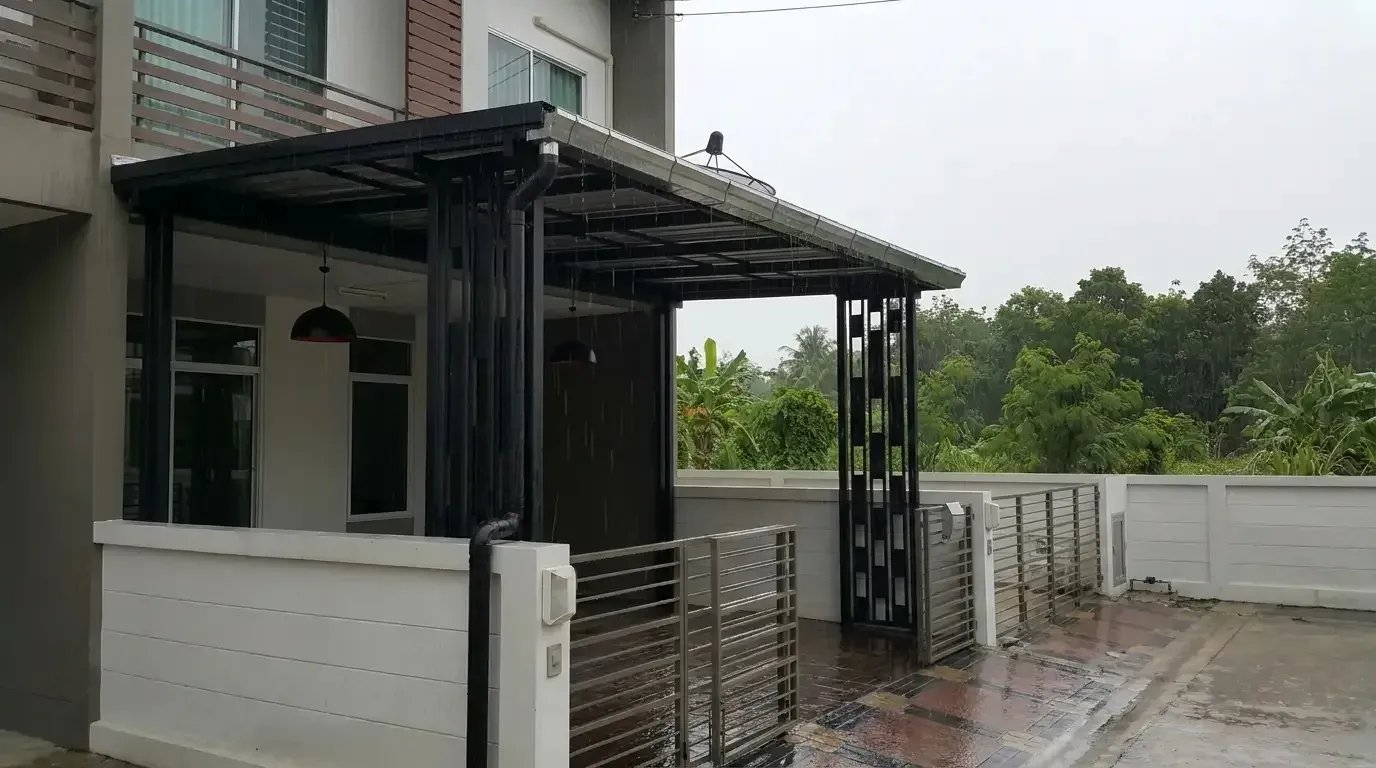 Roof Extensions That Survive Krabi's Rainy SeasonHow to build a roof extension that copes with Krabi's rainy season: roof slope, gutter sizing, flashing against the old house and when to schedule work.
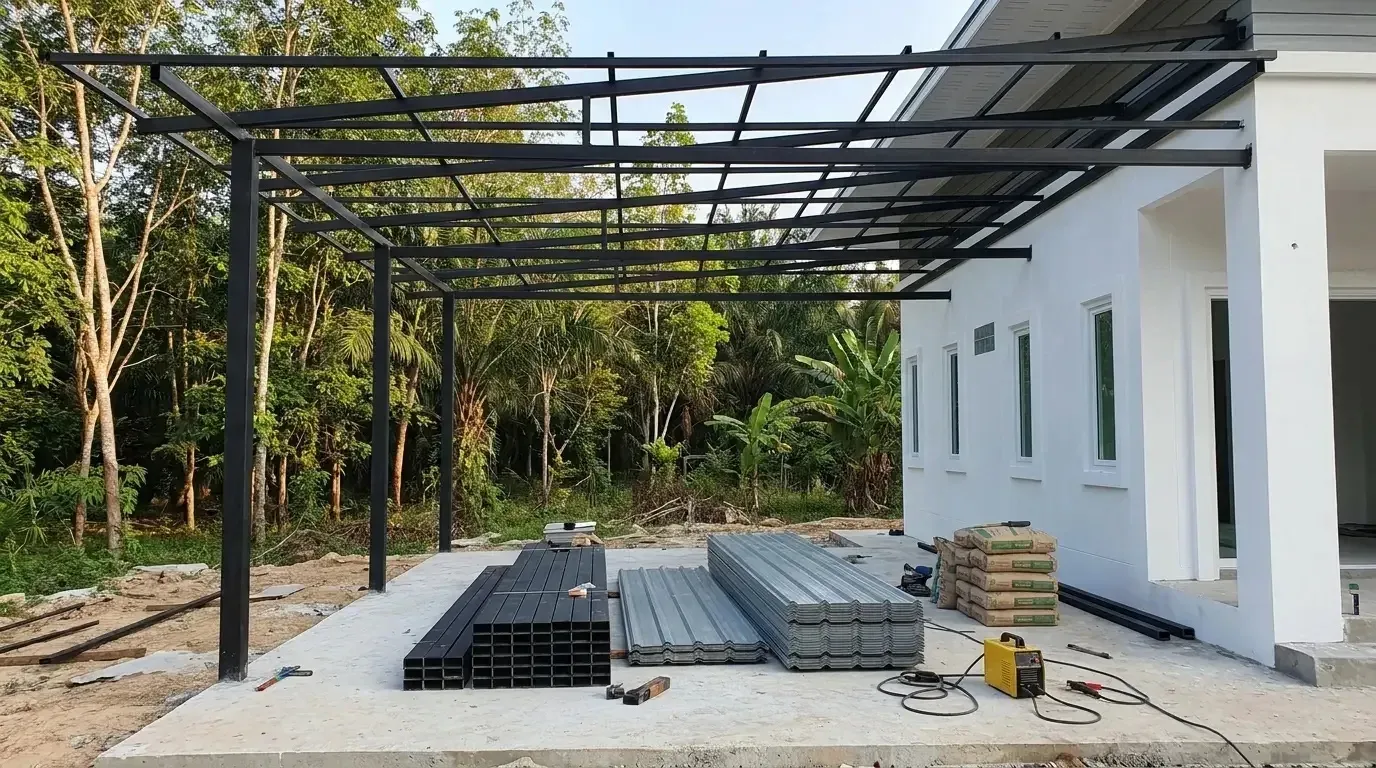 Labour-Only vs Full Contract for Home Projects in ThailandLabour-only or full contract for a home project in Thailand? Who buys materials, where the savings are real, the risks, and how we handle both options.
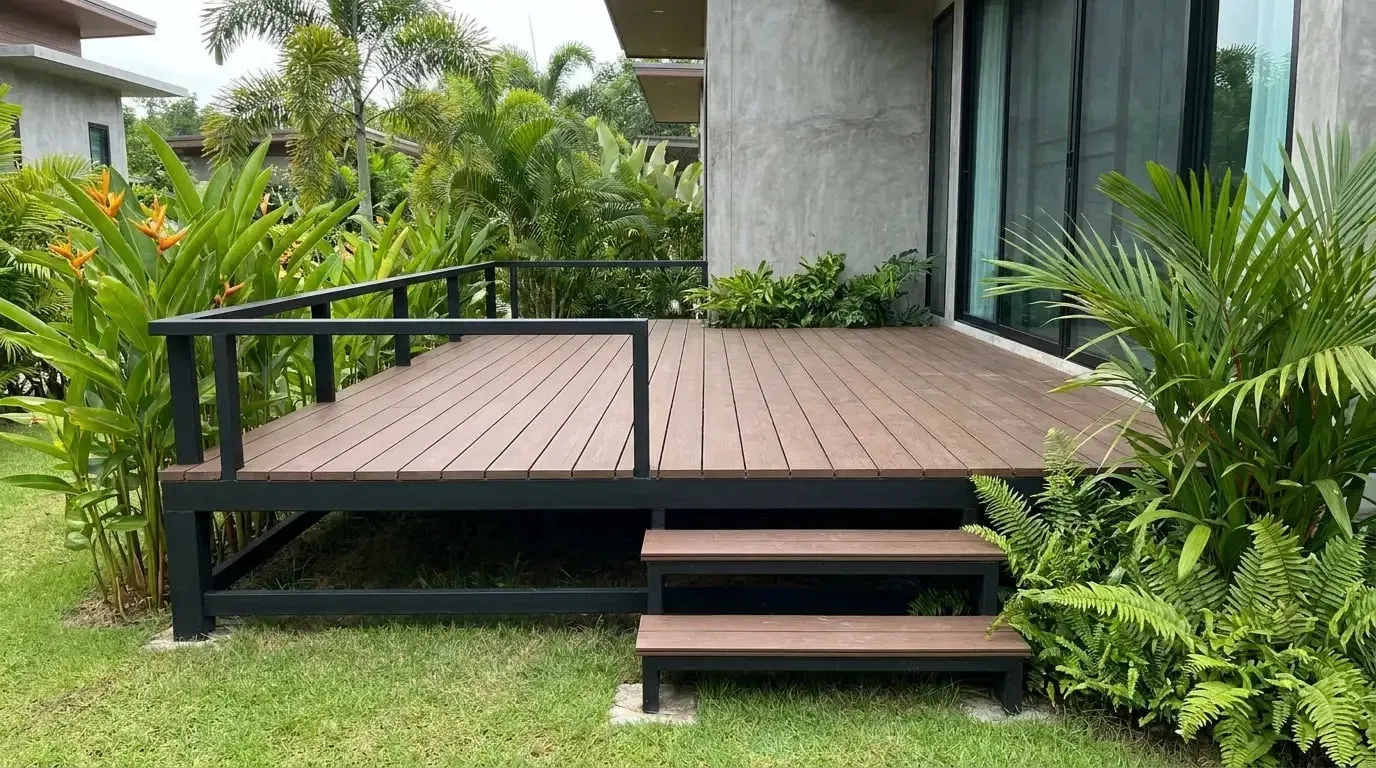 Shade for Villa Terraces and Pool Decks in KrabiShade options for villa terraces and pool decks in Krabi: cantilever canopies, batten pergolas, salas and composite decking on steel, in heat and salt air.