
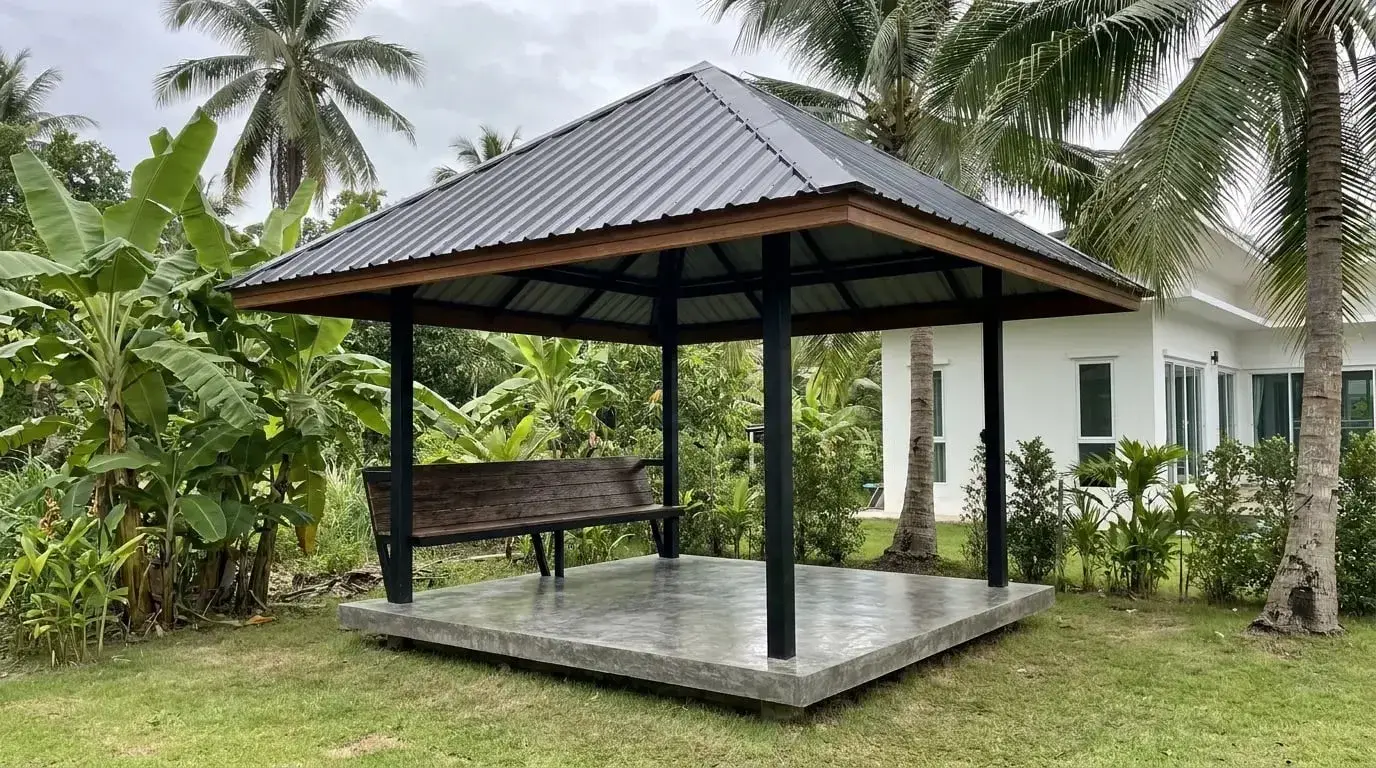
A sala (the open-sided Thai garden pavilion) that gets used isn’t just one that looks good in photos. If it’s too hot to sit under in the afternoon, the floor is muddy after rain, or the post bases rust within a few wet seasons, it becomes somewhere to dump garden furniture. So we start with how you’ll use it: evening drinks, family meals, a yoga spot, or a shaded corner for resort guests. Then we choose the shape and materials.
On the survey Rong checks whether the ground is firm or recently filled, whether water pools there after rain, where the afternoon sun comes from, whether big trees could drop branches on it or clog gutters with leaves, and how far it is from the house and paths. Close to the sea, salt air goes into the choice of steel and rust protection from the start.
Common mistakes are building on a spot lower than its surroundings so water runs in, using thin uninsulated metal sheet in full sun so it’s an oven underneath, and making the roof too low so it feels cramped. You can hire us for labour and materials or labour only. Send a wide photo of the spot, the ground, rough dimensions and a location pin on LINE to get started.
- Jobs start from
- 10,000 THB
- Team experience
- 30+ years
- Site survey
- Free
- Steel grade
- Your choice
Designs and options
Gable roof sala
The familiar shape. Rain runs off both sides and the high roof lets heat escape better than a flat one. Suits most houses and gardens, though it uses more steel than a single slope.
Hip roof or Thai-style sala
Slopes on every side, so rain is kept off all round, and it reads clearly as a traditional sala. Popular in resorts and gardens that want that atmosphere. Cutting and finishing the roof corners takes more work, so it usually costs more than a gable.
Single-slope modern pavilion
Simple, uses less steel and suits contemporary villas. The downside is the low side is lower, and if the slope is too shallow water drains slowly. The slope should send water away from where people walk.
Sala with a raised floor or deck
Lifting the floor off the ground keeps it dry after rain and deters some insects. It can be fibre-cement board decking or a concrete floor. If you want a floor, plan it together with the sala from the start so posts and floor frame line up.
Materials: the honest pros and cons
Metal sheet with PU foam backing
Near the sea: depends on specPros
- Cuts heat and rain noise, so it’s much more comfortable underneath
- Neat finish from below
Worth knowing
- Costs more than plain metal sheet
- Poor joints can let water soak into the foam
Since a sala is for sitting in, Rong usually recommends insulated roofing over plain sheet. Near the sea, pick a well-coated grade for the steel skin.
uPVC (vinyl) roofing sheets
Good near the seaPros
- The sheet can’t rust
- Quiet in the rain and holds less heat than steel
Worth knowing
- Dearer than metal sheet
- Purlins must follow the maker’s spacing
A good fit for resorts and beachside homes, but the posts and steel frame still need thorough rust protection.
Roof tiles on a steel frame
Good near the seaPros
- Cooler and quieter than metal
- Looks like a proper sala and matches tiled houses
Worth knowing
- Heavier, so the frame must be bigger
- Battens must be spaced to suit the tile type
Tiles don’t rust, but the steel battens and frame beneath do need protection. If you have a particular tile in mind, send a photo or the product name on LINE.
Structural steel frame (posts, beams, rafters, purlins)
Near the sea: depends on specPros
- Strong, with no rot or termites like timber
- Can be clad or painted to look like wood
Worth knowing
- Needs rust primer and top coat everywhere, welds included
- Post bases touching soil or standing water rust quickly
You choose the steel grade, sizes and rust-protection system. Rong explains the pros and cons first and your choice is written into the quotation.
How the price is worked out
Garden salas start from 10,000 THB, but there is no fixed price. It depends on your site: the size, roof shape and roofing material, whether footings and a floor are needed, any decorative finishes, and the price of steel at the time. Rong does a free site survey, then gives you a written itemised quotation. Remote or boat-access locations such as Ko Lanta and Ko Phi Phi carry a travel fee, which is shown in the quotation before you agree to anything.
There is no fixed price. It depends on your site and on steel and material prices at the time. The site survey is free.
Included
- Free site survey: checking ground, drainage and sun, and suggesting a shape and materials
- Written itemised quotation
- Post footings and steel frame with rust primer and top coat
- Roofing in the material you choose
- Floor or deck, if listed in the quotation
- Clearing away offcuts and debris when the job is finished
Not included
- Materials, if you choose a labour-only contract
- Electrical work, lights and ceiling fans (ask on LINE with photos)
- Landscaping, filling or levelling ground, or paths to the sala, unless listed in the quotation
- Gutters and downpipes, unless listed in the quotation
- Furniture and decoration
How a job with us runs
- 1
Send photos on LINE
Photos plus a location pin. Rong tells you early if the idea is realistic.
- 2
Free site survey
He checks the walls, the ground and where the rain will go — the things photos can’t show.
- 3
Written, itemised quote
Full contract (labour + materials) or labour-only. Nothing hidden in a lump sum.
- 4
30% deposit, then work starts
Only once you have agreed the design and price. Payment is by cash bill, no VAT invoice.
- 5
Walk-through before handover
We check every point with you. 1-year warranty under the conditions in the quote.
How long it takes
It depends on the size, roof shape, whether footings and a floor are needed, and the weather. New concrete footings have to cure before the frame goes up, and in the rainy season work may stop and start. Rong gives a timeline after the survey and it goes in the quote.
1-year warranty: what it covers
One year, under the site-specific conditions written into your quotation.
Covered
- Installation workmanship by our crew
- 1-year warranty, under the site-specific conditions written in your quotation
Not covered
- Damage from falling branches or trees, and unusually severe weather or natural disasters
- Anything the quotation does not list as covered by the warranty
Garden Salas & Pavilions: questions we get asked
Steel or timber sala: which is better in Krabi?
Timber feels natural, but in Krabi’s humidity it can rot and attract termites, so it needs regular care. Steel is strong and termite-proof, but needs good rust protection and repainting from time to time. If you love the look of wood, a steel frame with timber battens or a wood-effect finish gives you both.
What roofing keeps a sala cool?
Insulated roofing such as foam-backed metal sheet, uPVC sheets or tiles is clearly cooler than plain metal sheet. Shape matters too: a high, open roof releases heat better than a low, flat one. If the sala takes direct afternoon sun, don’t roof it entirely in polycarbonate.
Can the sala have a composite or fibre-cement deck floor?
Yes, and it’s best planned together with the sala, because the floor frame and posts need to line up. A raised floor also stays dry after rain. Our Composite Decking on Steel Frames page has more on flooring.
Can we build on recently filled land?
New fill can still settle, so posts without proper footings can lean or crack the floor. Rong checks the ground and tells you what kind of footings it needs. If the spot floods often, sort out the drainage before or alongside the build.
I’m not in Krabi right now. Can I get a rough idea before a site visit?
Yes. Send a wide photo of the area, close-ups of the wall or beam it would attach to and the ground, rough measurements and a location pin on LINE. Photos explain most of the job, and Rong can tell you whether the idea is workable. Messages in English are welcome; our English-speaking admin replies and arranges the free site survey, which a firm price still needs. If you can’t be there, a friend, landlord or property manager can meet Rong on site.
How does payment work? Do you give a tax invoice?
We take a 30% deposit before work starts, and the balance is paid as set out in the quotation. You get a cash bill, but we do not issue VAT or tax invoices. If your company or landlord needs a tax invoice, tell us at the start so there are no surprises.
Read this before you build
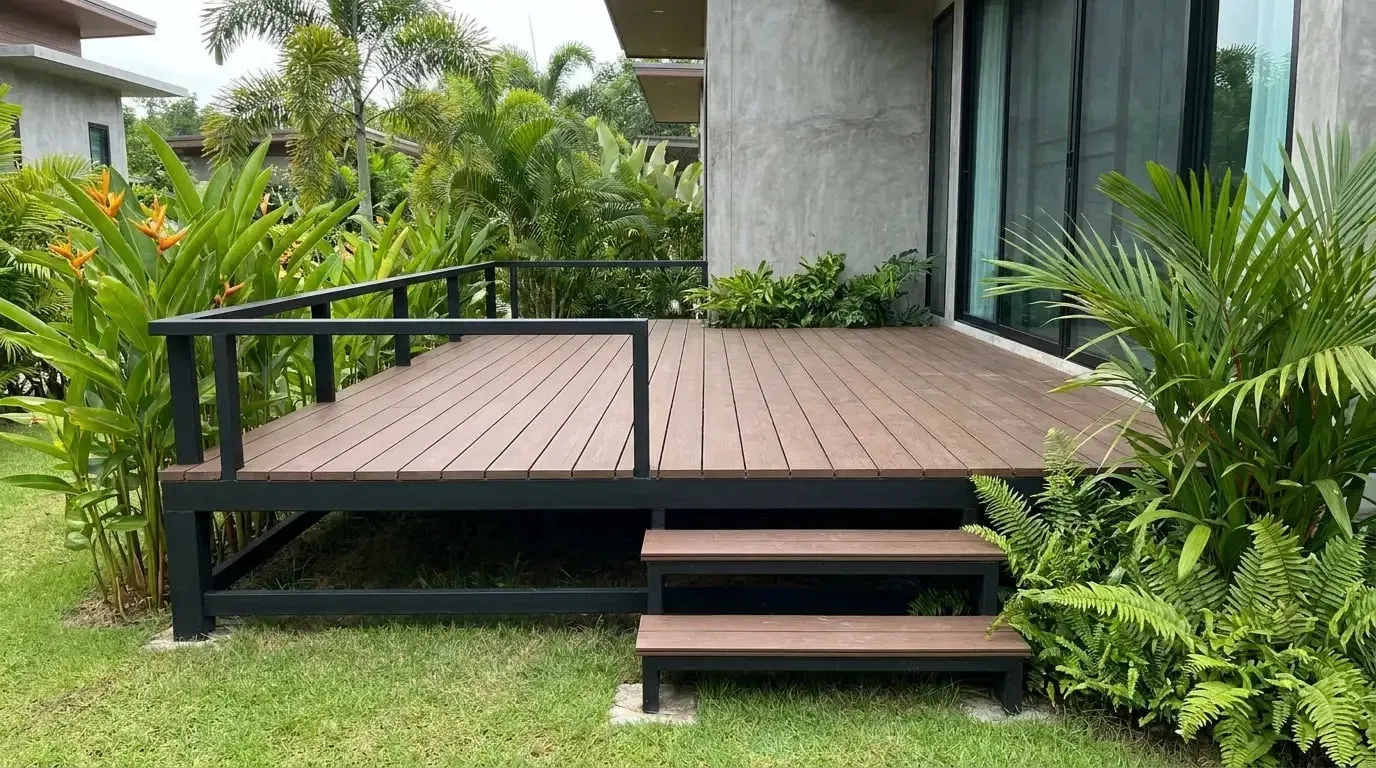 Shade for Villa Terraces and Pool Decks in KrabiShade options for villa terraces and pool decks in Krabi: cantilever canopies, batten pergolas, salas and composite decking on steel, in heat and salt air.
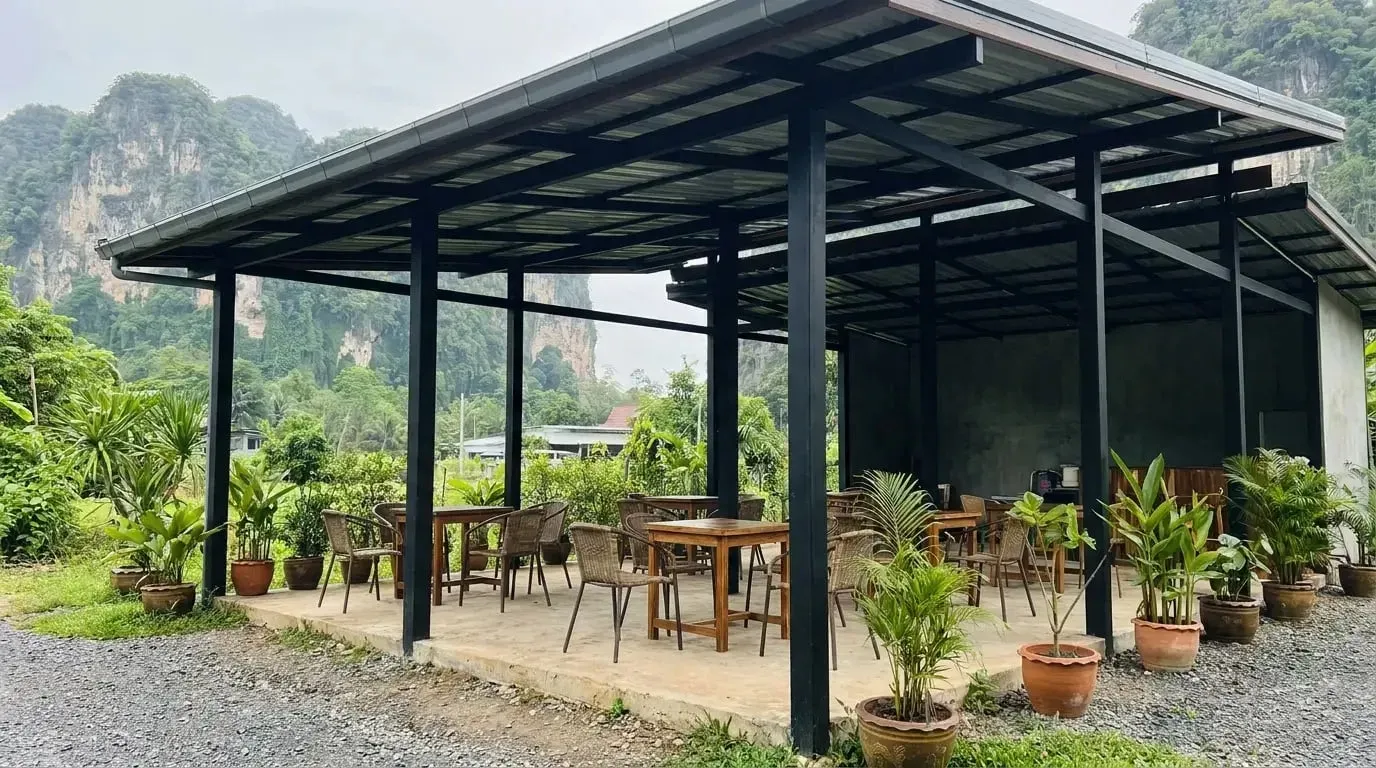 Roofing and Steel Work for Resorts, Bungalows and Cafés in KrabiRoofing and steel work for resorts, bungalows and cafés in Ao Nang and Ko Lanta: scheduling around guests, noise, access, ferry travel fees and receipts.
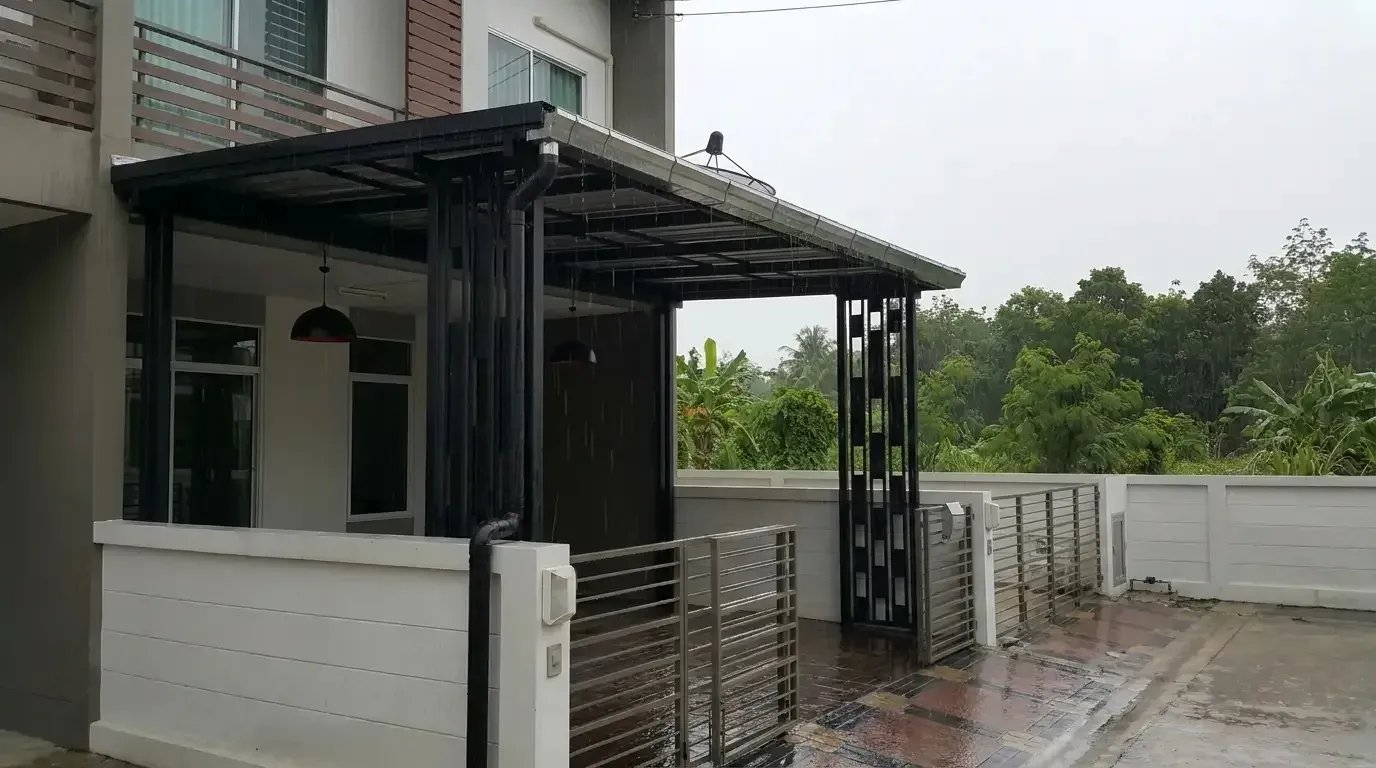 Roof Extensions That Survive Krabi's Rainy SeasonHow to build a roof extension that copes with Krabi's rainy season: roof slope, gutter sizing, flashing against the old house and when to schedule work.
Related services
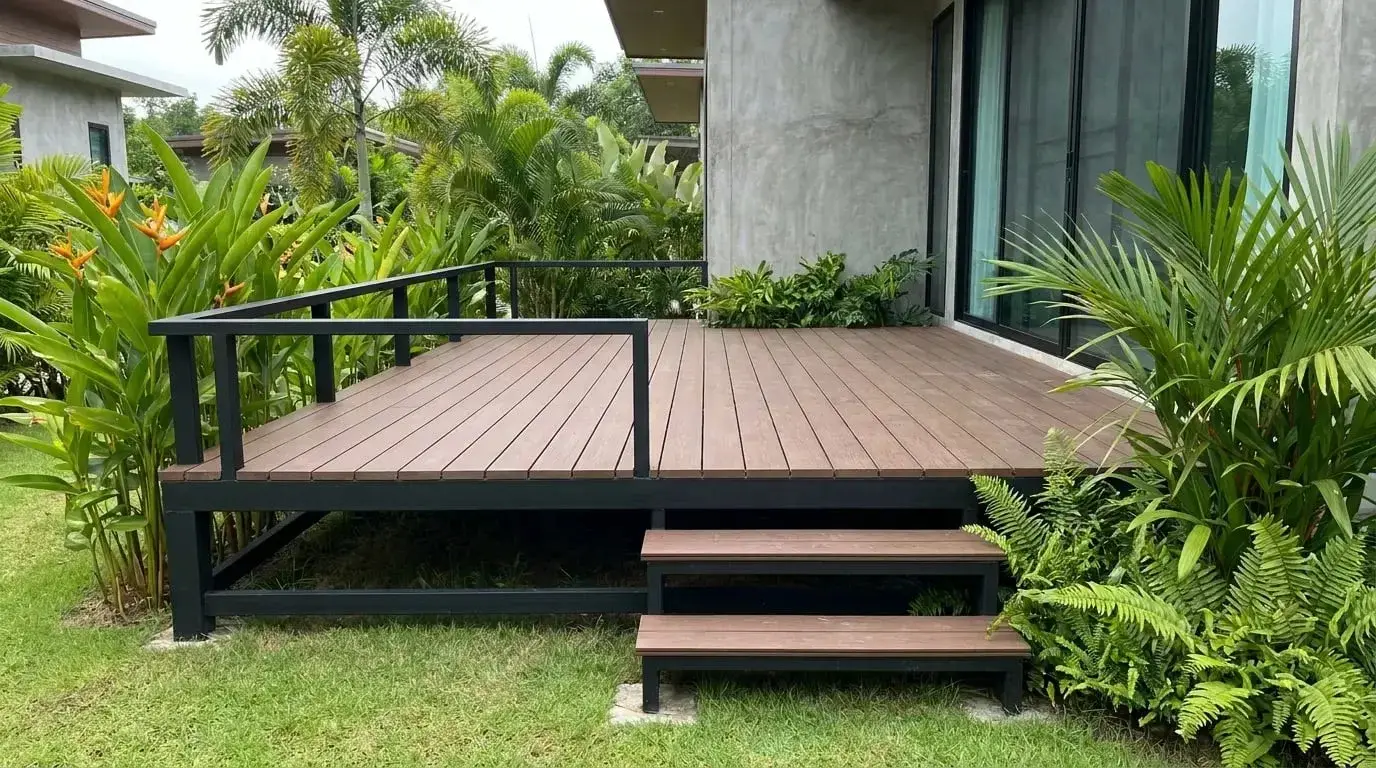 Composite Decking on Steel FramesRaised decks, pool surrounds and walkways built with wood-look boards on a rust-protected steel frame that won't bounce or rot.
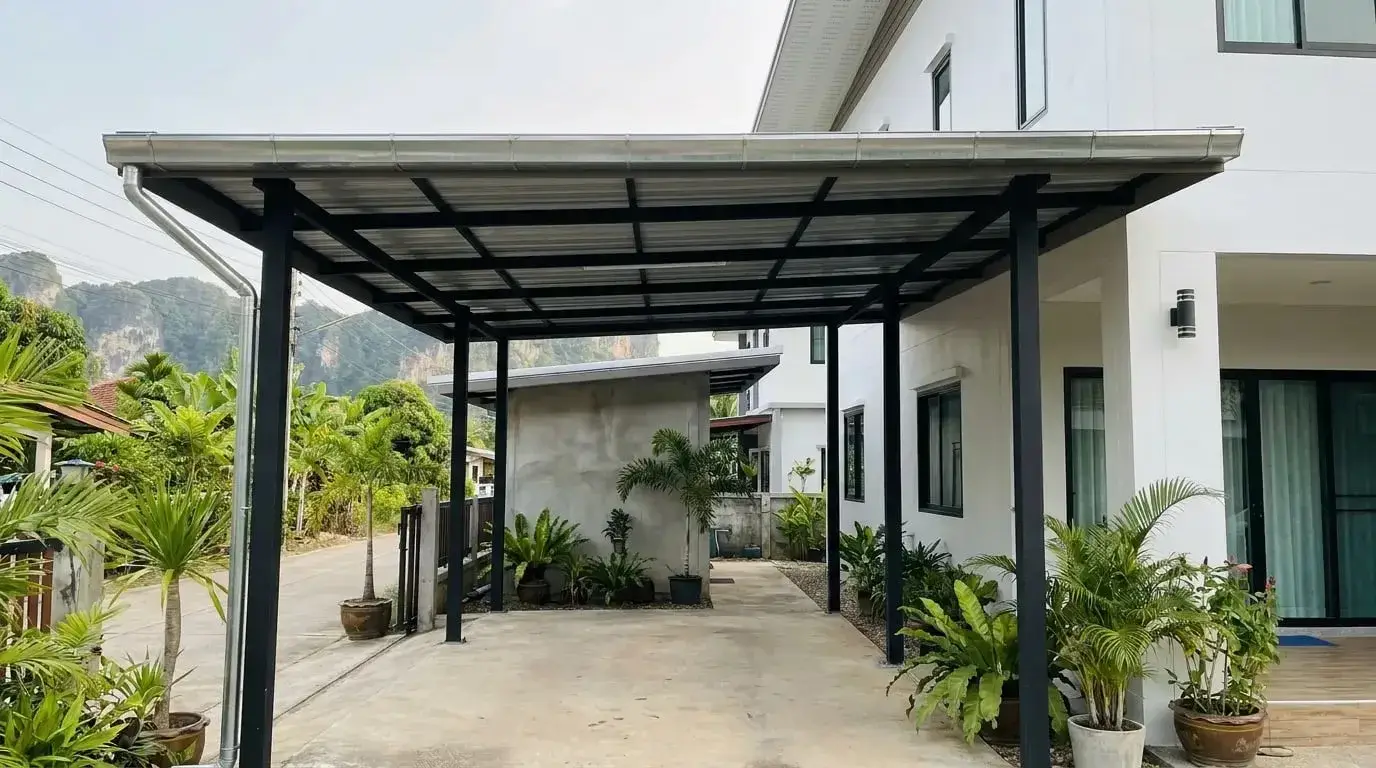 Covered WalkwaysSteel-frame covered walkways between houses, carports, kitchens and resort buildings, with the joints at both ends done properly.
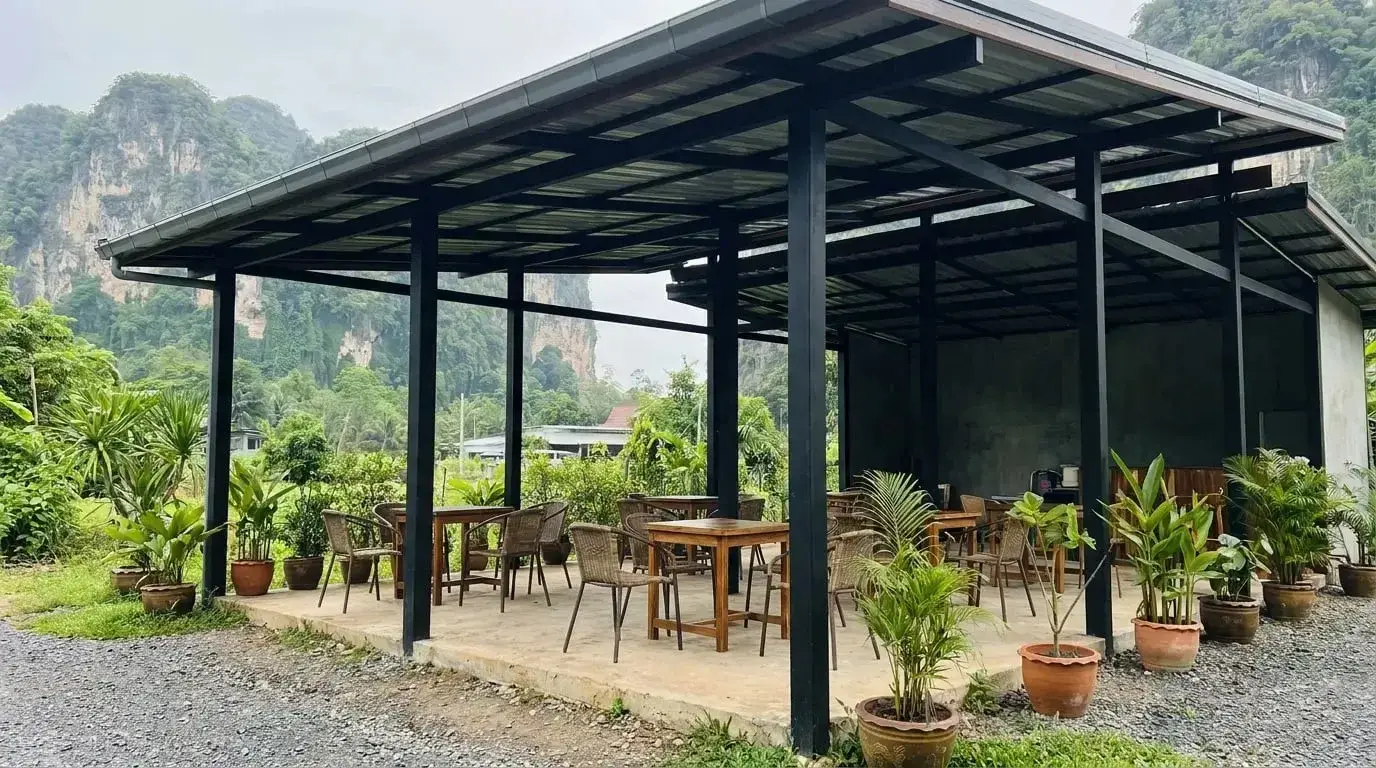 Roofing for Resorts, Shops & CafésRoofs, awnings and steel frames for beachside resorts, bungalows, shops and cafés, planned around rust, wind and keeping the business open.
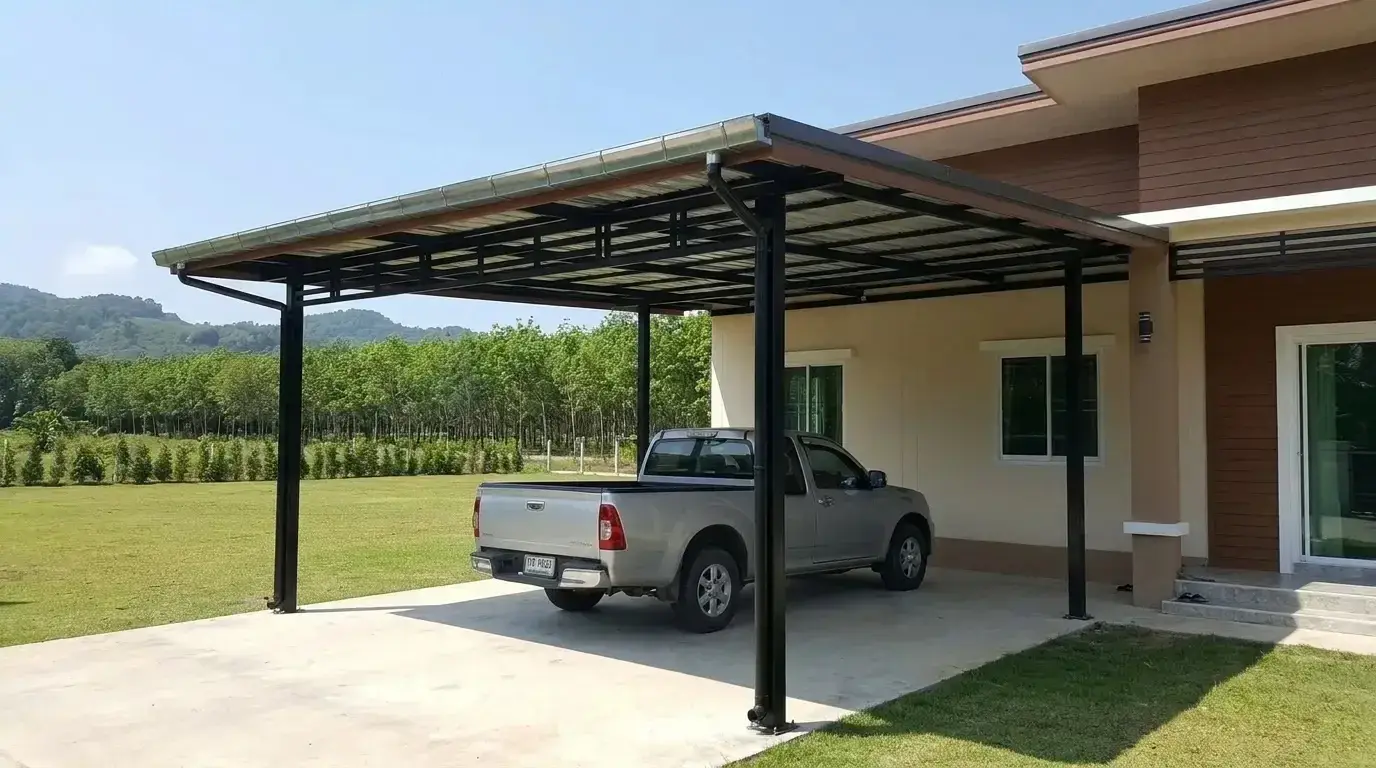 Steel CarportsSteel-frame carports sized to your car, your plot and your budget, with honest advice on roof shape and sheeting.
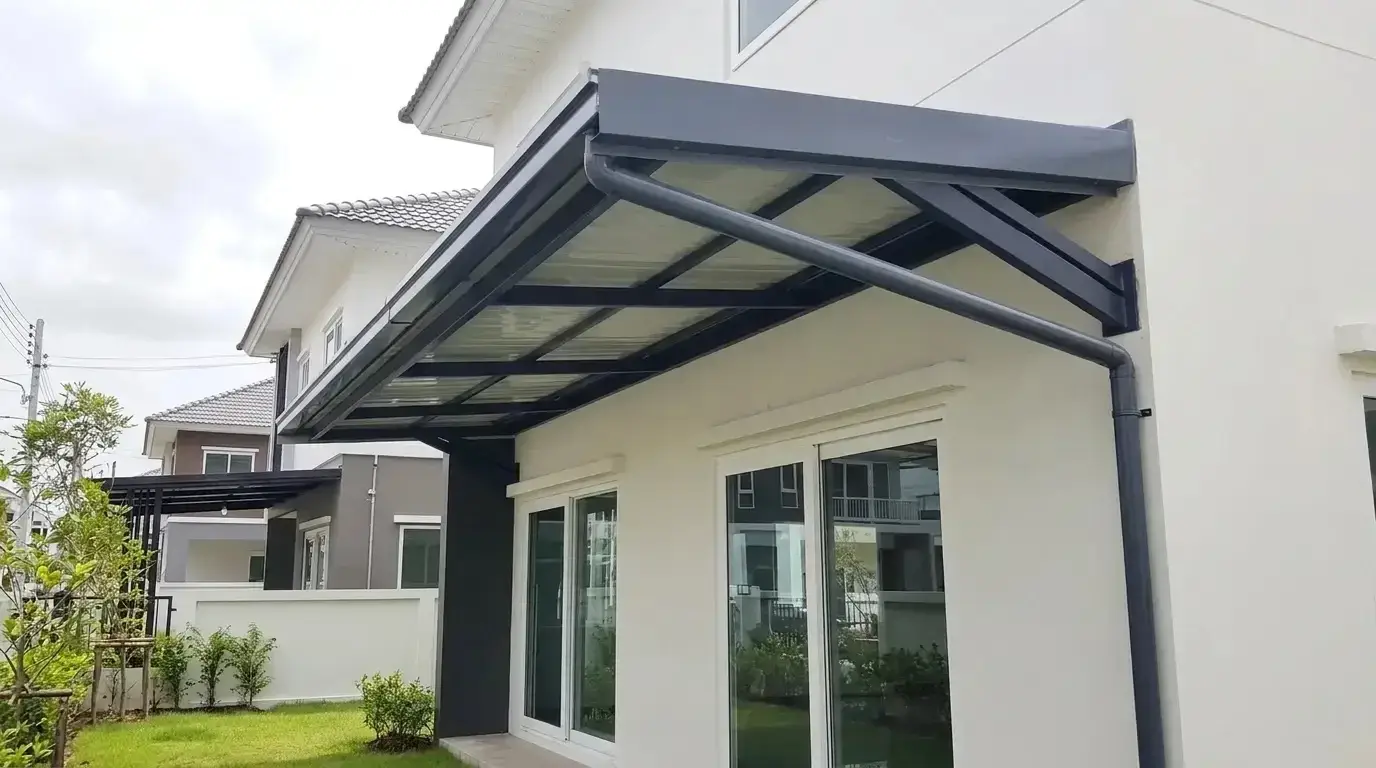 Awnings & Lean-to RoofsSteel-frame awnings and lean-to roofs over windows, doors and patios, built with the wall joint and drainage done properly.
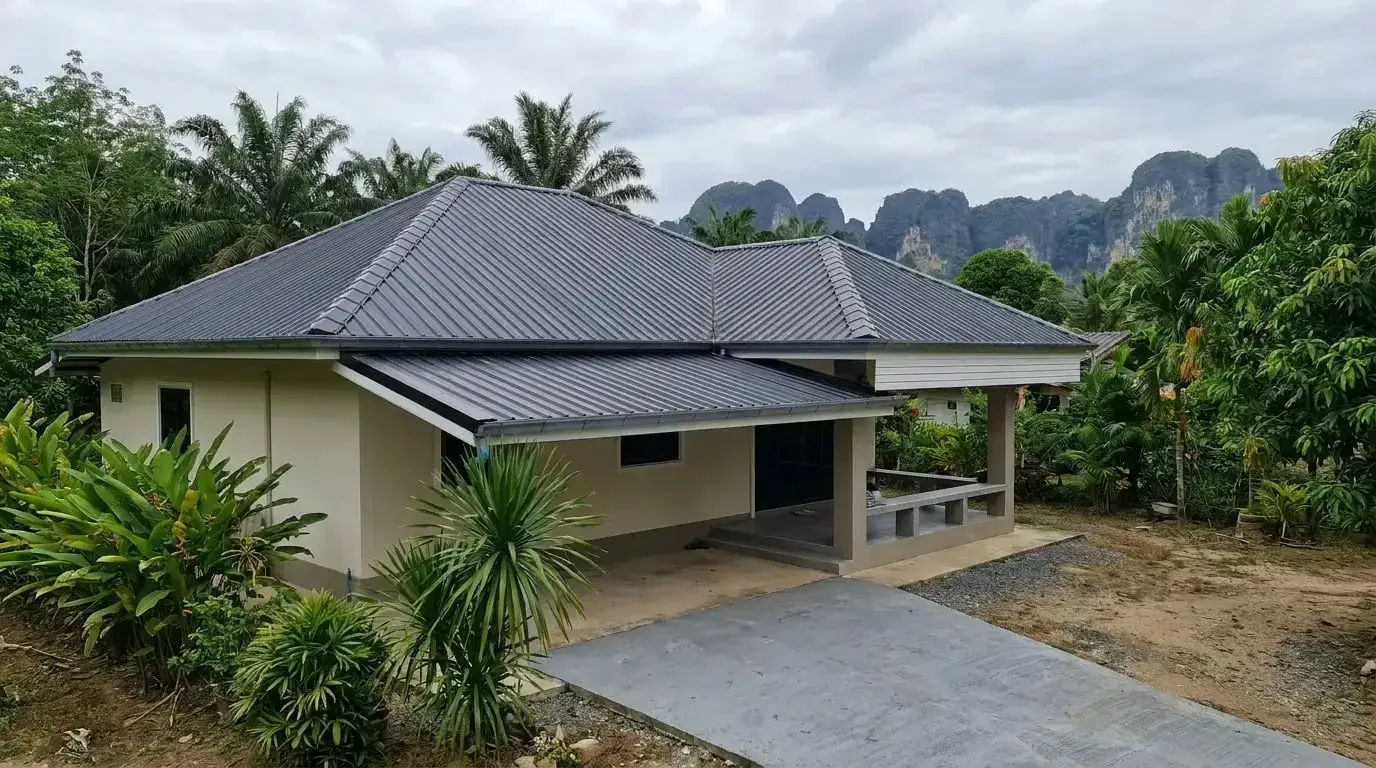 Metal Roofing & Re-roofingSteel roof frames and metal re-roofing for houses, with the existing structure checked before we recommend repair or replacement.