A pool deck in Krabi is lovely at seven in the morning and punishing by two in the afternoon. The same sun that makes a villa attractive to guests makes an unshaded terrace almost unusable for half the day. Add salt air near the coast, heavy rain for part of the year and the odd strong wind, and the choice of shade structure becomes more than a matter of looks.
This article compares the options we build for villa owners, holiday-let managers and residents in Ao Nang, Klong Muang, Nopparat Thara and Ko Lanta. It is honest about the downsides of each.
First, decide what you want the shade to do
Before picking a style, answer these:
- Sun only, or sun and rain? Filtered shade is pleasant; rain cover needs a solid or clear roof.
- Which hours? Morning and afternoon sun come in from different angles, and a canopy directly overhead may not shade the afternoon.
- What is underneath? Loungers, a dining table, an outdoor kitchen, or just a walkway.
- Views. Posts in front of a sea or mountain view are unwelcome.
- Wind exposure. Hillside and beachfront sites catch more wind.
Cantilever canopies
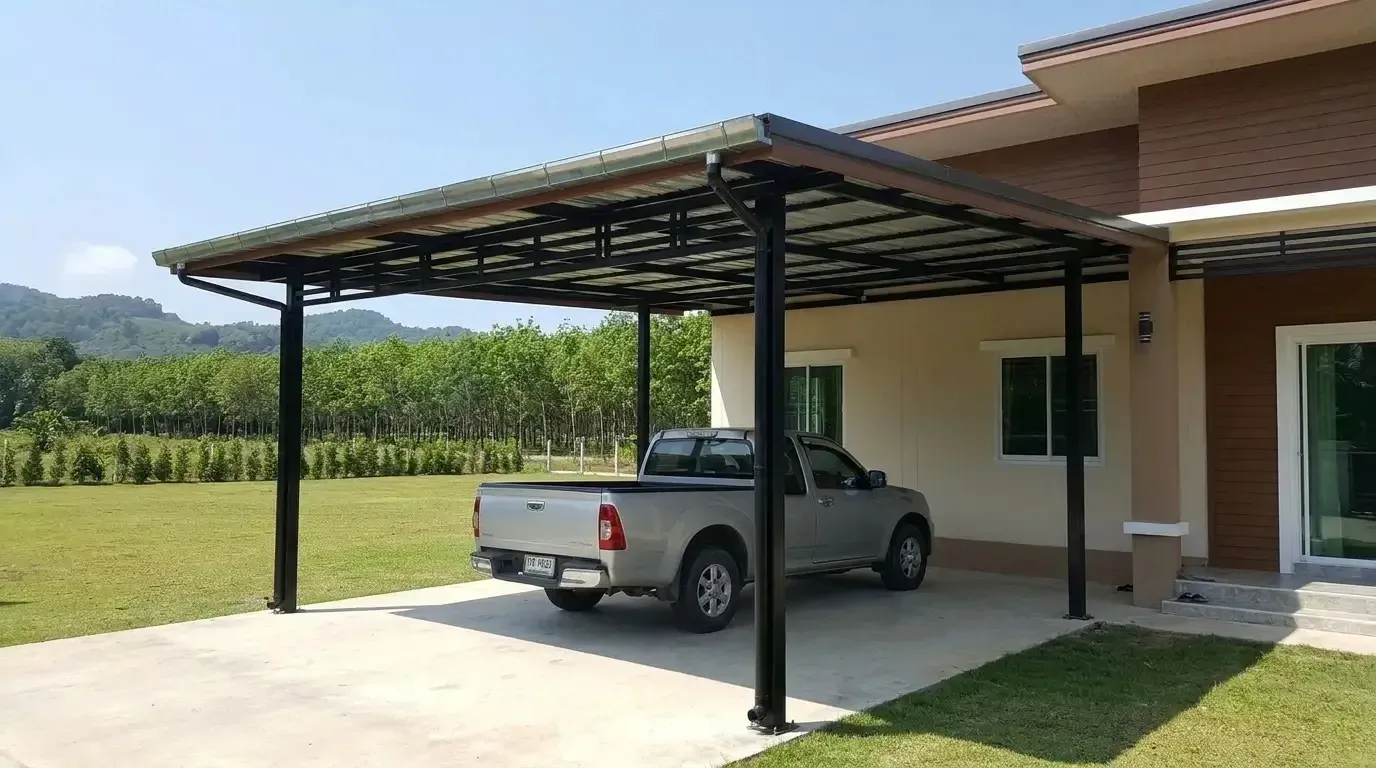
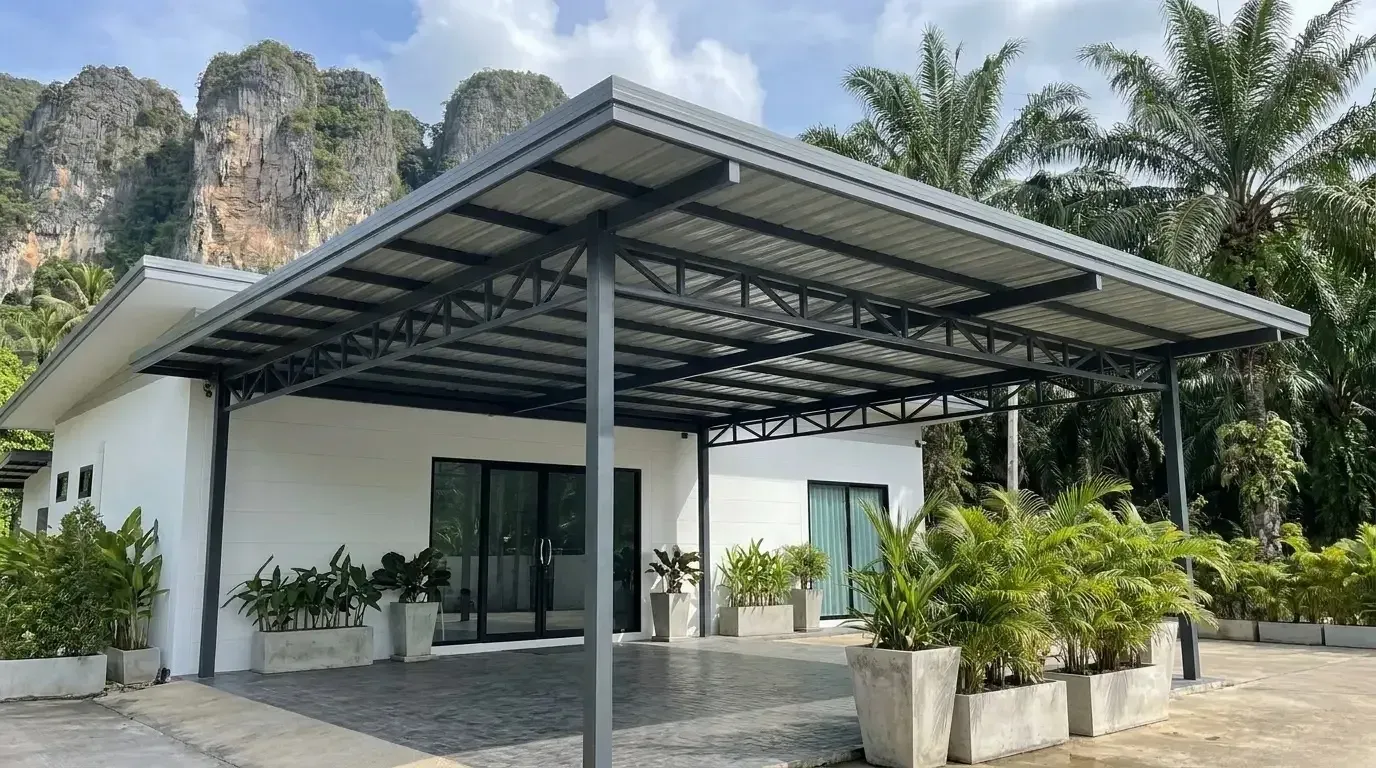
A cantilever canopy projects out from posts on one side, with no posts at the front. It keeps the pool edge and view clear.
Pros
- No posts in the way of views or pool access
- Clean, modern look
- Can take a solid or clear roof sheet for rain cover
Cons
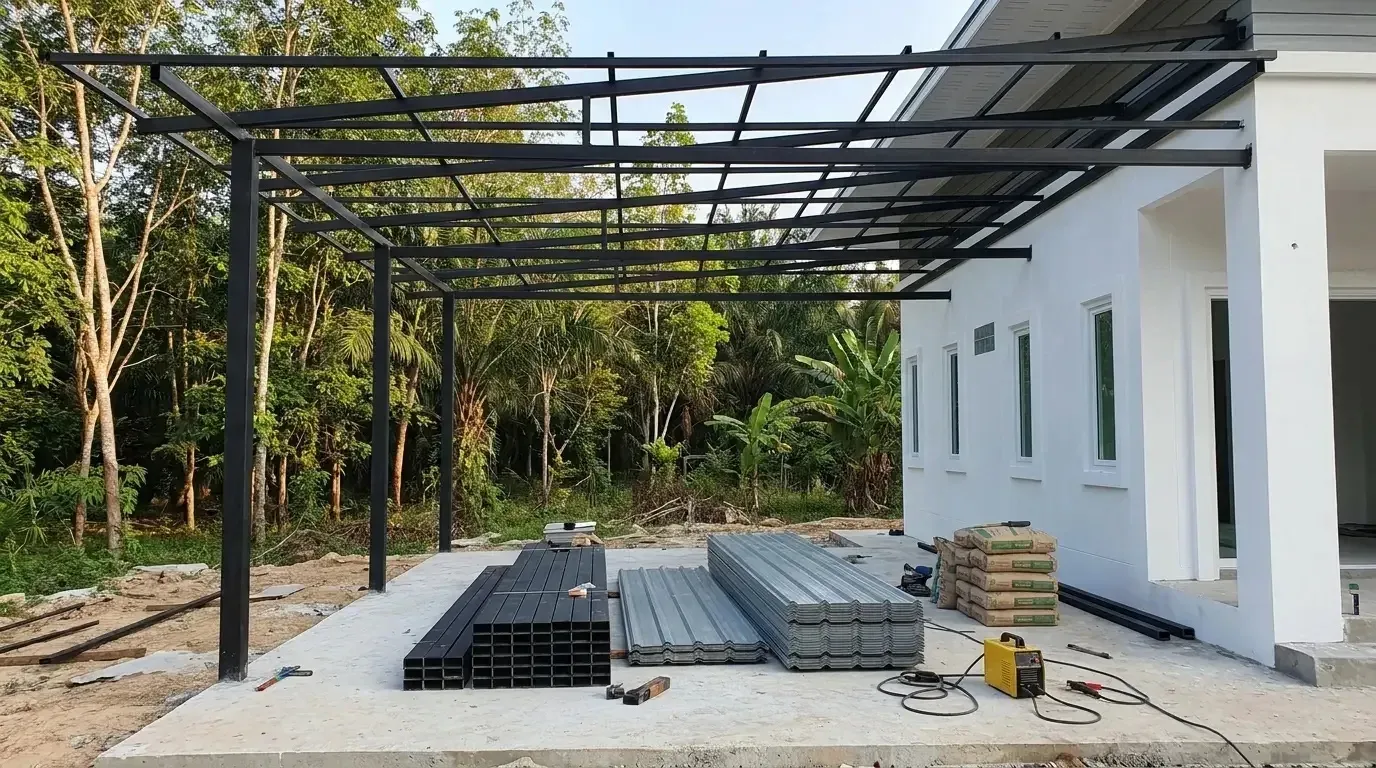
- Needs heavier steel and larger footings than a posted roof of the same size, so it costs more
- The projection is limited by the structure; very deep canopies may not be practical
- Wind uplift has to be taken seriously on exposed sites
See cantilever roofs for more on how they are built.
Batten pergolas
A steel frame with rows of battens on top, spaced to cast striped, filtered shade. The battens can be steel, aluminium-look sections or wood-effect composite.
Pros
- Light, open feel; air moves through
- Shadows shift during the day, which many people like
- Can match a batten wall or screen elsewhere on the villa
Cons
- No rain cover unless you add a clear sheet above the battens
- A clear sheet above battens collects leaves and needs cleaning
- Many joints and fixings, so rust protection details matter near the sea
Salas
A sala is a freestanding pavilion with a roof, often placed in the garden or at the end of the pool. It gives a destination rather than shade over the whole deck.
Pros
- Full shade and rain cover in one spot
- Works well for a daybed, dining or massage area
- Does not need to attach to the house
Cons
- Shades only its own footprint
- Needs its own footings, and sometimes its own lighting and power
- Roof style should suit the house, which can add cost
See our sala service for styles.
Composite decking on steel frames
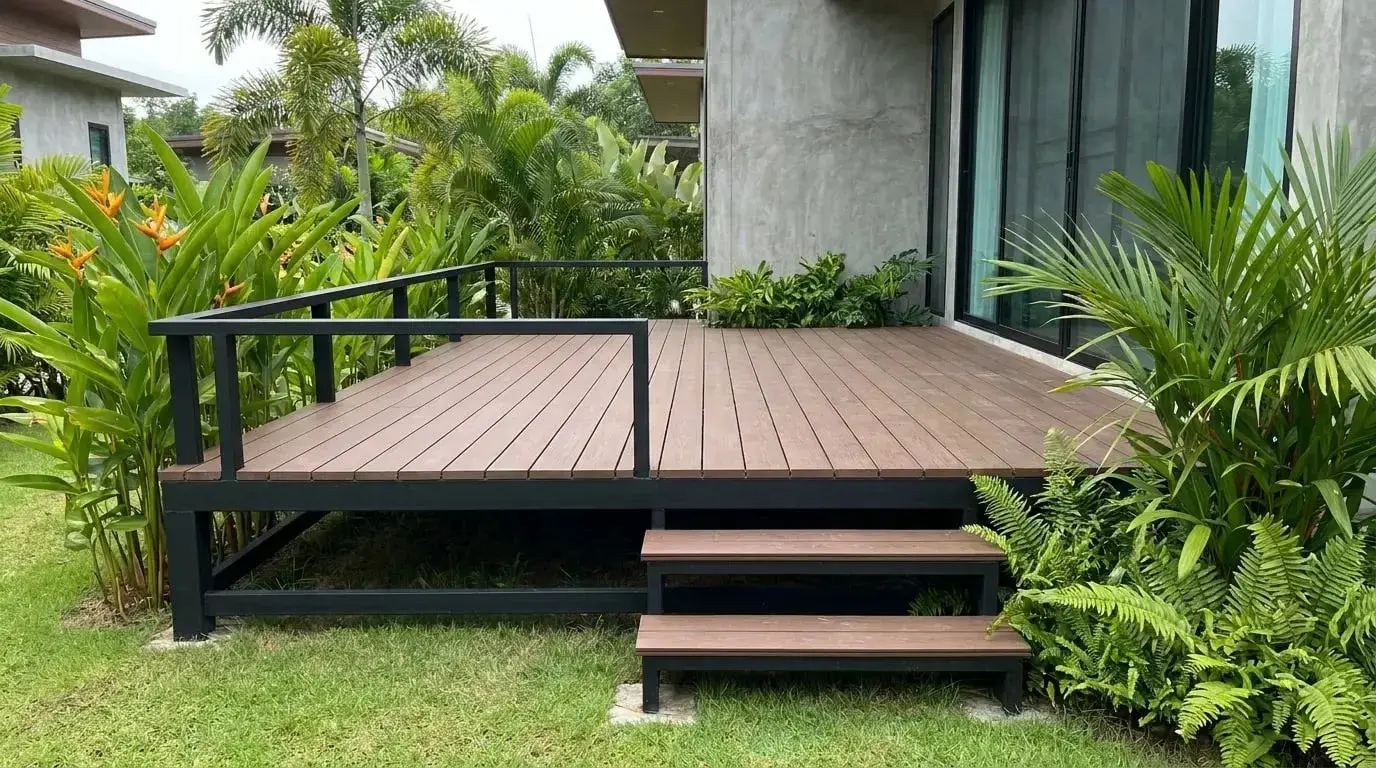
Timber decks look beautiful but struggle in Krabi's humidity and with termites. A common alternative is composite decking boards fixed to a galvanised steel sub-frame.
Pros
- The steel frame does not rot or attract termites
- Composite boards need less upkeep than timber
- A steel frame can bridge uneven ground or step down a slope
Cons
- Composite boards can get hot in direct sun, especially darker colours
- Boards expand and contract, so gaps and fixings must allow for movement
- The steel frame sits close to damp ground and needs good rust protection and airflow underneath
- Poor drainage under the deck leads to standing water and mould
More on this at steel-framed decks.
Heat and salt air: what they mean for materials
Heat
- Dark metal roof sheets get very hot and radiate heat downwards. Insulated sheets or a ventilated gap help.
- Clear sheets let heat in as well as light. Consider tinted or heat-reflective types.
- Leave space above head height so hot air can escape.
Salt air and pool water
Near the beach, salt spray settles on every surface. Around the pool, splashing adds chemically treated water. Both attack steel, especially at welds, cut ends and base plates. You choose the steel grade and rust protection; we explain the trade-offs. Our article on stopping rust on steel near the sea goes into detail.
Wind
Open-sided shade structures act a little like a sail, especially on hillsides and beachfront plots. Roof sheets need enough fixings, and posts need footings sized for uplift, not just for the weight of the roof. It is one reason we do not price shade structures from a photo alone.
Lighting and fans
If you plan to use the terrace in the evening, think about lights, ceiling fans or power points now. Running cable through a steel frame is far easier before the roof goes on than after.
Practical checklist for villa shade projects
- Watch where the sun falls at the times you use the terrace
- Decide sun-only or sun-and-rain cover
- Mark where posts can and cannot go (pool walls, pipes, views)
- Check drainage from any new roof, so water does not run into the pool
- Agree rust protection for a coastal site
- Get written owner approval if you rent or manage the property
- For holiday lets, schedule work around guest bookings
If the villa is let to guests, our article on resort and café roofing covers working around occupancy.
Cost and location
Every shade structure is priced from a survey. Jobs start from 10,000 THB. We cover the whole of Krabi province; for Ko Lanta and other boat-access areas there is a travel fee, stated up front.
Next step
Send a few photos of the terrace at different times of day, plus rough measurements, through LINE on our contact page. Rong can suggest which options suit the space before anyone visits.