
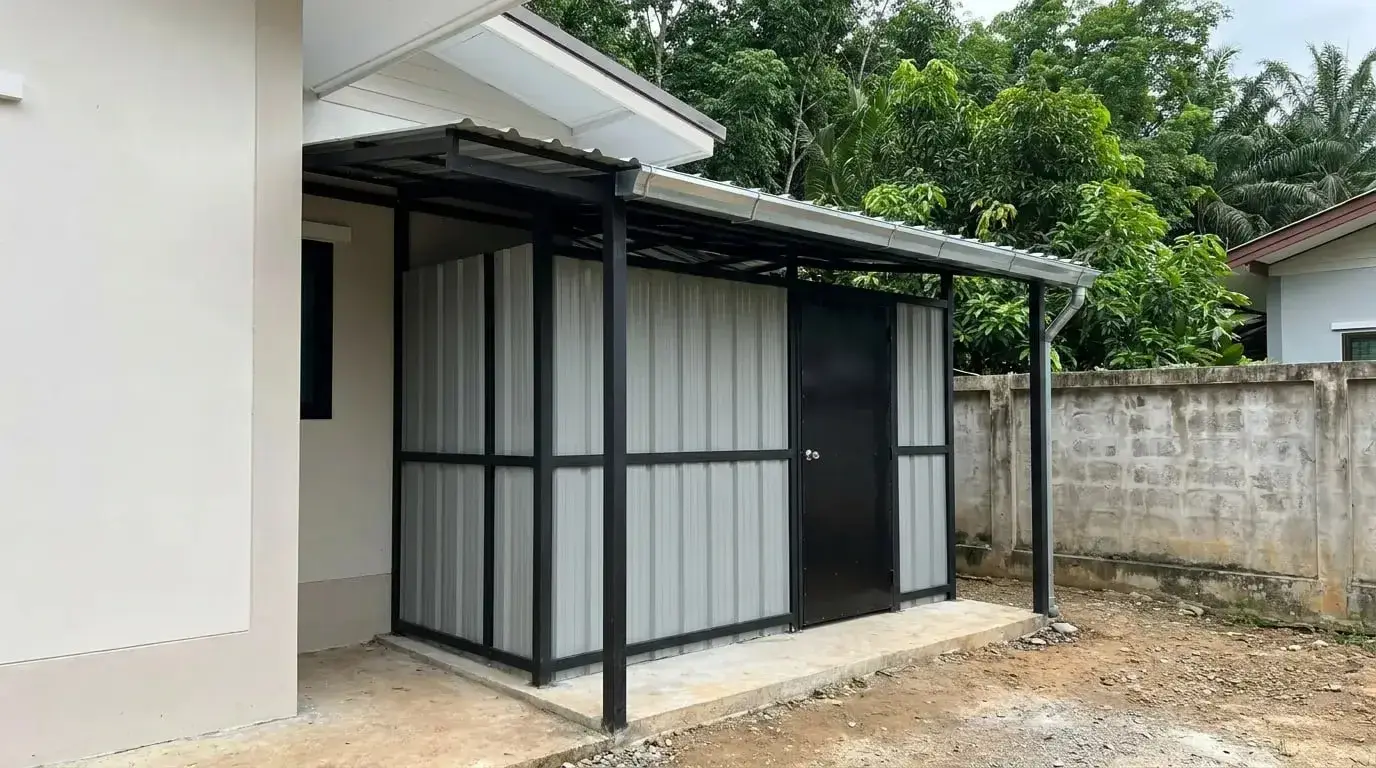
A small room at the side of the house for tools, pool equipment, a washing machine, or a quiet workspace is one of the most requested extensions. The problems we see again and again: the room settles and pulls a crack into the house wall, rain leaks in where the roofs meet, and the room gets so hot and humid that whatever you store goes mouldy or rusty.
On site Rong checks whether the ground is original soil or fill, whether water pools there in the rainy season, what the house wall the room will meet is made of, where rain from the main roof lands, how close you are to the boundary, and what the room is actually for. A storeroom, a laundry and a room someone sits in all day need different walls, ventilation and services.
Our approach is to give the new room its own footings and columns, separate from the house, so each can move without dragging on the other, and to detail the roof junction so it doesn't leak. On soft ground, or if the room is larger or heavier than a typical storeroom, Rong will recommend an engineer checks it first.
In a housing estate, villa development or rented property, check the estate rules and get written landlord approval before booking. Send on LINE a wide photo of the spot, the house wall, the ground, rough measurements and a location pin.
- Jobs start from
- 10,000 THB
- Team experience
- 30+ years
- Site survey
- Free
- Steel grade
- Your choice
Designs and options
Enclosed lockable storeroom
Walls all round and a lockable door for tools, garden and pool gear, or anything that must stay dry. It still needs some ventilation, or it turns hot and damp and stored items grow mould or rust.
Laundry or utility room
Drainage, sockets and airflow must be planned before the walls go up. The floor should fall towards a drain and the walls should be moisture-resistant. Cutting in pipes after the walls are closed looks messy and you pay twice.
Small office or room used every day
Heat matters far more than in a storeroom: an insulated roof, heat-resistant walls and windows for cross-ventilation. If you plan to fit air conditioning, say so at the start because it affects the choice of walls and roof.
Semi-open shed
A roof with walls on some sides and the rest open or screened with battens. Air moves through and it doesn't get musty, and it costs less than a closed room, but it offers less security and less protection from driving rain.
Materials: the honest pros and cons
Fibre cement board walls on a steel frame
Good near the seaPros
- Won't rot or rust and copes with humidity
- Lighter than brick, so less weight on the footings
Worth knowing
- Board joints must be finished properly or they crack along the line
- Less impact-resistant than brick
The boards handle salt air, but the steel frame and screws still need rust protection.
Metal sheet walls on a steel frame
Near the sea: depends on specPros
- Low cost and quick to put up
- Lightweight
Worth knowing
- Very hot inside without insulation
- Dents easily and looks more like a warehouse than part of a home
Fine for a tool shed or storeroom, not recommended for a room someone works in. Near the beach, choose a sheet with a good anti-corrosion coating.
Metal roof sheet with PU foam insulation
Near the sea: depends on specPros
- Much less heat and rain noise than plain sheet
- Neat underside, so a ceiling is optional
Worth knowing
- Costs more than plain metal sheet
- If water gets into the foam through a bad joint, it is hard to fix
For storing things that don't mind heat, plain sheet is enough. For a room people use regularly, insulated sheet is worth it.
Structural steel (columns, beams, purlins, wall framing)
Near the sea: depends on specPros
- Strong and sized to the site
- Easy to keep structurally separate from the house
Worth knowing
- Needs rust primer and paint everywhere, including welds
- Column bases on damp ground need checking regularly
You choose the steel grade, sizes and rust-protection system. Rong explains the options first and your choice is written into the quotation.
How the price is worked out
Work starts from 10,000 THB, but there is no fixed price and we cannot give a real figure in advance. It depends on the site, room size, new footings, wall and roof type, doors and windows, flooring, and steel and material prices at the time, which change constantly. Rong does a free site survey first, then gives you a written, itemised quotation based on material prices at that time. Remote or boat-access locations such as Ko Lanta or Ko Phi Phi carry a travel fee, which is stated in the quotation before you agree to anything.
There is no fixed price. It depends on your site and on steel and material prices at the time. The site survey is free.
Included
- Site survey: ground conditions, rainwater, boundary and the existing house wall
- Written, itemised quotation
- Steel frame kept separate from the house, with rust primer and top coat
- Roofing, and sealing the junction with the existing house
- Walls, doors and windows as listed in the quotation
- Clearing away debris when the job is finished
Not included
- Materials, if you choose a labour-only contract
- Plumbing, electrics and air-conditioning installation, unless listed in the quotation
- Concrete floor slabs or tiling, unless listed in the quotation
- Repairs to existing cracks or walls of the house
- Permit fees with the municipality or OrBorTor, if your area requires a permit
How a job with us runs
- 1
Send photos on LINE
Photos plus a location pin. Rong tells you early if the idea is realistic.
- 2
Free site survey
He checks the walls, the ground and where the rain will go — the things photos can’t show.
- 3
Written, itemised quote
Full contract (labour + materials) or labour-only. Nothing hidden in a lump sum.
- 4
30% deposit, then work starts
Only once you have agreed the design and price. Payment is by cash bill, no VAT invoice.
- 5
Walk-through before handover
We check every point with you. 1-year warranty under the conditions in the quote.
How long it takes
It depends on room size, whether new footings or a floor slab are needed, the wall type, other trades, and the weather. Concrete footings need time to cure, and in the rainy season work may stop for a few days at a time. Rong gives a timeline after the survey and it goes in the quote.
1-year warranty: what it covers
One year, under the site-specific conditions written into your quotation.
Covered
- Workmanship on the steel frame, roof and walls we installed
- 1-year warranty, under site-specific conditions written into your quotation.
Not covered
- Services or equipment not included in the quotation
- Cracks or damage in the house that existed before the extension
- Anything the quotation does not list as covered by the warranty.
Steel-Frame Storage Rooms: questions we get asked
Why does a storeroom against the house need its own footings?
The house and a new room nearly always settle at different rates. If the new frame hangs off the house, ground movement cracks the joint or pulls on the old wall. We give the room its own footings and columns and detail the roof joint to move without leaking, though a hairline gap along the wall joint can still appear over the years.
Won't a steel-frame room be too hot?
With plain metal sheet on the walls and roof and no ventilation, yes, very. For a room people use, go for an insulated roof, fibre cement walls, and windows or vents. Rong looks at sun and wind direction and suggests a combination that fits the use and your budget.
Do I need permission to build a room beside my house?
It depends on size, type of work and local rules. Ask your municipality (thesaban) or OrBorTor first, especially if the room is close to the boundary. In a housing estate or villa development, check the estate rules, and if you rent, get the landlord's approval in writing.
Can you build on the concrete slab that's already there?
Sometimes. Rong checks whether the slab is thick and sound enough, whether it is already cracked or sinking, and whether it is tied into the house. If it isn't suitable, he'll recommend new column footings, listed as a separate line in the quotation.
Can you wire sockets and plumb in a washing machine?
For electrical and plumbing work, send photos on LINE and ask. Whoever does it, fix the positions of sockets, taps and waste pipes at the site survey, before any walls are closed in.
How does payment work? Can I get a VAT invoice?
We take a 30% deposit before work starts, and the rest is paid as set out in the quotation. We issue a cash bill. We do not charge VAT and cannot issue a tax invoice, so if your company needs one, tell us before you book.
Read this before you build
 Labour-Only vs Full Contract for Home Projects in ThailandLabour-only or full contract for a home project in Thailand? Who buys materials, where the savings are real, the risks, and how we handle both options.
 Hiring a Contractor in Krabi as a Foreigner: A Practical GuideA practical guide for foreigners hiring a contractor in Krabi: comparable quotes, deposits, cash bills vs VAT invoices, warranties and working in English.
 Do You Need Permission for a Carport or Extension in Krabi?A cautious general guide to permission for carports and extensions in Krabi: local offices, landlord and village approval, and when to use an engineer.
Related services
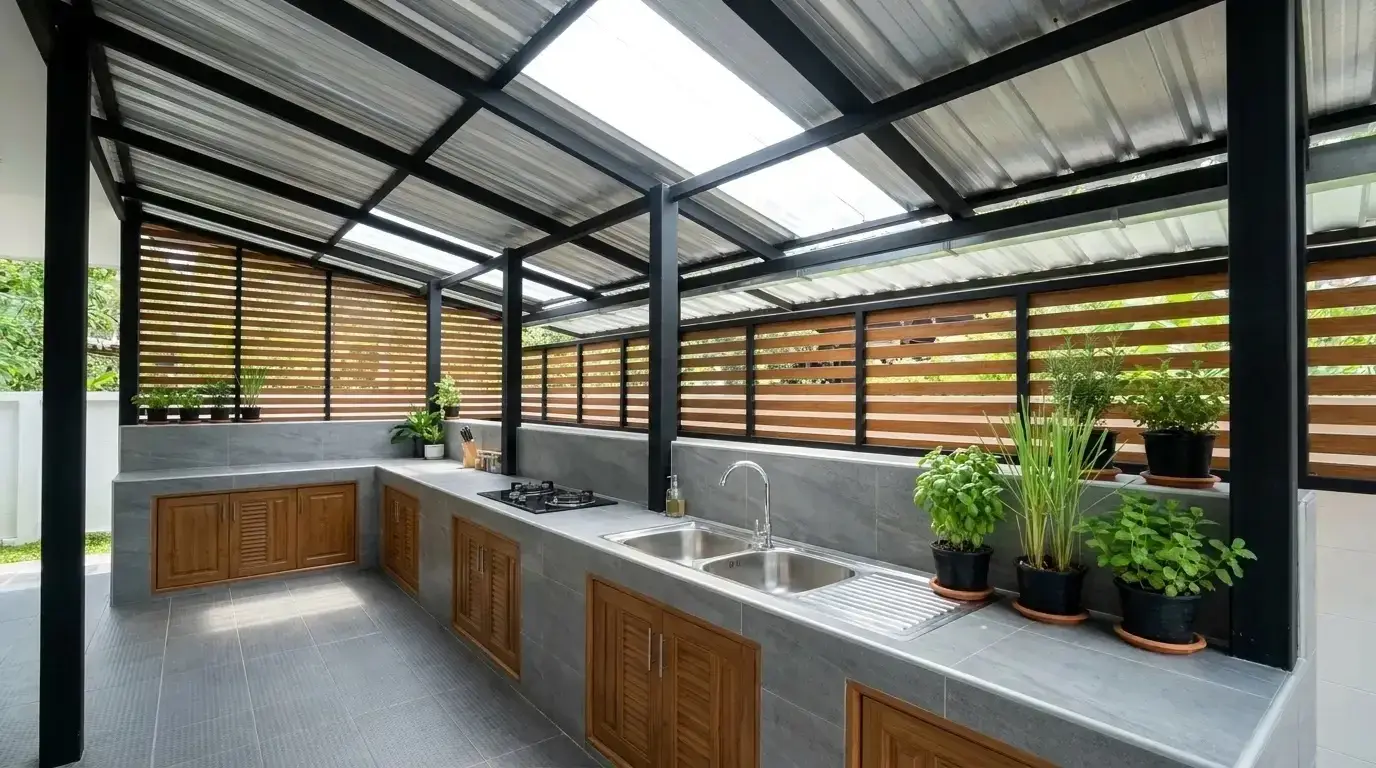 Outdoor Kitchen & Laundry ExtensionsA Thai-style back kitchen or laundry area on a separate steel frame, with drainage and smoke planned before we build.
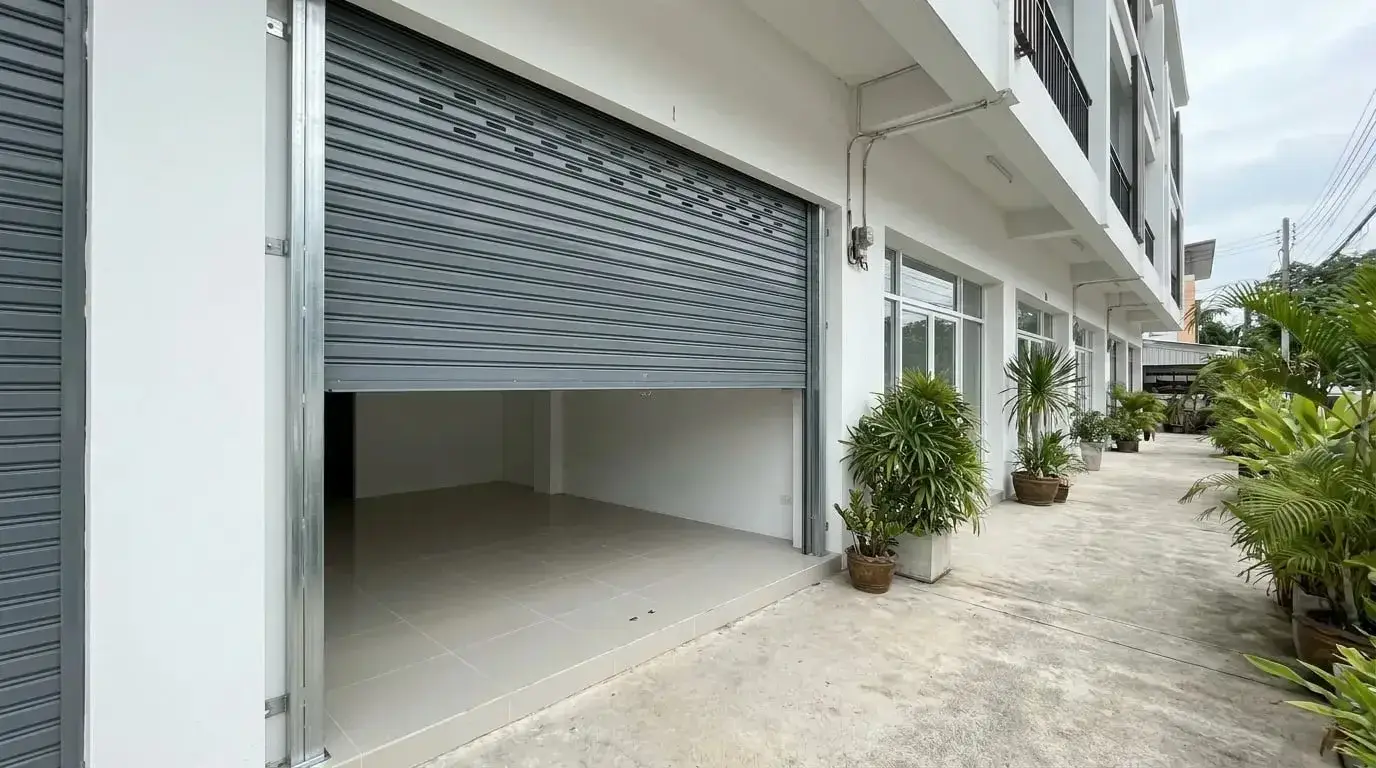 Roller ShuttersLockable roller shutters for shops, storerooms and garages, checked for headroom and fixing strength before fitting.
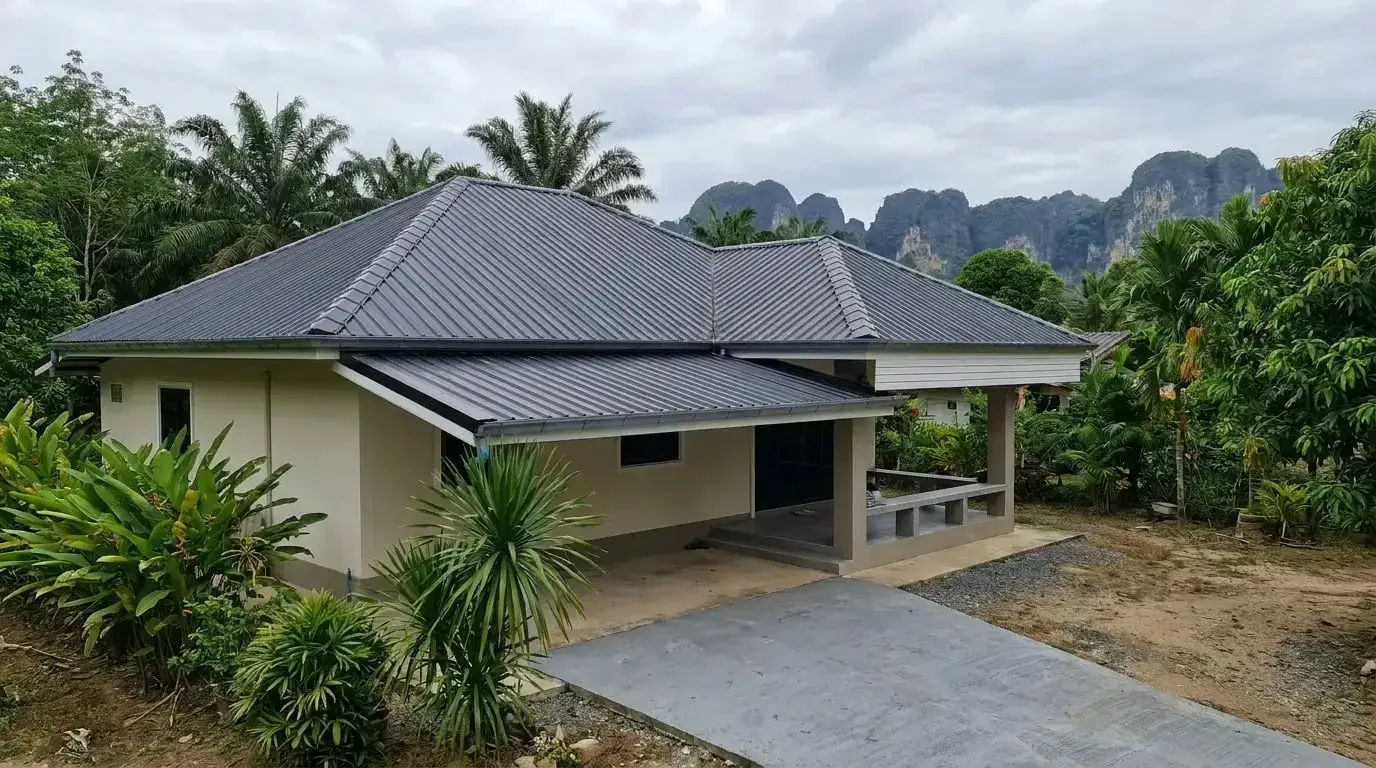 Metal Roofing & Re-roofingSteel roof frames and metal re-roofing for houses, with the existing structure checked before we recommend repair or replacement.
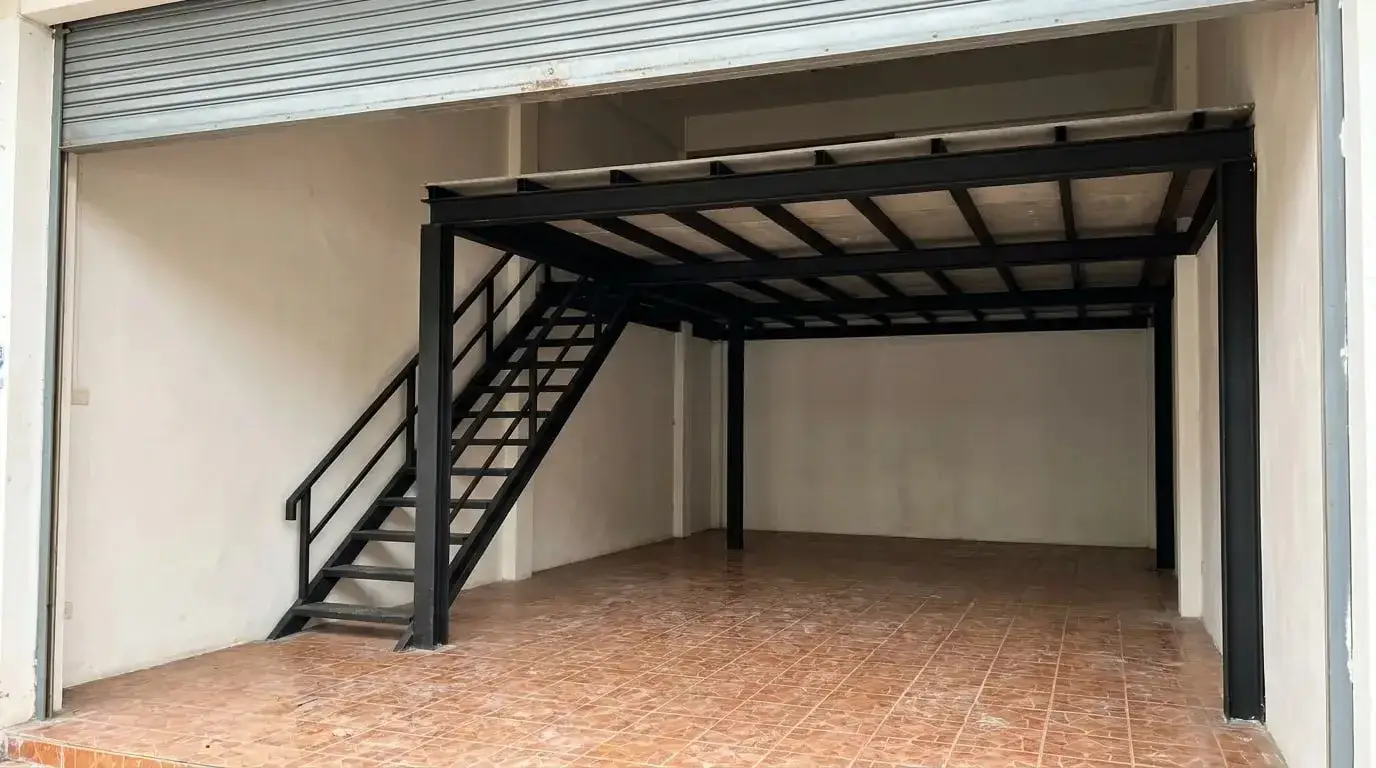 Steel Mezzanine FloorsA steel mezzanine for a home, shop or stockroom, designed around what you will use it for and what the existing floor can carry.
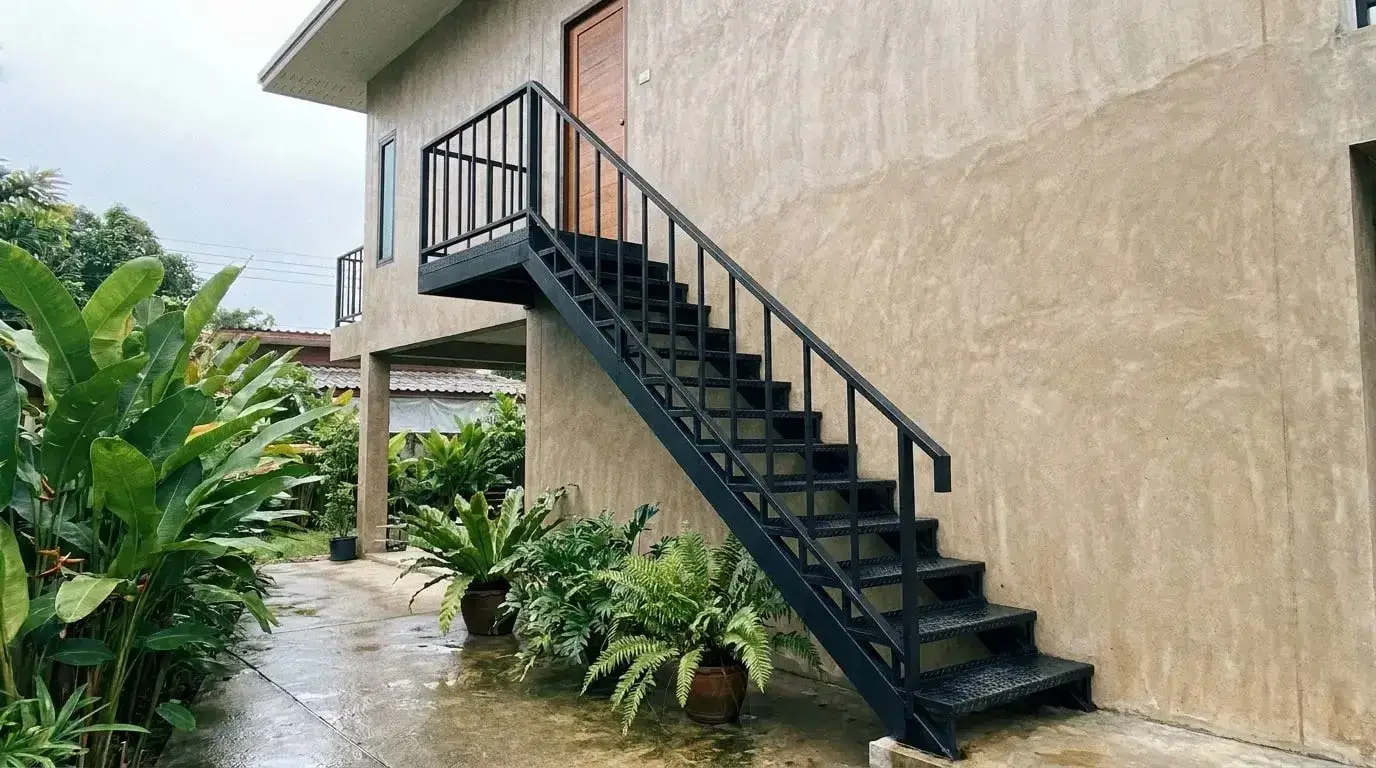 Steel StaircasesIndoor stairs, rooftop and mezzanine stairs, and outdoor steel staircases, built around safe steepness, solid fixings and proper handrails.
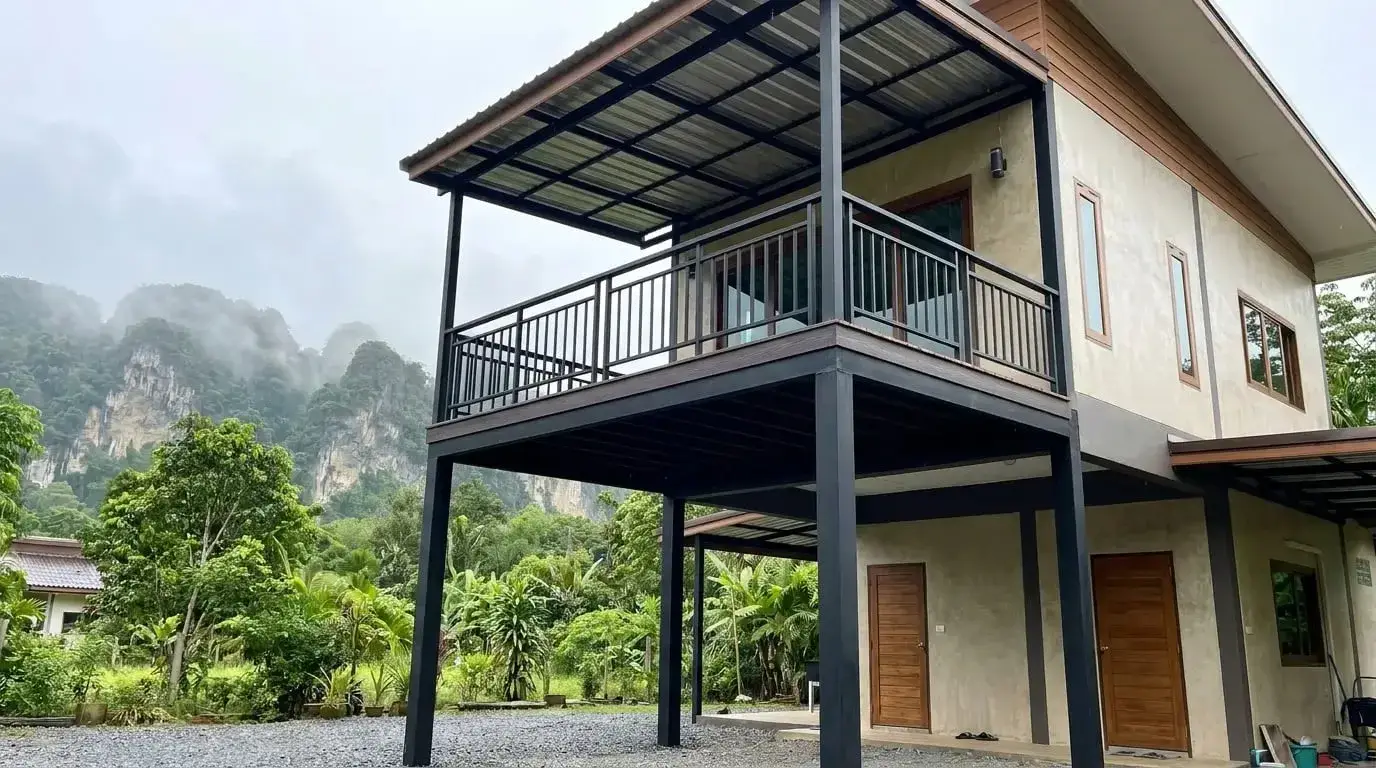 Balcony ExtensionsSteel-frame balcony extensions, with supporting posts or brackets, flooring, safety rails and drainage worked out before any design is agreed.