If you live close to the Andaman Sea, you have probably seen it: a gate that looked fine a year ago now has orange streaks, or a handrail bubbling under the paint at every joint. Salt air corrodes steel much faster than inland air, and Krabi's heat and humidity make it worse. The good news is that most early rust failures come from a few avoidable details, not from steel being the wrong material.
This article is for homeowners, villa owners and resort managers in Ao Nang, Klong Muang, Nopparat Thara and Ko Lanta. It explains why coastal steel fails and what to ask for when you order new work.
Why steel fails faster on the coast
Rust needs water and oxygen. Salt speeds up the reaction, and on the coast salt is carried in the air as fine spray, especially when the wind comes in off the water. It settles on every surface and stays in corners and gaps where rain does not wash it off.
A few things make it worse:
- Sheltered undersides. Rain washes the top of a beam but not the underside, so salt builds up where you cannot see it.
- Constant humidity. Steel stays damp for longer, particularly during the rainy season, roughly May to October on this coast.
- Trapped water. Hollow sections with no drainage, flat ledges and overlapping plates hold moisture.
- Contact with other metals or with damp concrete at the base of posts.
Sites right on the beach face the harshest conditions, but even a few streets back in Ao Nang or on Ko Lanta you should plan for coastal exposure.
Choosing steel and coatings
We do not decide this for you. You choose the steel grade and the rust protection, and we explain what each option means for your site. The main choices:
Black steel with a paint system
Ordinary steel sections cleaned, primed and painted. It is the lowest starting cost. Its life near the sea depends almost entirely on surface preparation and coating thickness, and it needs regular touch-ups.
Galvanised steel
Steel coated with zinc. The zinc corrodes slowly and protects the steel underneath, even at small scratches. It is a much better base for coastal work. The weak points are wherever the coating has been cut, drilled or welded during fabrication.
Galvanised steel with a paint system on top
For most coastal projects this is the combination we suggest discussing first. The zinc protects the steel, the paint protects the zinc, and the result lasts longer than either on its own. It costs more up front.
The paint system itself
A coating system usually means a primer suited to the steel (a zinc-rich primer is common for exposed work), then one or more topcoats. The number of coats and the preparation before painting matter as much as the product.
Details that decide how long it lasts
This is where coastal work succeeds or fails. When you compare quotes, ask how each of these is handled.
Cut edges and welds
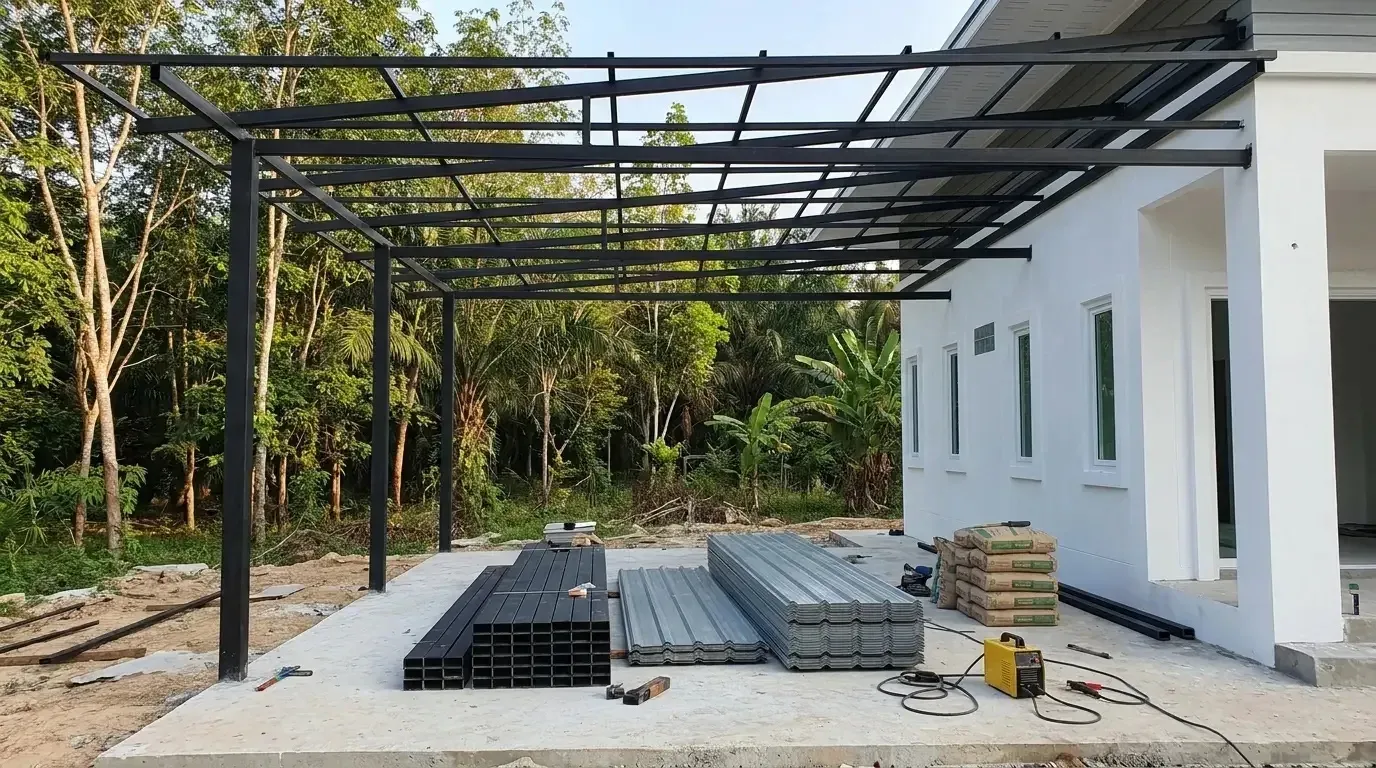
Every cut end and every weld is bare metal, even on galvanised steel. These spots should be cleaned and treated with a suitable primer before the topcoat. Skipping this is the single most common reason new work rusts at the joints within months.
Drill swarf
Drilling roof sheets and purlins leaves tiny steel shavings, called swarf. Left on the roof, they rust within days and leave orange stains that look like the sheet itself is failing. They should be swept or blown off at the end of each working day.
Drainage
- Hollow sections should be sealed or given a drain hole at the low point so water does not sit inside.
- Avoid flat ledges that hold water; angle them or cap them.
- Base plates should sit above the finished floor or be detailed so water does not pond around the post.
Fixings
Screws, bolts and brackets rust too. Use fixings with a coating suited to outdoor coastal use and seal washers on roof screws. A cheap screw can stain an expensive roof.
Where steel meets concrete
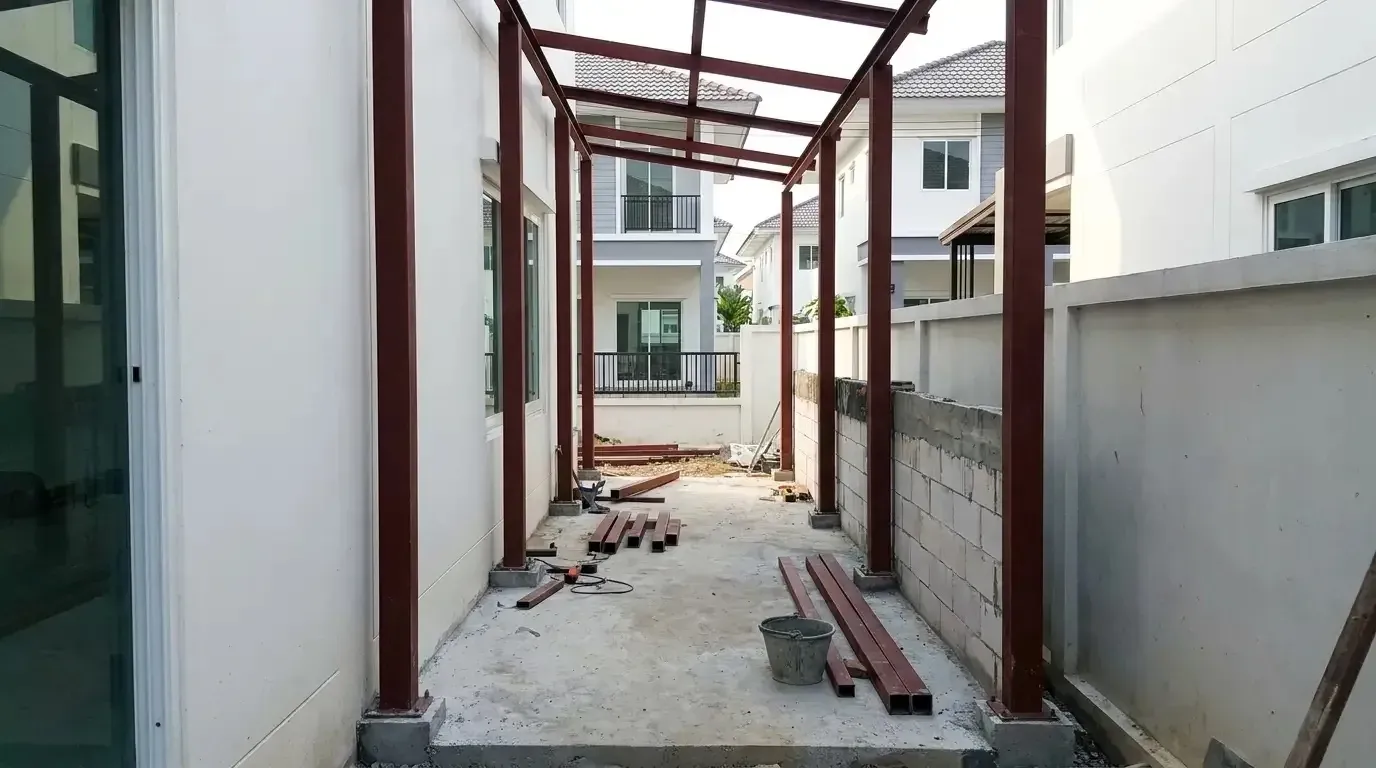
Posts cast straight into a slab that stays wet tend to rust at ground level, hidden until it is serious. A raised base plate on a footing is easier to inspect and maintain.
A simple maintenance routine
No coating is maintenance-free near the sea. A little regular care costs far less than replacing steel.
Every few months
- Rinse salt off sheltered areas with fresh water, especially undersides of canopies and handrails.
- Clear leaves and debris from gutters and roof valleys.
Once a year, ideally before the rainy season
- Walk round and look closely at joints, welds, base plates and screw heads.
- Treat small rust spots early: clean back to bright metal, prime, repaint.
- Check sealant along flashing and around roof penetrations.
When to call someone
- Paint lifting in sheets rather than small spots
- Flaking steel you can push a screwdriver into
- Rust at the base of a post that carries a roof
Our article on roof extensions that survive the rainy season covers the roof side of annual checks.
Where coastal protection matters most
Some items take more punishment than others:
- Handrails and balustrades on terraces facing the sea. See steel handrails.
- Gates and fences at ground level, where spray and garden watering both hit. See steel gates.
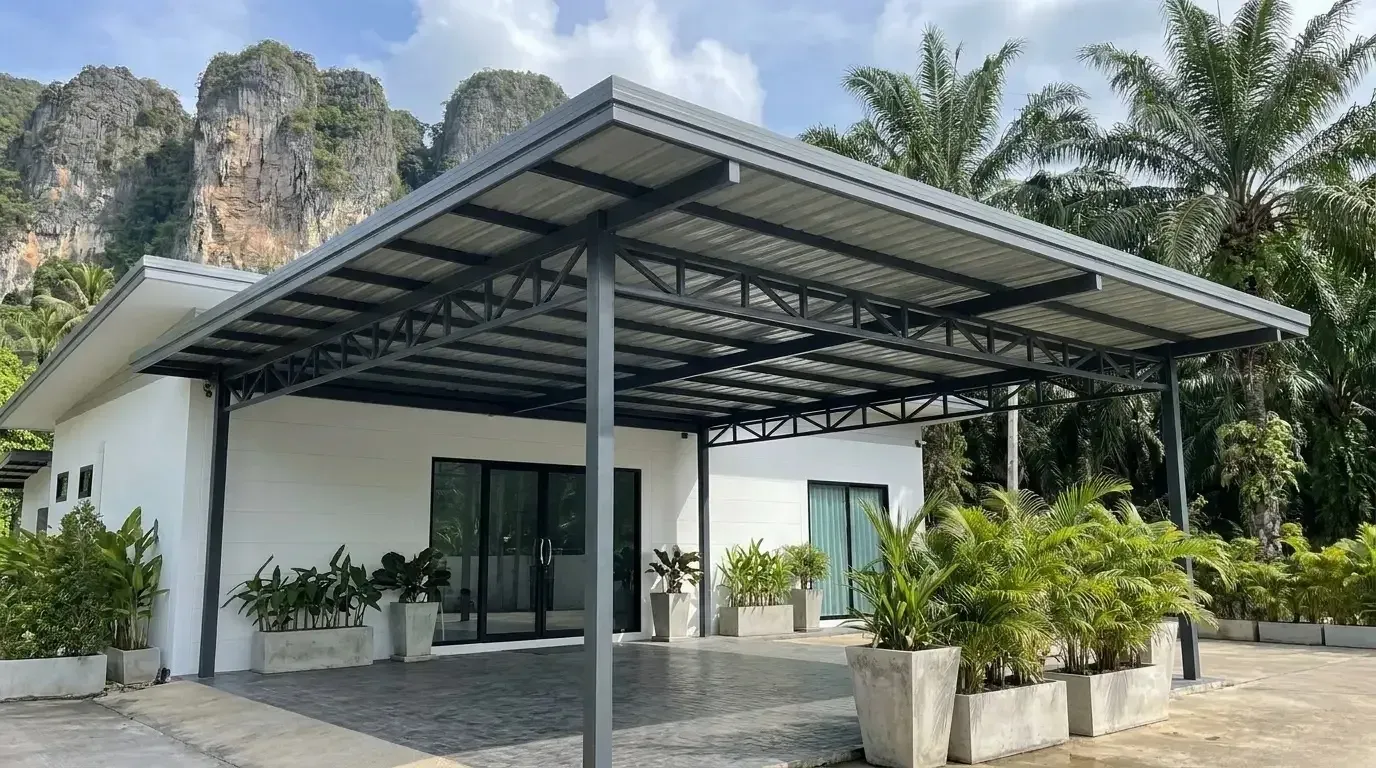
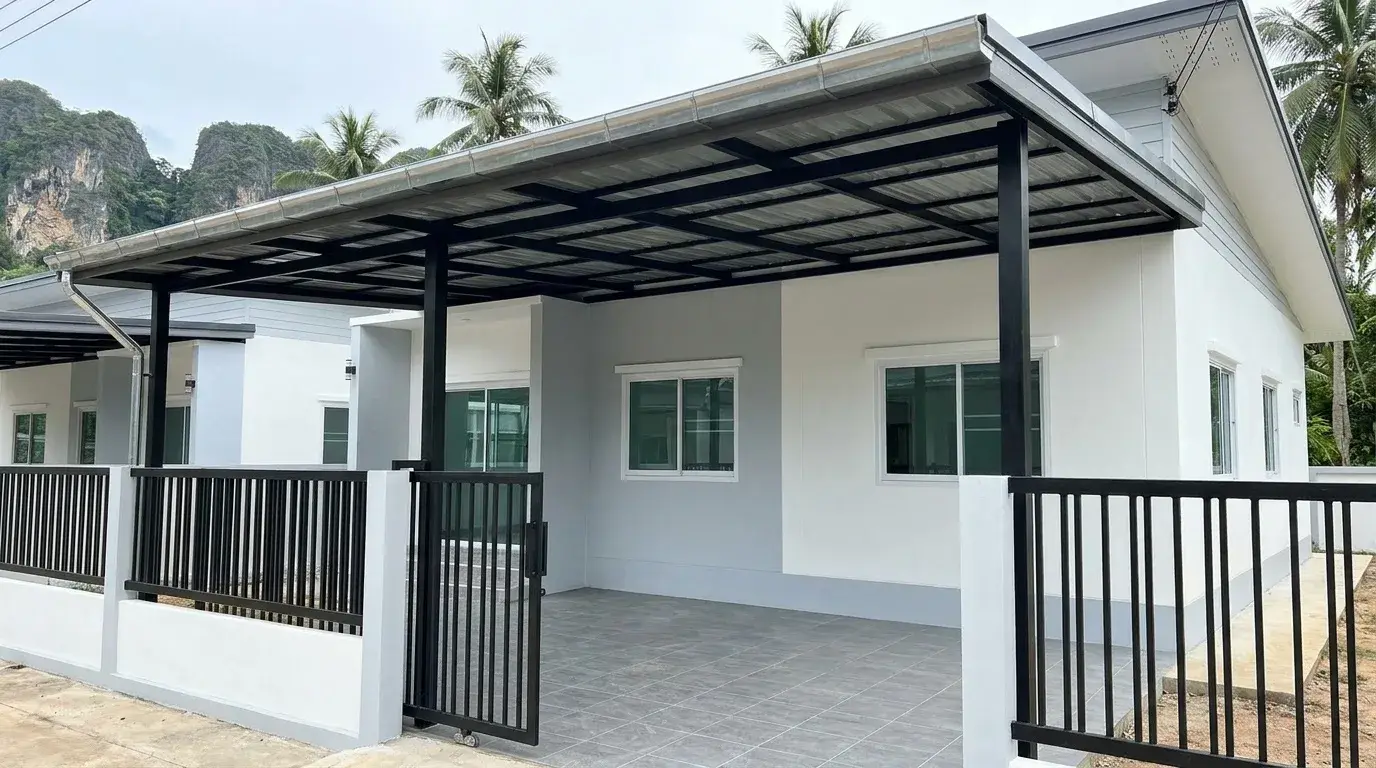
- Carports and canopies with sheltered undersides.
- Resort and café structures close to the beach, which also need to look good for guests.
If the budget is limited, it can be sensible to put the better protection on the most exposed parts first. We can price options side by side; see our pricing page for how quotes work.
Next step
If you have steel that is already rusting or a new project near the sea, send photos and your location through LINE on our contact page. Rong can tell you whether it looks like a repair, a recoat or a replacement.