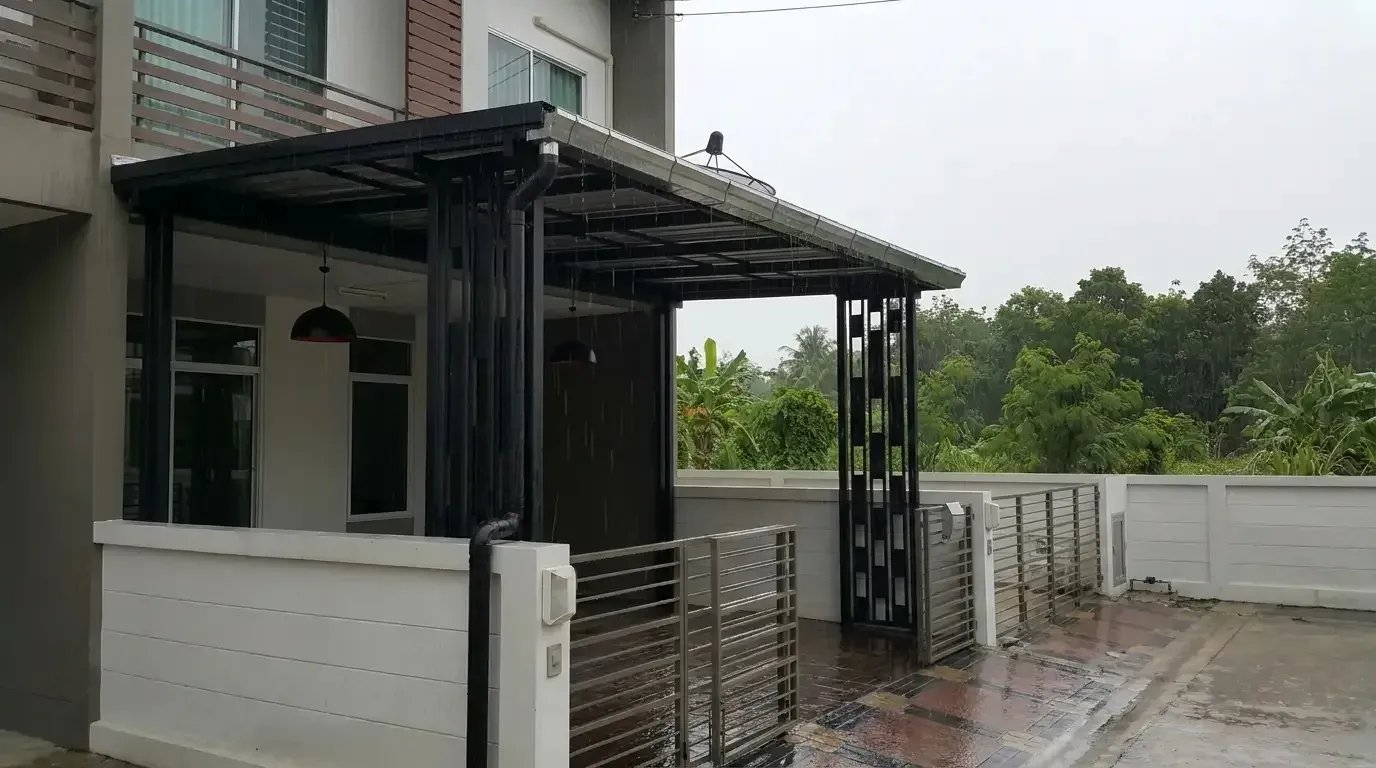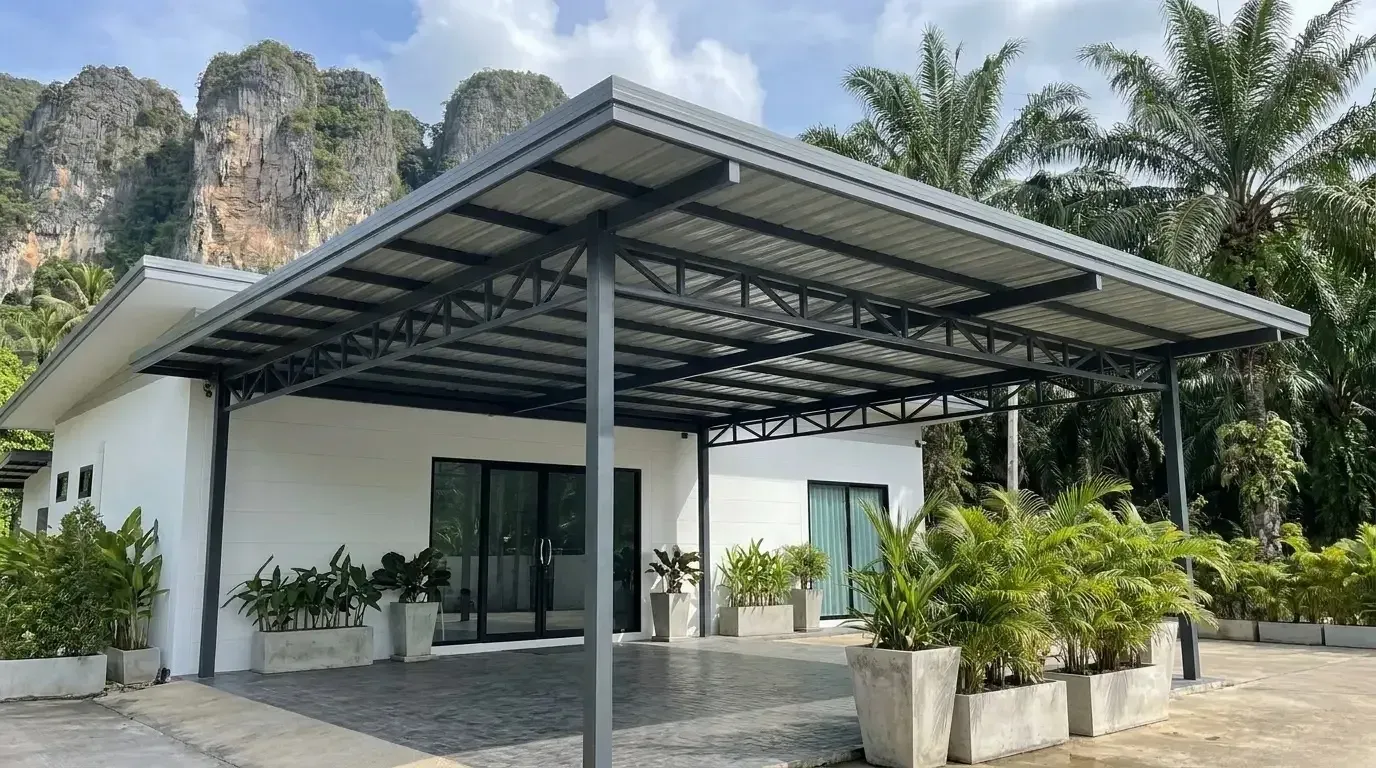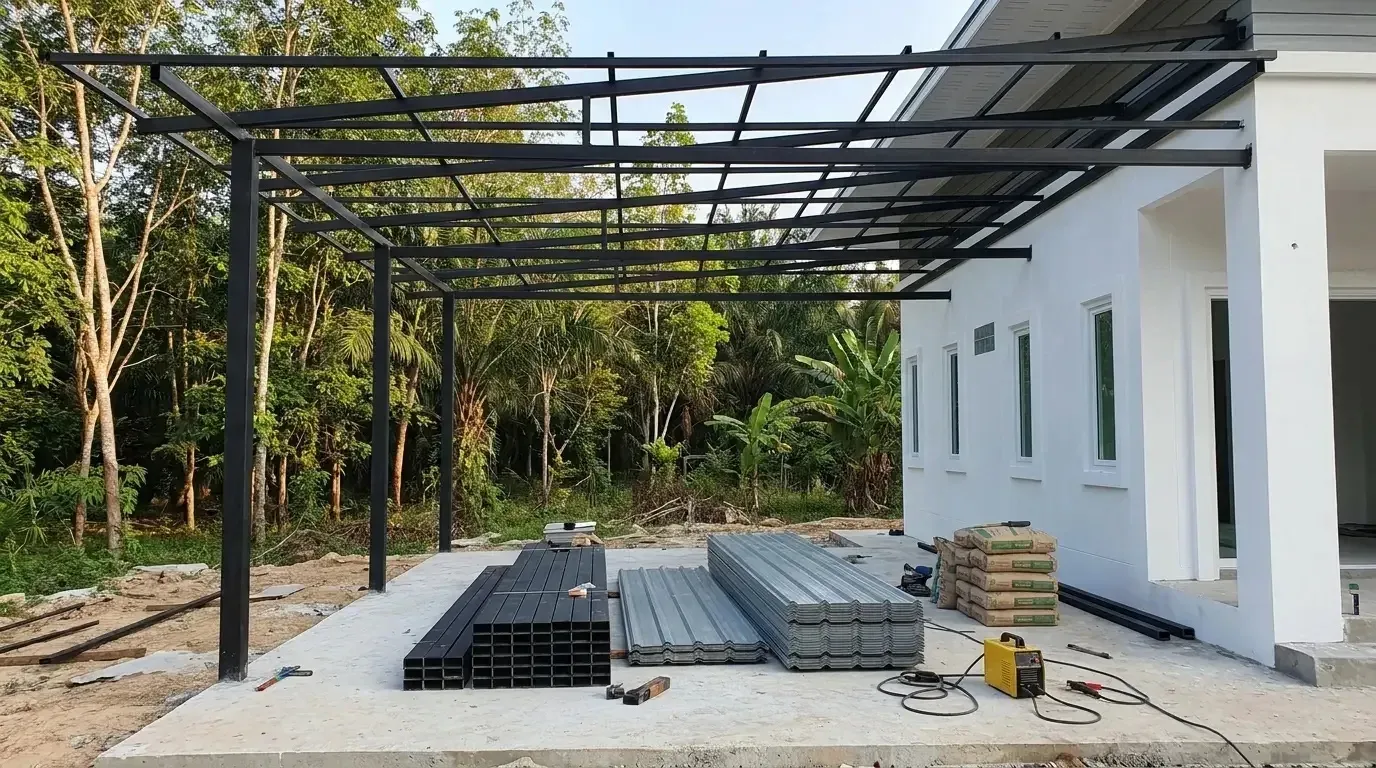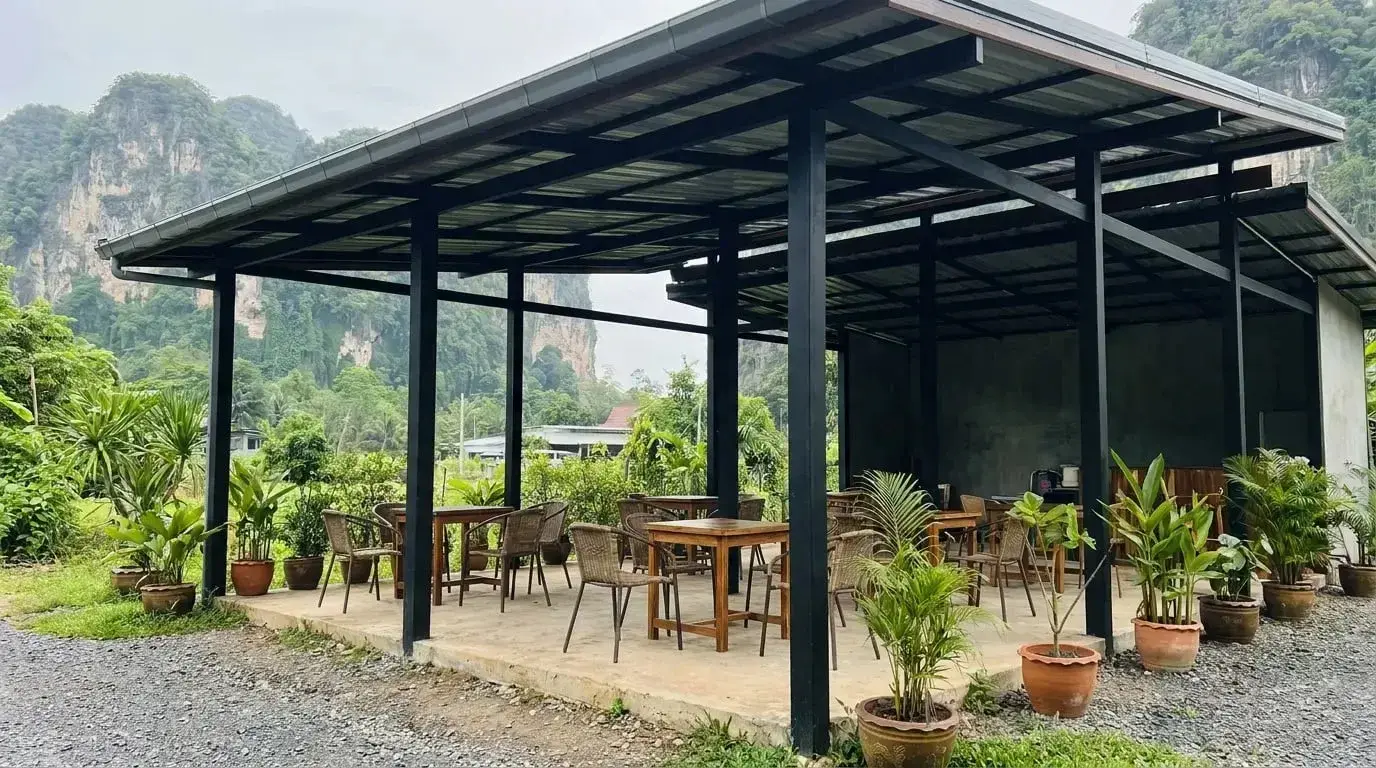
For a resort, bungalow operation or beachside café, the roof is part of the product. Guests notice a leak over their bed, a rusty stain on a restaurant ceiling or a covered walkway that drips on them at breakfast. At the same time, building work is noisy and messy, and nobody wants it during a fully booked week.
This article is for owners and managers in Ao Nang, Klong Muang, Nopparat Thara, Krabi Town and Ko Lanta. It covers the practical side of getting roofing and steel work done without upsetting guests or the business.
Common projects for hospitality businesses
- New roofs over dining areas, bars, reception or shop fronts
- Covered walkways between rooms, pool and restaurant. See walkway roofs.
- Replacing rusted roof frames on older bungalows. See roof frame renovation.
- Awnings and sun shading for café terraces
- Steel stairs, handrails and decks around rooms and pools
- Rolling shutters for shops and bars
Our resort and shop roof service gives an overview.
Scheduling around guests and high season
Low season is not automatically the answer
On the Andaman coast, the quieter months overlap with the rainy season, roughly May to October. Fewer guests make work easier, but rain interrupts roofing. High season has better weather but more guests. The right timing depends on the job.
Questions to settle before booking
- Which rooms or areas can be closed, and for which dates?
- Are there events, weddings or group bookings to avoid?
- Can the job be split into phases, one building or section at a time?
- Where can materials be stored securely without blocking guest paths?
Phasing work
Splitting a large job into smaller sections lets you keep most of the property open. It can add a little cost because of setting up more than once, but it protects revenue. We can price both approaches so you can compare.
Noise and disruption
Steel work is not silent. Cutting, grinding and drilling roof sheets all make noise, and welding produces sparks and fumes.
Ways to reduce disruption
- Agree working hours that avoid early mornings and late afternoons around pool areas
- Cut and prepare steel away from guest areas where the site allows
- Do the noisiest tasks when guests are usually out for the day
- Keep walkways clear and taped off where work is overhead
- Clear drill swarf and offcuts at the end of each day so nothing rusts on roofs or cuts bare feet
Let guests know in advance. A short note at check-in is better than a surprise.
Safety around guests
Guests wander. Children run along walkways, and people in flip-flops take shortcuts. Before work starts, agree:
- Which paths stay open and which are closed off
- Where ladders and scaffolding stand overnight, and how they are secured
- That no steel, sheets or tools are left lying in guest areas at the end of the day
- A contact person on your staff the team can go to if a guest needs to pass through
Keeping a café or shop trading
Cafés and shops have a different problem from resorts: the business is the space being worked on. Some approaches that help:
- Work on the roof over one section while tables stay open in another
- Do the heaviest work on your closing day, if you have one
- Put up the frame first, then sheet the roof in a short, planned window
- Keep the entrance clear and clean so customers are not put off
Access and site logistics
Mainland sites
Some resorts in Ao Nang and Klong Muang have narrow access roads, steep driveways or garden paths between bungalows. Steel lengths have to be carried in, which affects labour time and the quote.
Ko Lanta and island sites
Reaching Ko Lanta means a ferry crossing for the team, tools and materials. For boat-only islands such as Ko Phi Phi, logistics are more involved still. We charge a travel fee for remote or boat-access areas, shown separately in the quote so you can see it.
On island jobs, ordering the right quantity first time matters more than on the mainland, because a missing piece means another crossing. This is one reason Rong surveys before quoting.
Salt air and hospitality structures
Beachfront structures take heavy salt exposure, and guests notice rust stains quickly. You choose the steel grade and rust protection. For guest-facing structures near the sea, it is usually worth putting money into better protection and careful treatment of cut ends and welds. See stopping rust on steel near the sea.
Receipts and tax invoices
Please read this before asking for a survey. We issue a cash bill, not a VAT invoice. Some resorts and registered companies need a VAT tax invoice for their accounts; if that is you, we would rather you know now.
Other payment points:
- 30% deposit to order materials
- Balance as written in the quote
- One-year warranty under the site conditions written in the quote
Checklist for resort and café owners
- List the structures involved and photograph them
- Note occupancy and dates to avoid
- Decide whether the job can be phased
- Identify storage and access routes for steel lengths
- Agree working hours and noisy-task windows
- Choose rust protection for exposed areas
- Confirm receipt type works for your accounts
- If you lease the property, get the landlord's written approval
For projects that change a building's size or structure, read our cautious guide on permits for carports and extensions.
How pricing works
There is no price list, because every property and access route is different. Jobs start from 10,000 THB. After a free survey we send a written, itemised quote. See our pricing overview.
Next step
Send photos of the area, a rough idea of dates you could close it, and your location through LINE on our contact page. Rong will tell you what the survey needs to cover.